An Opportunity Lost
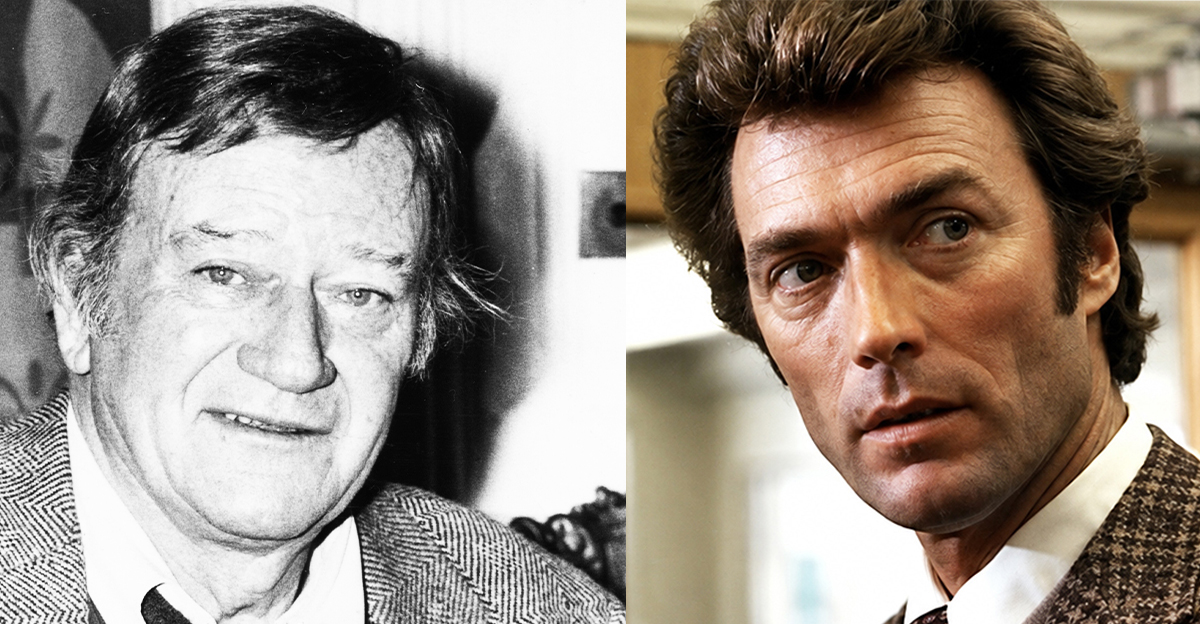
John Wayne spent decades playing men who enforced justice out of the barrel of a gun, so Harry Callahan should have fit him perfectly. Instead, Wayne passed on Dirty Harry (1971), watched Clint Eastwood turn it into a phenomenon, and quickly realized he'd made a mistake. His response was fascinating: at 66, the Duke finally became a big-city cop.
Harry Callahan Came Calling
By 1970, Dirty Harry had already gone through a complicated development process. Frank Sinatra had been attached to play San Francisco detective Harry Callahan before dropping out, and several other major stars were considered as the project changed hands. Somewhere along the way, the screenplay reached John Wayne.
Wayne was still one of Hollywood's biggest names. He'd recently won the Best Actor Oscar for True Grit (1969), directed by Henry Hathaway and co-starring Glen Campbell and Kim Darby. But a contemporary urban cop thriller was unfamiliar territory for an actor still strongly associated with Westerns.
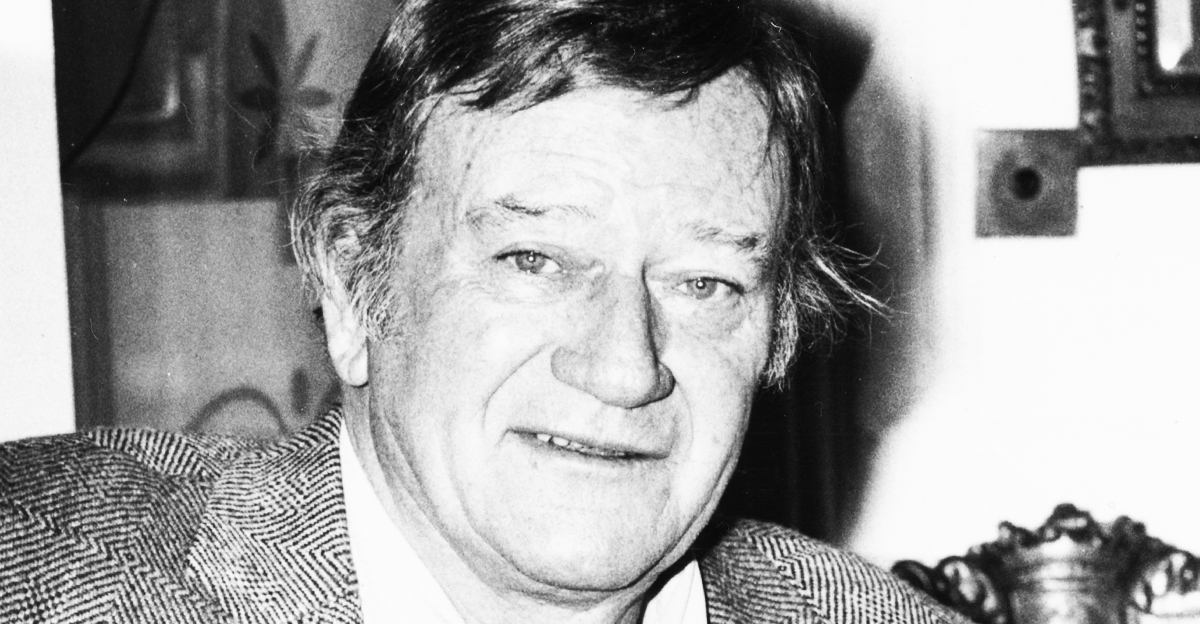 Dennis Oulds/Central Press/Getty Images
Wayne Said No
Wayne later offered several explanations for rejecting Harry Callahan. He disliked being offered a role after Sinatra had passed on it, saying pride played a part. More importantly, he initially regarded Harry as a rogue policeman whose methods made him uncomfortable. He was also busy making other pictures.
That last point was certainly true. Wayne was still prolific, appearing in Howard Hawks' Rio Lobo (1970) with Jorge Rivero and Jennifer O'Neill, followed by George Sherman's Big Jake (1971), co-starring Richard Boone and Wayne's sons Patrick and Ethan.
Clint Eastwood Took Over
The part eventually went to Clint Eastwood, with Don Siegel directing. Dirty Harry cast Eastwood opposite Andy Robinson as the murderous Scorpio, with Harry Guardino, Reni Santoni and John Vernon among the supporting players.
The hard-edged San Francisco thriller became a major success and gave Eastwood a defining new character. But even more importantly for Wayne, it demonstrated that the rule-breaking Callahan wasn't actually that far removed from the lawmen he'd spent much of his career playing.
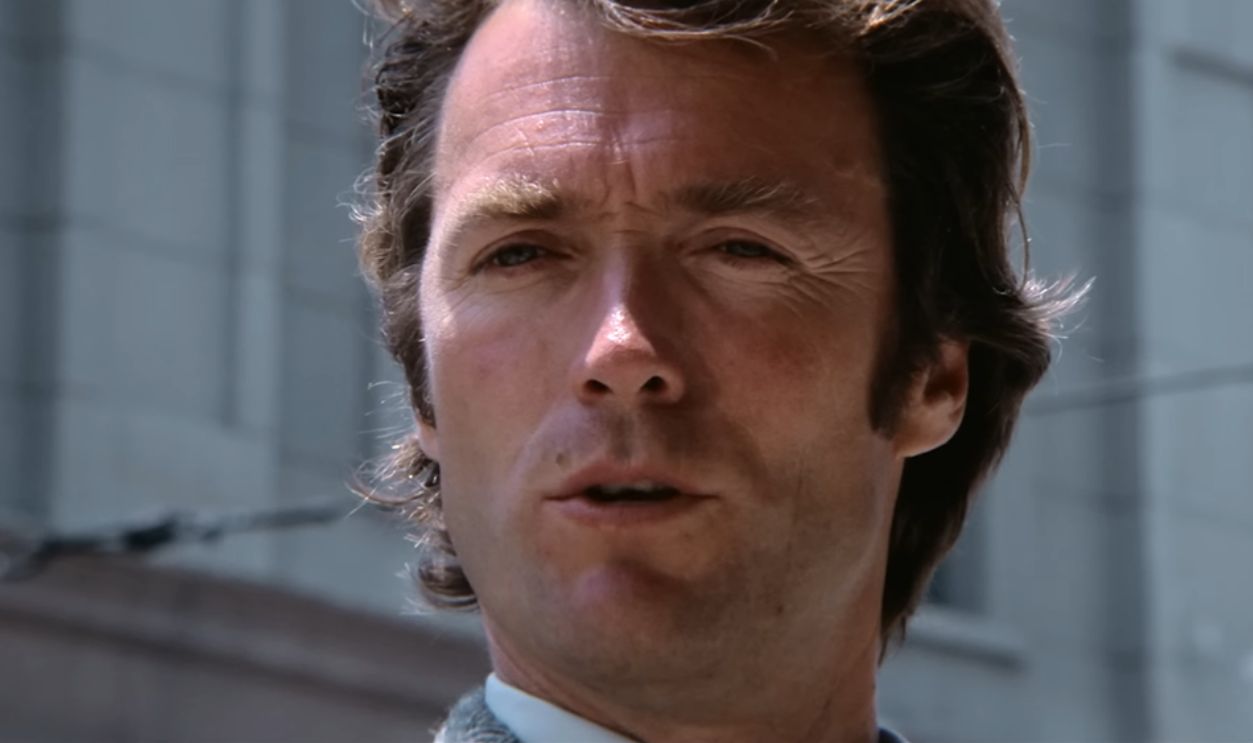 Screenshot from Dirty Harry, Warner Bros. (1971)
Wayne Changed His Mind
Seeing the finished movie apparently changed Wayne's whole outlook on Harry. He later acknowledged that he'd been too narrow-minded about the character, realizing that Callahan essentially operated within the law but broke rules when circumstances demanded it.
Wayne reportedly wondered, “How did I ever let that one slip through my fingers?” Whatever his exact level of regret, his next career move suggests that he had recognized the possibilities of the modern police thriller.
McQ Gave Him Another Chance
Wayne found that opportunity in McQ (1974), directed by The Great Escape (1963) filmmaker John Sturges. For the first time in his long career, Wayne played an actual police officer rather than a frontier sheriff or marshal. His production company, Batjac, became involved, with his son Michael Wayne serving as executive producer.
Wayne played Seattle detective Lon McQ alongside Eddie Albert, Diana Muldaur, Colleen Dewhurst, Al Lettieri, Clu Gulager and David Huddleston. McQ investigates the slaying of his partner, clashes with his superiors and ultimately leaves the police department to pursue the case independently.
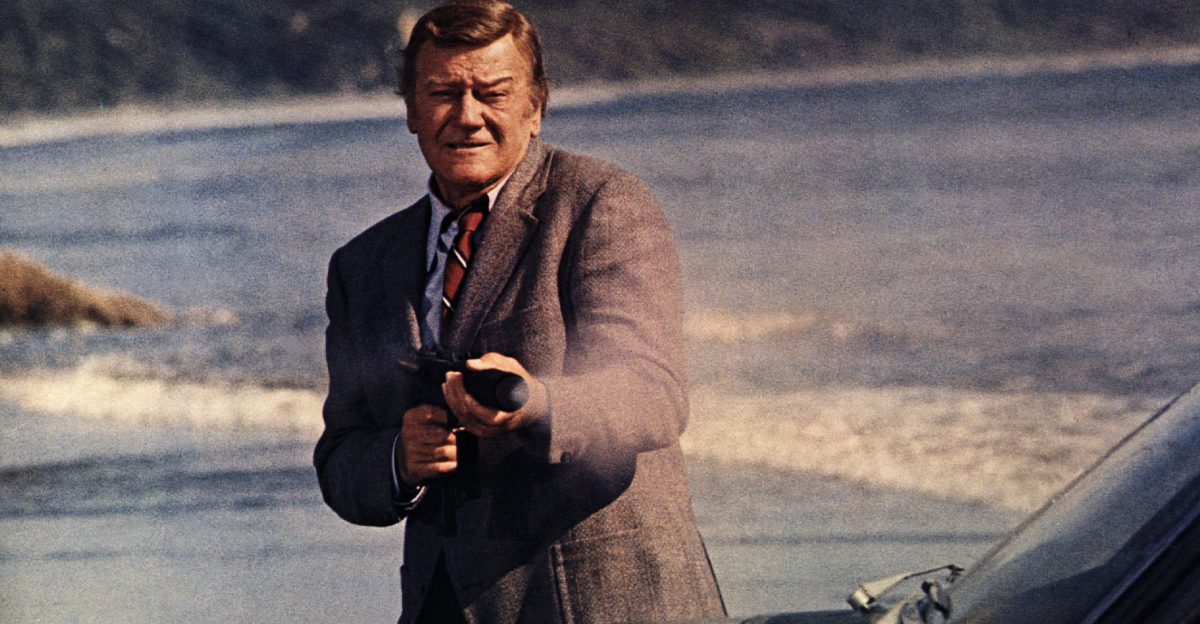 Screenshot of John Wayne in 'McQ' (1974), Warner Brothers
The Duke Went Modern
There was little attempt to disguise McQ as an old-fashioned Wayne vehicle. He drove a Pontiac Trans Am, lived aboard a boat and eventually wielded a MAC-10. Seattle locations replaced Monument Valley, while a climactic car chase brought the Duke firmly into the era of modern action filmmaking.
The parallels weren't subtle. Dirty Harry had proven the commercial appeal of the maverick urban cop, and McQ gave Wayne his own variation on that formula. Sources specifically describe Wayne as taking the project after regretting his decision to reject Harry Callahan.
Critics Saw The Comparison
Wayne's reinvention didn't fool contemporary critics. Pauline Kael's New Yorker review explicitly compared McQ with Eastwood's Harry Callahan and also saw echoes of Steve McQueen, whose Bullitt (1968) had helped establish the modern car-chase thriller.
Still, McQ remains an intriguing career experiment. Wayne wasn't simply playing another cowboy with different scenery. At 66, one of Hollywood's most recognizable Western stars was consciously trying to adapt his familiar screen persona to a genre that younger actors were redefining.
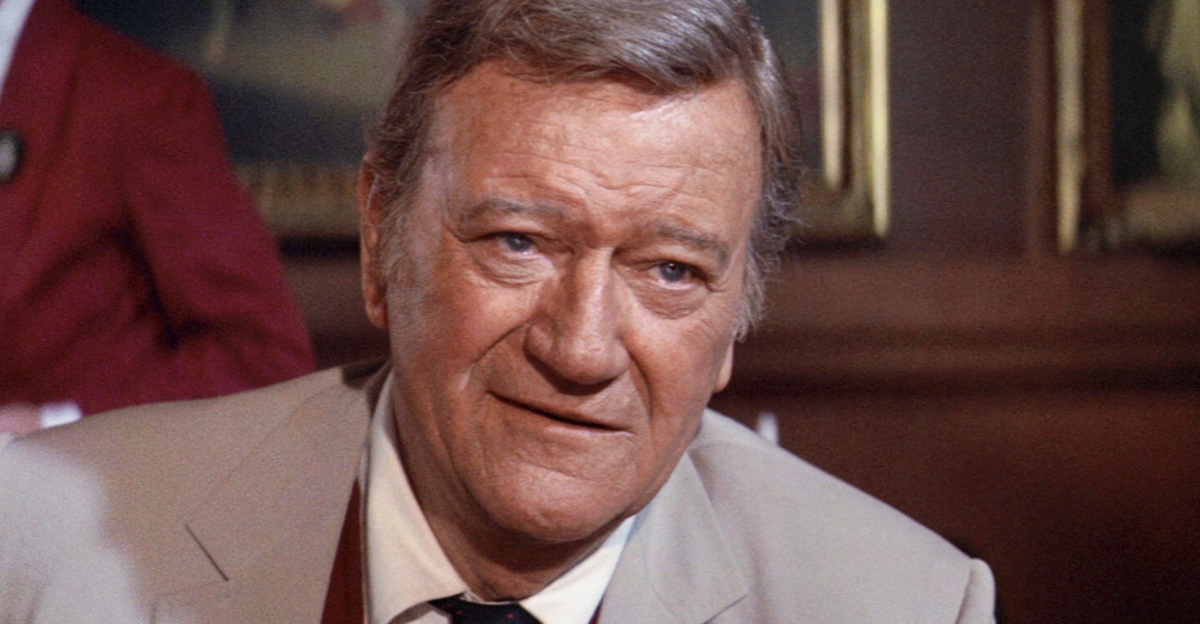 Screenshot of John Wayne in 'Brannigan' (1975), United Artists
He Tried It Again
Wayne wasn't finished with police movies. Douglas Hickox's Brannigan (1975) sent him to London as Chicago detective Jim Brannigan, pursuing a bad guy played by John Vernon. Richard Attenborough, Judy Geeson, Mel Ferrer and Ralph Meeker co-starred.
Once again, Wayne played a tough American cop operating according to his own instincts, and once again comparisons with Dirty Harry were inevitable. It was further confirmation that the success of Siegel's film heavily influenced the wave of police thrillers that followed.
The Role That Got Away
Wayne never became Harry Callahan. Clint Eastwood made the character inseparable from himself and ultimately played him five times. But Wayne's two late-career police films reveal how much Dirty Harry affected him.
He initially saw Harry as the wrong kind of lawman. After watching Eastwood, Wayne realized something he'd missed: underneath the badge, Harry Callahan wasn't so different from the stubborn, rule-bending heroes John Wayne had been playing all along.
You May Also Like:
1970s Movie Detectives Who Broke Every Rule—But Stayed On The Job Because They Got Results