The Stunts That Fooled Moviegoers
Some of the decade's most unforgettable action scenes were far more complicated than they appeared. Behind those spectacular chases, impossible falls, and last-second escapes were months of preparation, ingenious camera tricks, and stunt performers whose remarkable work often went unnoticed by audiences.
Indiana Jones Went Under A Moving Truck
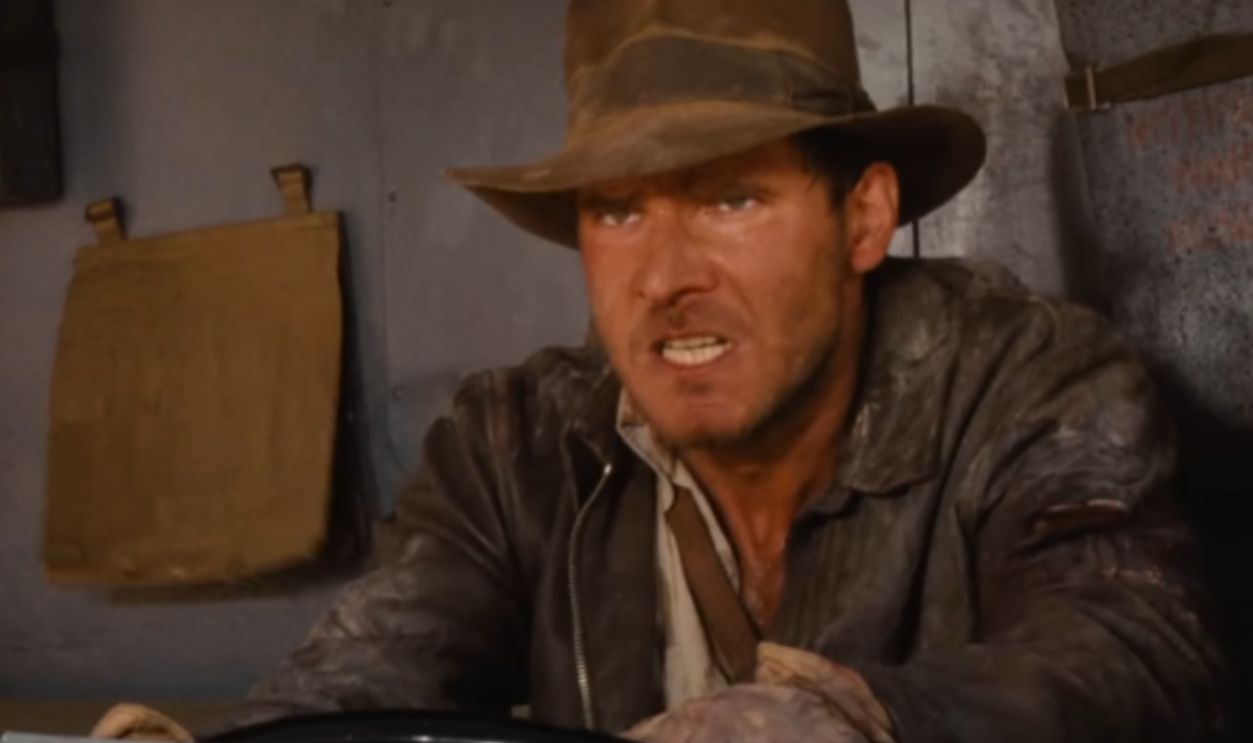
One of the most memorable moments in 1981's Raiders of the Lost Ark occurs when Indiana Jones finds himself hanging beneath a moving truck during an intense desert chase. Harrison Ford's character appears to slide underneath the vehicle before pulling himself back aboard, creating an almost impossibly dangerous escape. The sequence looks effortless on screen, but making it work required substantial modifications to the truck and the road itself.
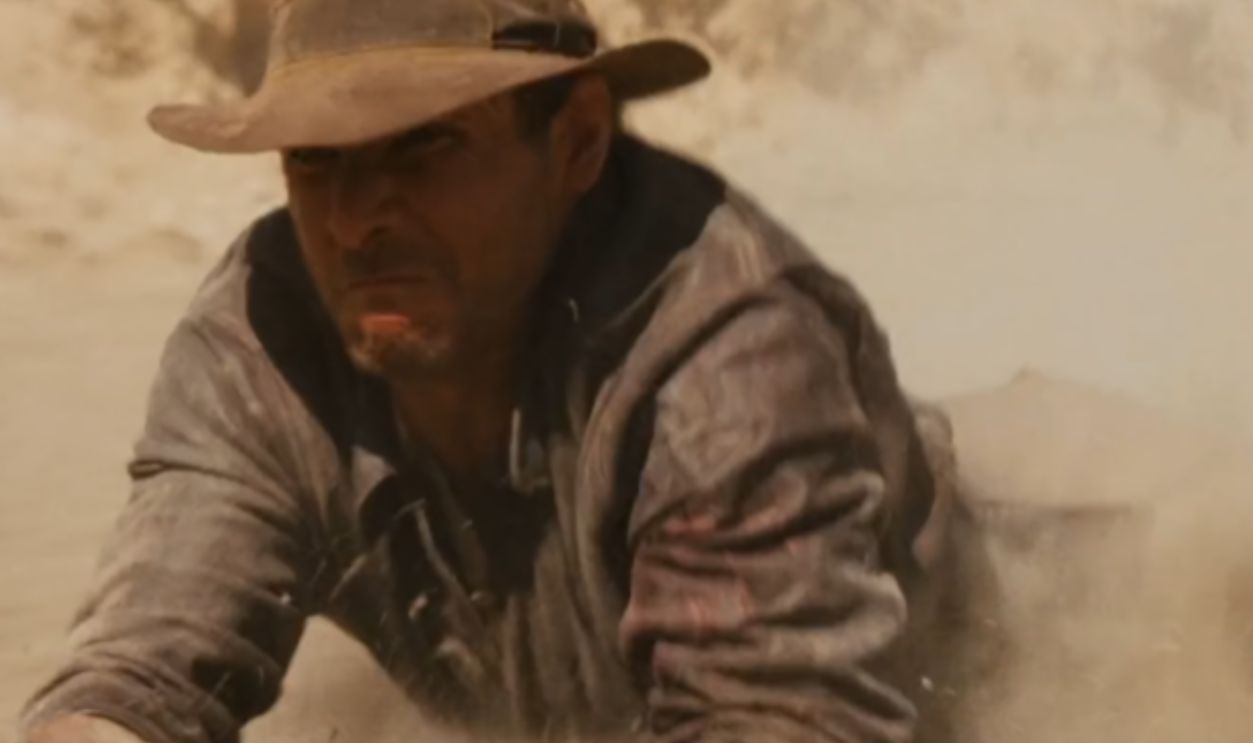 Screenshot from Raiders of the Lost Ark, Paramount Pictures (1981)
The Crew Had To Dig Up The Road
The production team modified the truck to provide additional clearance underneath its chassis, but that alone wasn't enough to accommodate a stunt performer safely. Workers also dug a shallow trench into the roadway, creating more space for the performer as the vehicle passed overhead. Carefully selected camera angles concealed these preparations, making it appear that Indiana Jones was narrowly avoiding the underside of an ordinary moving truck.
 Screenshot from Raiders of the Lost Ark, Paramount Pictures (1981)
Harrison Ford Still Came Away Bruised
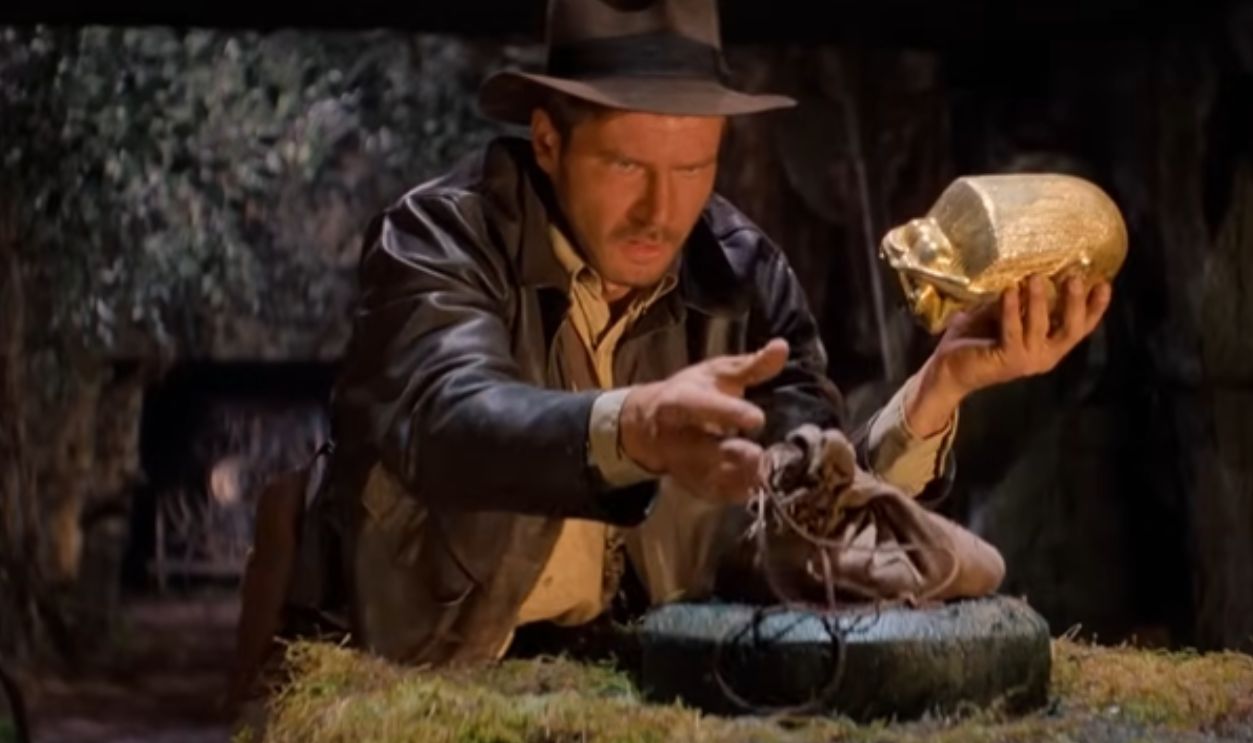
Veteran stuntman Terry Leonard handled the demanding under-truck work, while Ford participated in several carefully controlled portions of the sequence. The actor was dragged behind the vehicle for some shots and reportedly bruised his ribs during filming. The elaborate chase also involved second-unit director Michael D. Moore and several stunt doubles, showing how many skilled performers were needed to create a few minutes of seemingly continuous action.
 Screenshot from Raiders of the Lost Ark, Paramount Pictures (1981)
Mad Max 2 Finished With A Terrifying Truck Crash
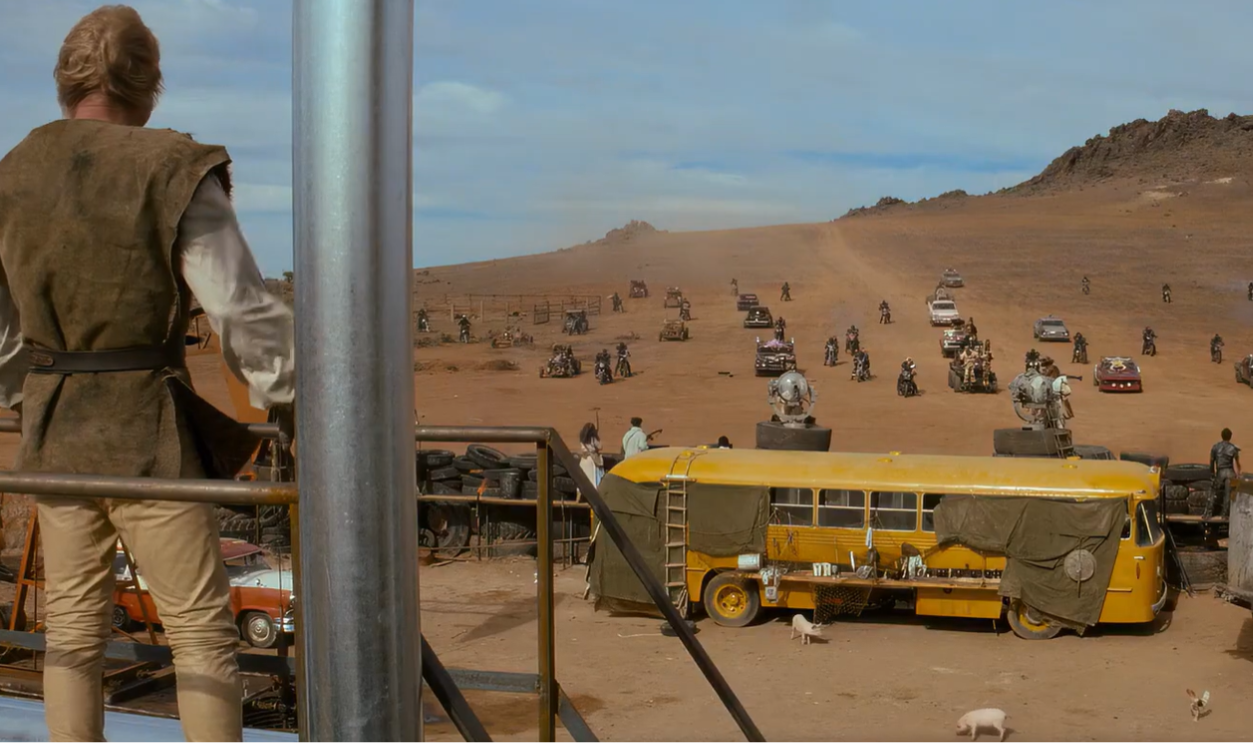
George Miller's 1981 film Mad Max 2, released in America as The Road Warrior, built toward an enormous chase involving motorcycles, heavily modified cars, and a tanker truck. The spectacular finale required the massive vehicle to overturn in a violent collision, creating one of the decade's most memorable action sequences. Rather than relying on a small model for the central crash, the production arranged for a real truck to perform the stunt.
 Jasin Boland, Wikimedia Commons
The Driver Wasn't Even A Professional Stuntman
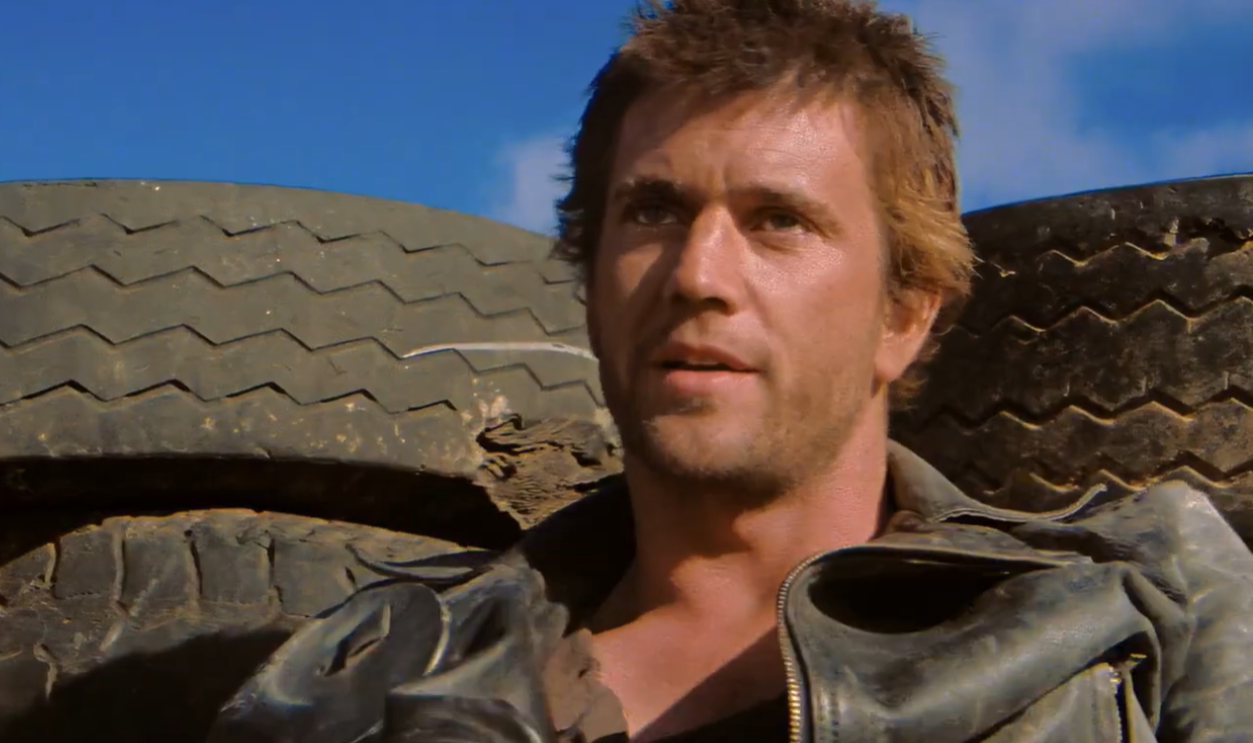
The man behind the wheel was Dennis Williams, an experienced truck driver who had never attempted anything comparable to the film's planned rollover. The production needed someone capable of controlling the enormous vehicle during the approach, but Williams understood that the truck would become completely unpredictable once it began overturning. Stunt performers, including Guy Norris, helped prepare him for the dangerous maneuver while the crew worked out how to make the crash happen as planned.
 Screenshot from Mad Max 2: The Road Warrior, Warner Bros. (1981)
Ten Tonnes Of Sand Helped Control The Crash
To influence how the truck would overturn, the crew packed approximately ten tonnes of wet sandbags along one side of the tanker. Williams was also instructed not to eat for twelve hours before filming, a precaution intended to make emergency surgery safer if something went wrong. The resulting crash became a defining moment of The Road Warrior, even though the audience saw only the brief conclusion of an extraordinarily complicated operation.
 Screenshot from Mad Max 2: The Road Warrior, Warner Bros. (1981)
Romancing The Stone Featured A Dangerous Waterfall Escape
In Robert Zemeckis's 1984 adventure Romancing the Stone, Michael Douglas and Kathleen Turner's characters escape from a vehicle moments before it plunges over a waterfall. On screen, the action unfolds with the frantic speed of an unexpected accident, giving viewers little opportunity to consider how the filmmakers arranged it. Behind the scenes, however, the crew spent several days preparing a carefully controlled stunt involving a specially modified vehicle and multiple cameras.
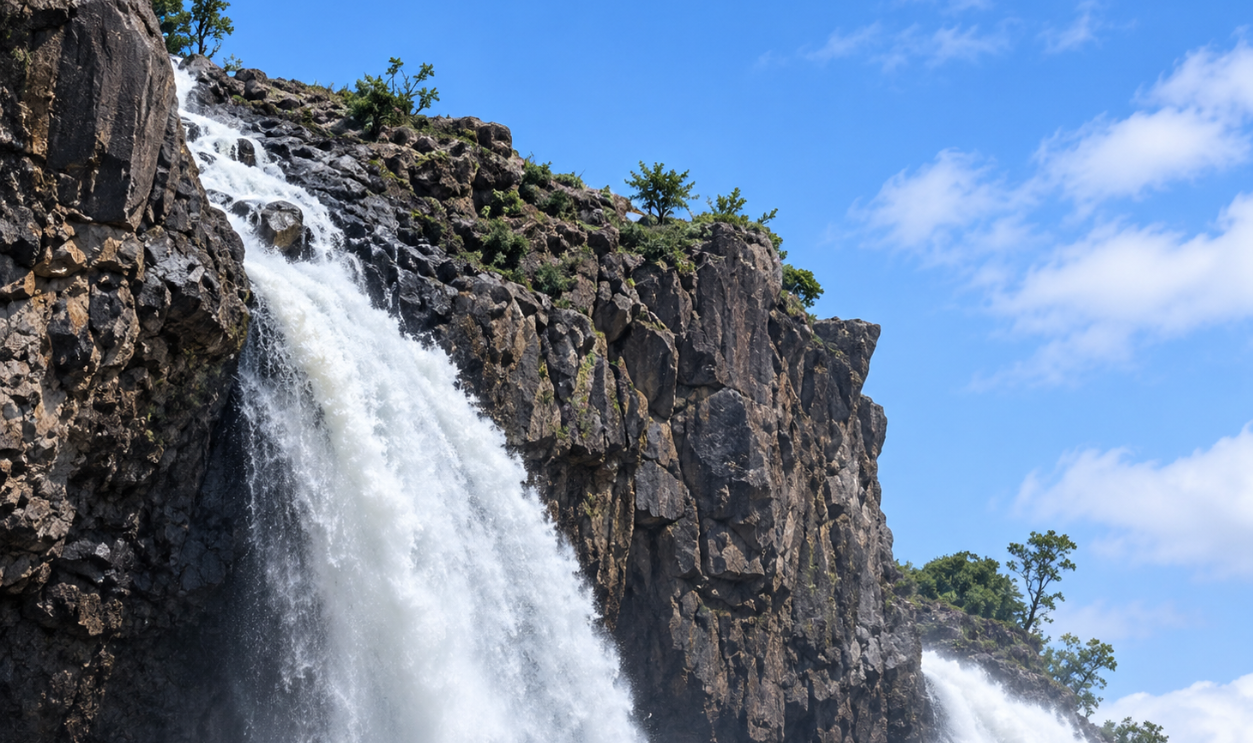 Screenshot from Romancing The Stone, Twentieth Century Fox (1984), Modified
Five Cameras Captured The Plunge
According to the American Film Institute's production history, the crew spent five days setting up the waterfall sequence before filming it in a single day. A wooden ramp was constructed near the edge, allowing the stunt vehicle to follow the intended path as it plunged over the waterfall. Five cameras recorded the action, giving the editors enough coverage to create a convincing escape without requiring the entire maneuver to happen exactly as it appeared on screen.
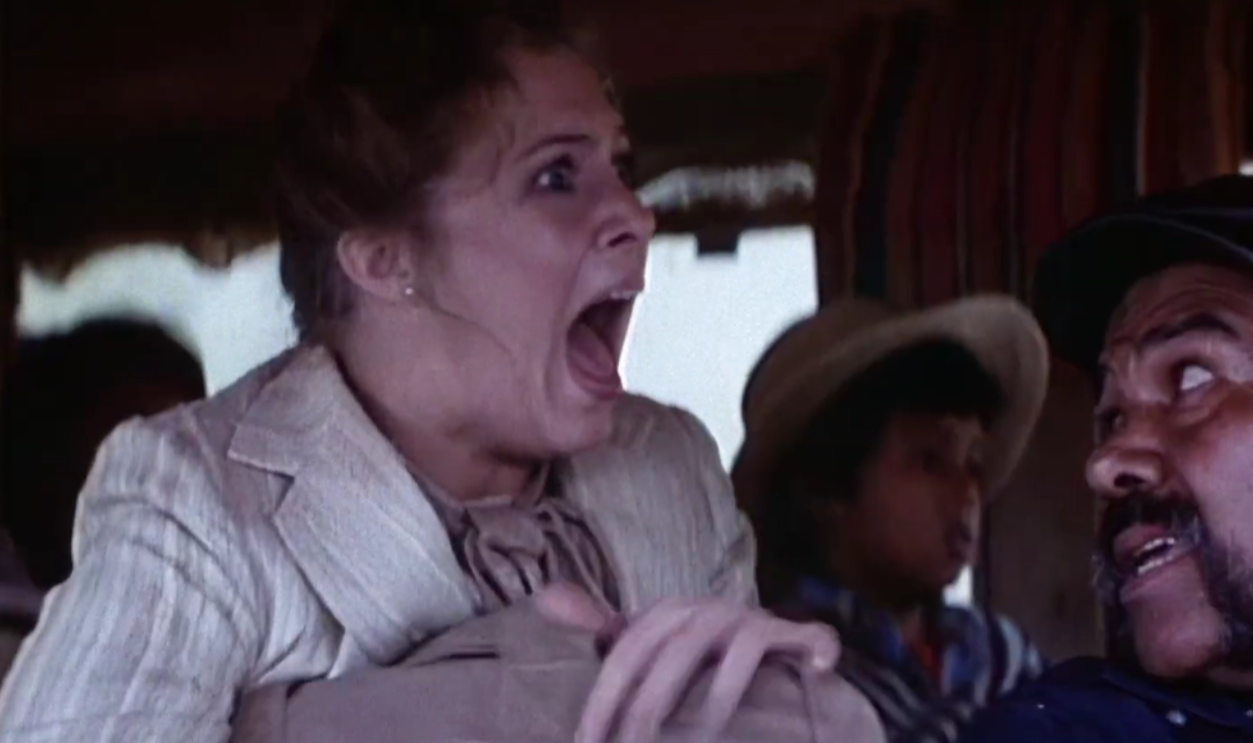 Screenshot from Romancing The Stone, Twentieth Century Fox (1984)
The Performers Were Farther Away Than They Looked
The stunt vehicle was packed with Styrofoam and inner tubes, while stunt performers stood on exterior footrails before jumping away. A carefully chosen camera lens made the performers appear close to the falling vehicle, even though they were actually about thirty feet away. This manipulation of distance helped transform a carefully planned maneuver into a heart-stopping scene that looked far more dangerous than the controlled separation between the performers and the vehicle.
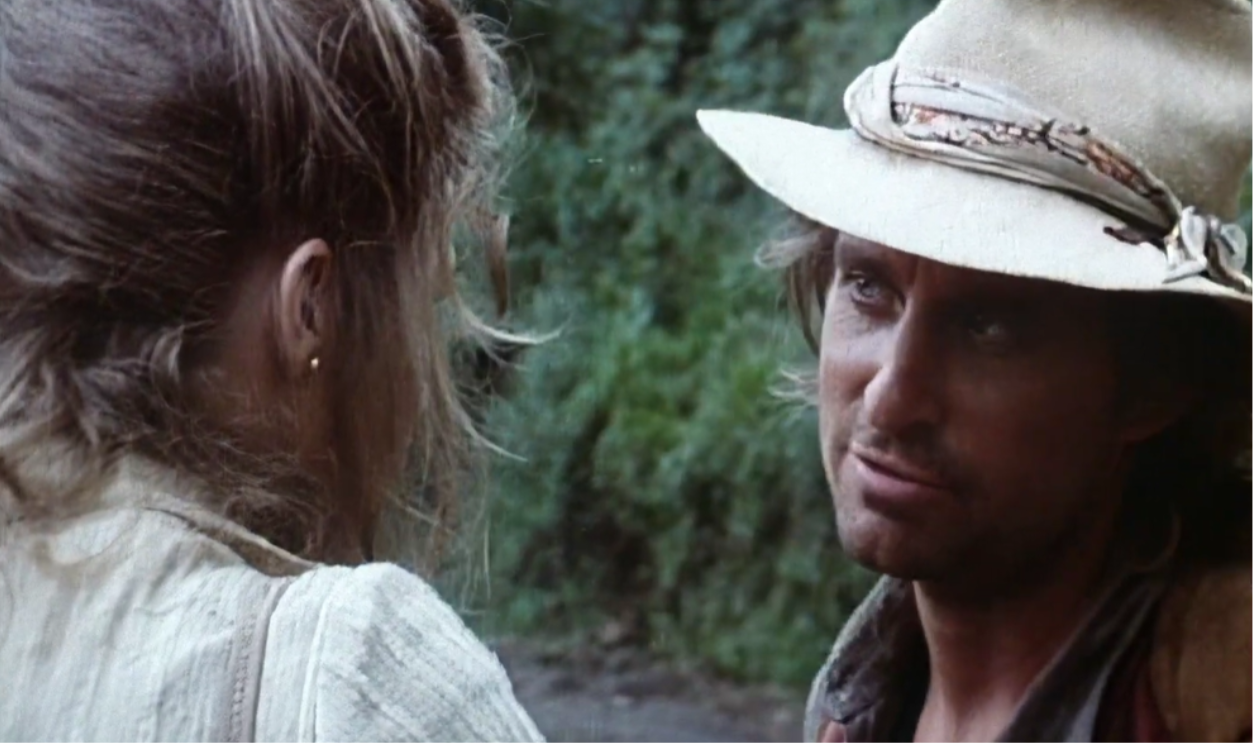 Screenshot from Romancing The Stone, Twentieth Century Fox (1984)
Jackie Chan Fell From A Clock Tower In Project A
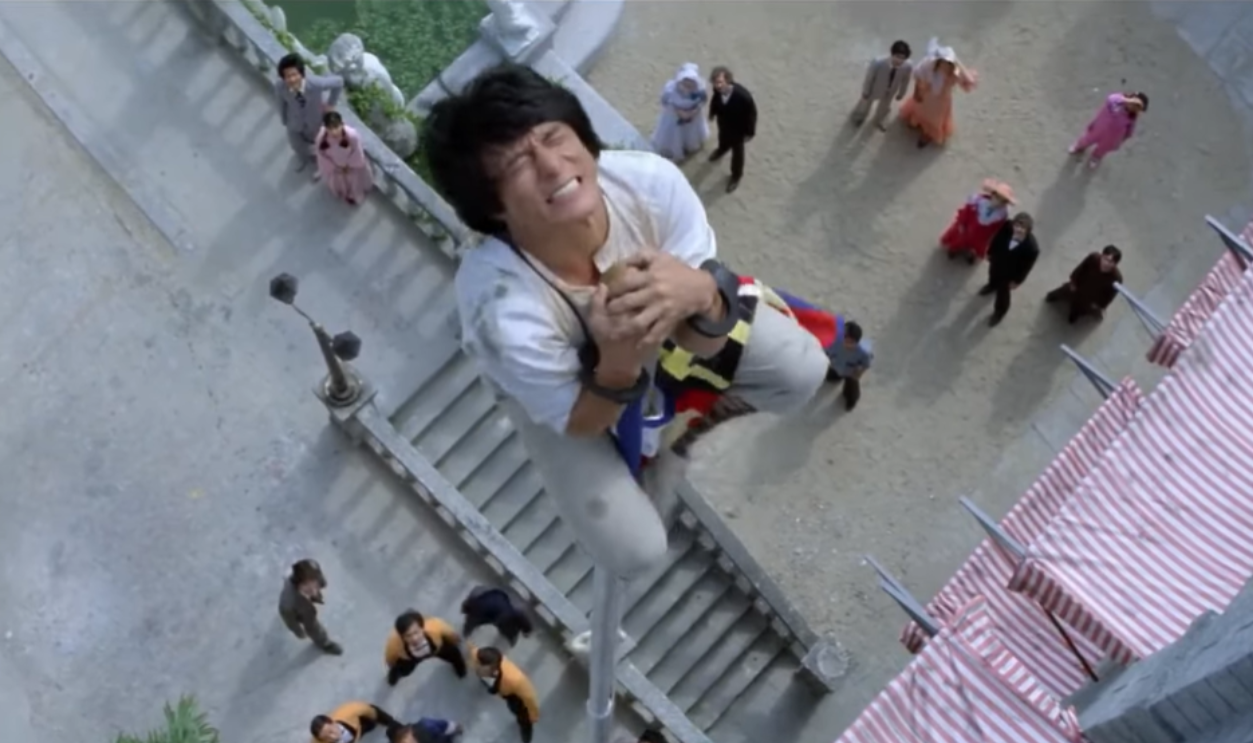
Jackie Chan's 1983 action comedy Project A included an extraordinary scene in which his character falls from a clock tower through fabric awnings before landing on the ground. The sequence was inspired partly by the daring physical comedy of silent-film performers, particularly Harold Lloyd's famous clock-related stunt in Safety Last! Chan wanted to create something equally memorable, but the resulting fall became one of the most demanding achievements of his early action career.
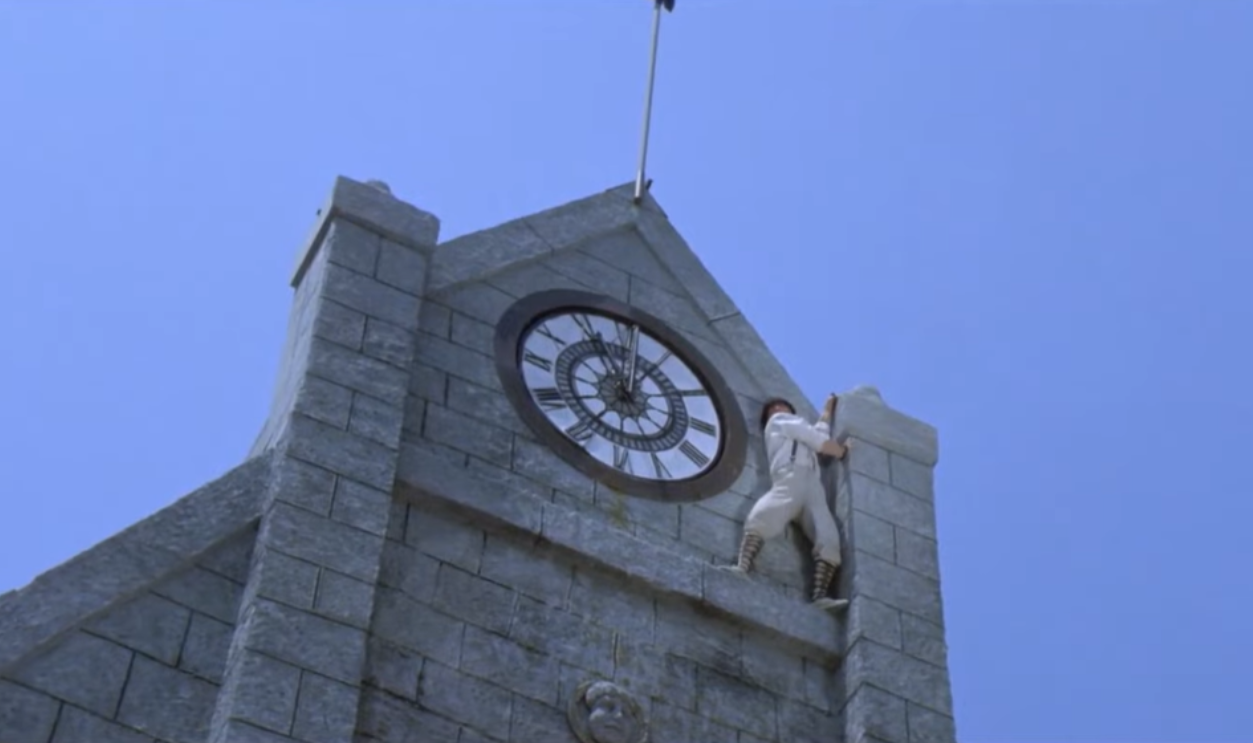 Screenshot from Project A, Golden Harvest (1983)
He Performed The Fall Three Times
Rather than relying on a single successful recording, Chan repeated the clock-tower fall three times during production. Two of the attempts were incorporated into the movie, allowing the audience to watch the remarkable descent from different perspectives. The third attempt went badly, with Chan bouncing onto the ground, and footage of that unsuccessful landing was later shown among the film's closing outtakes.
 Screenshot from Project A, Golden Harvest (1983)
The Stunt Helped Define His Career
Chan's willingness to perform difficult physical comedy became an important part of Project A, alongside its elaborate fight choreography and adventure sequences. The combination helped establish a filmmaking approach that would influence many of his subsequent movies. Although the completed fall occupies only a short portion of the film, preparing and executing it became a major achievement that demonstrated how demanding his particular style of action comedy could be.
 Screenshot from Project A, Golden Harvest (1983)
Temple Of Doom's Mine Carts Were An Engineering Nightmare
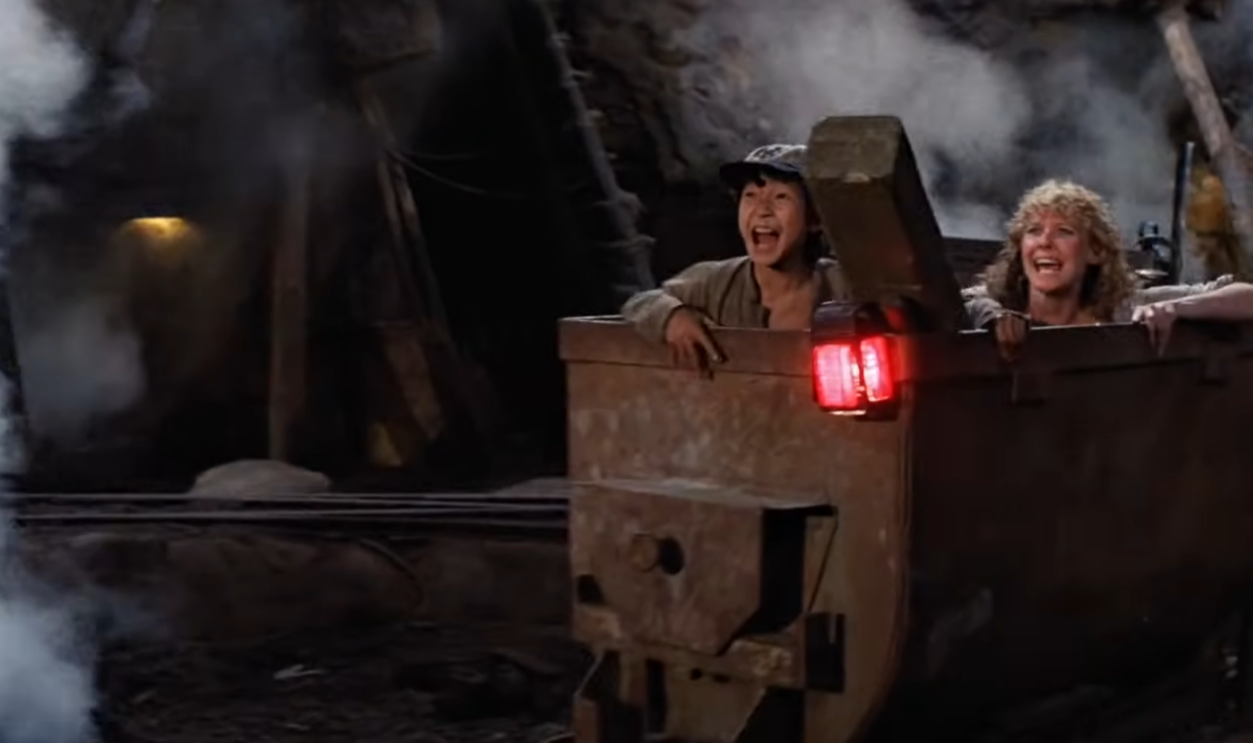
In 1984's Indiana Jones and the Temple of Doom, Indiana Jones and his companions race through an underground mining complex aboard runaway carts. The sequence appears to send the characters around impossible curves, along steep drops, and through dangerous tunnels at extraordinary speeds. However, the filmmakers couldn't accomplish the entire chase using a conventional full-sized track, requiring Industrial Light & Magic to develop an unusually inventive combination of practical sets and miniature effects.
 Screenshot from Indiana Jones And The Temple Of Doom, Paramount (1984)
The Full-Sized Track Was Surprisingly Slow
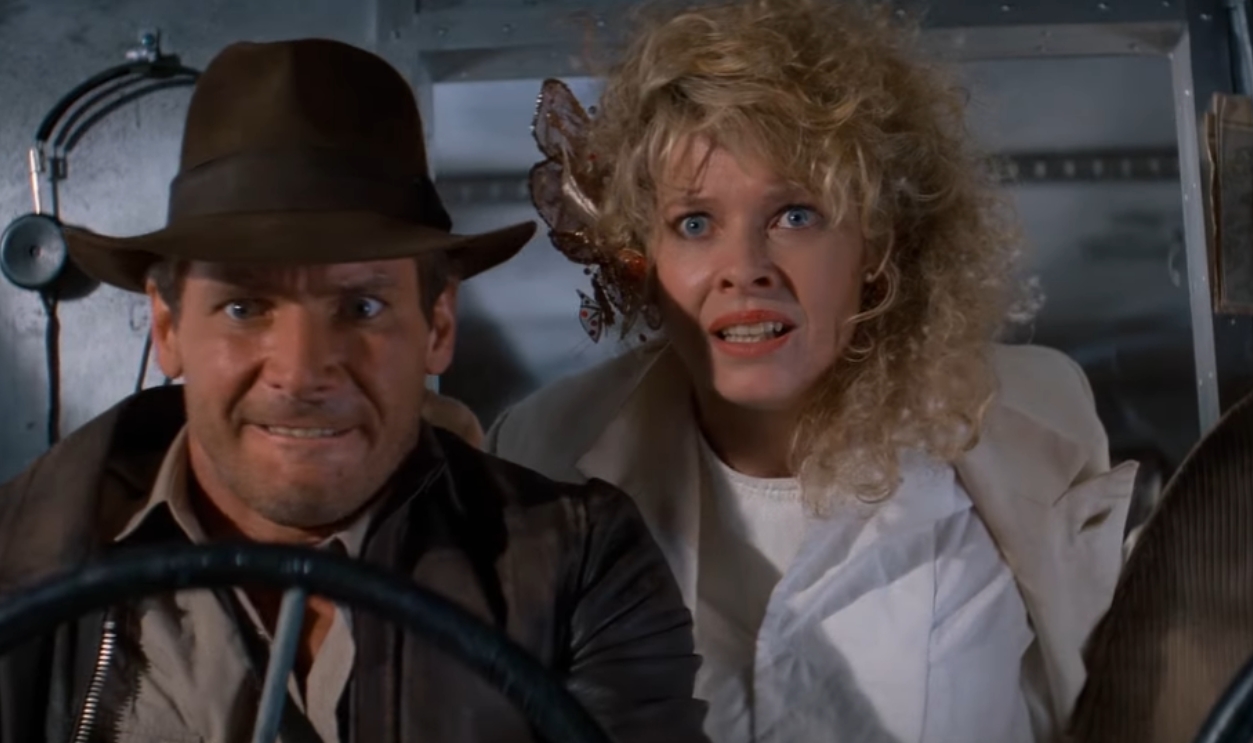
The production built a functioning mine-cart system at England's Elstree Studios, with a circular track resembling a small roller coaster. For safety reasons, the carts traveled no faster than approximately ten miles per hour, even though they appeared to be racing through the tunnels much faster. Camera placement, controlled lighting, and adjustments to filming speed helped transform the relatively modest movement into something far more spectacular.
 Screenshot from Indiana Jones And The Temple Of Doom, Paramount (1984)
A Modified Nikon Camera Solved The Biggest Problem
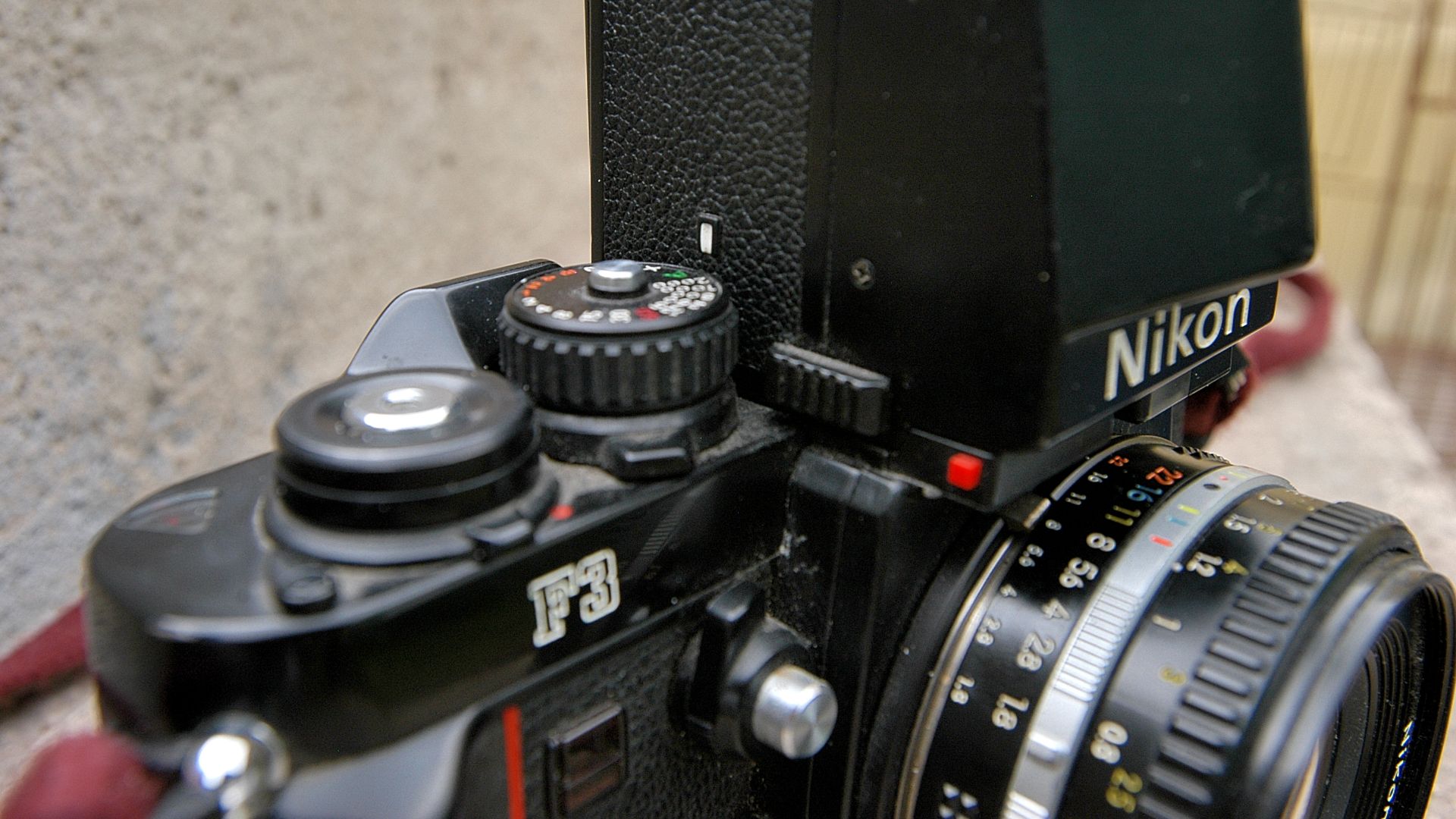
Industrial Light & Magic created miniature tunnels and carts for the chase's most dangerous-looking moments, but ordinary motion-picture cameras were too large to travel through the small sets. The crew modified a Nikon F3 still camera to capture movie footage, creating a specialized system known as the NikonFlex. Developing and filming the miniature action took approximately four months, with the mine-cart sequence accounting for more than a third of the film's visual-effects shots.
Police Story's Shopping Mall Finale Was Extraordinary
Jackie Chan's 1985 film Police Story concluded with an elaborate confrontation inside a shopping mall filled with glass displays, escalators, and multiple levels. The sequence combined martial arts choreography with dangerous falls and destructive physical comedy, transforming an ordinary commercial setting into a spectacular action environment. One stunt in particular would become among the most recognizable achievements of Chan's career.
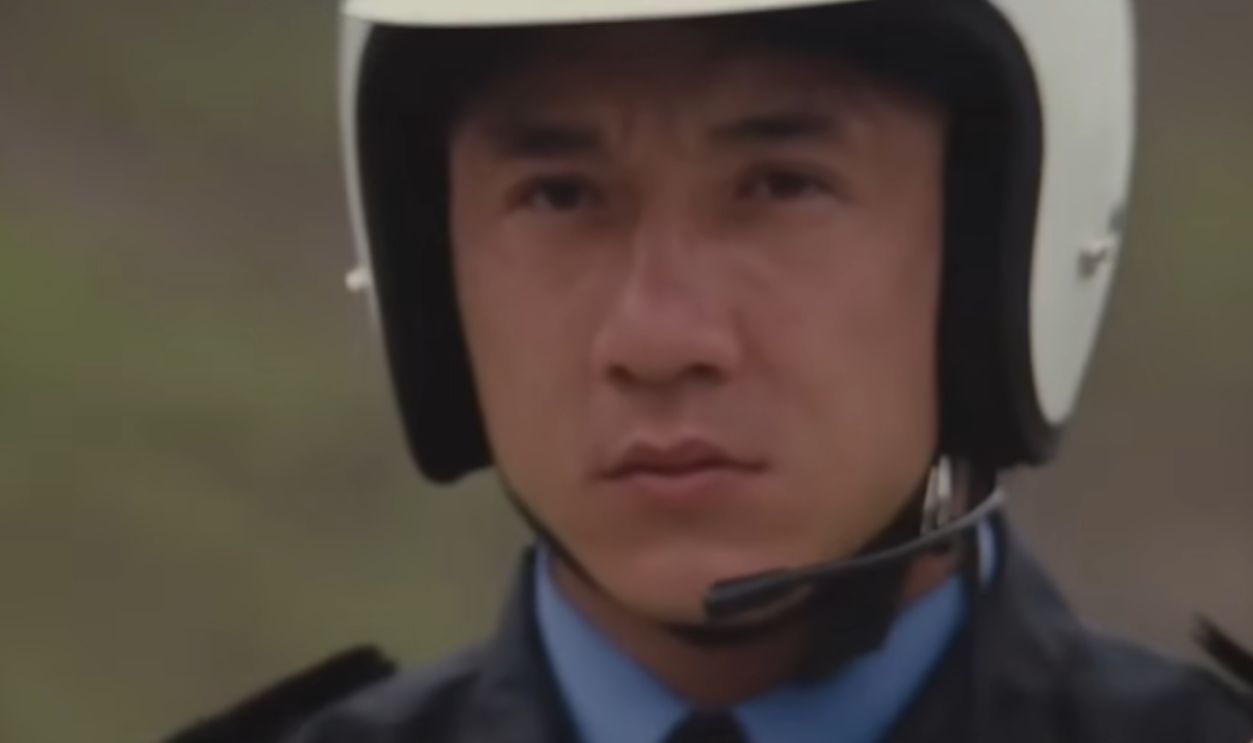 Screenshot from Police Story, Golden Harvest (1985)
Chan Slid Down A Pole Covered In Lights
During the finale, Chan leaps onto a tall pole decorated with illuminated glass fixtures and slides several stories toward the floor below. The stunt required him to travel directly through the lights before crashing through a glass panel near the bottom. Although the action appears to happen almost instantly, the maneuver demanded considerable preparation because the performer had to control his descent while encountering obstacles along the way.
 Screenshot from Police Story, Golden Harvest (1985)
The Lights Caused Serious Burns
The electrical fixtures had made the pole dangerously hot, and Chan suffered burns to his hands during the descent. He also injured his back, making the completed sequence considerably more punishing than the audience could have realized. The combination of genuine physical risk and carefully choreographed action helped establish Police Story as one of Chan's most important films and demonstrated the extraordinary demands he placed on himself as a performer.
 Screenshot from Police Story, Golden Harvest (1985)
Lethal Weapon Turned A Rooftop Jump Into Movie Magic
Richard Donner's 1987 action film Lethal Weapon introduced audiences to Mel Gibson's Martin Riggs, an unpredictable Los Angeles detective whose methods frequently alarmed his colleagues. In one memorable sequence, Riggs attempts to rescue a distressed man standing on the edge of a tall building. Rather than following the expected approach, Riggs attaches himself to the man and jumps with him, creating a dramatic plunge toward the street below.
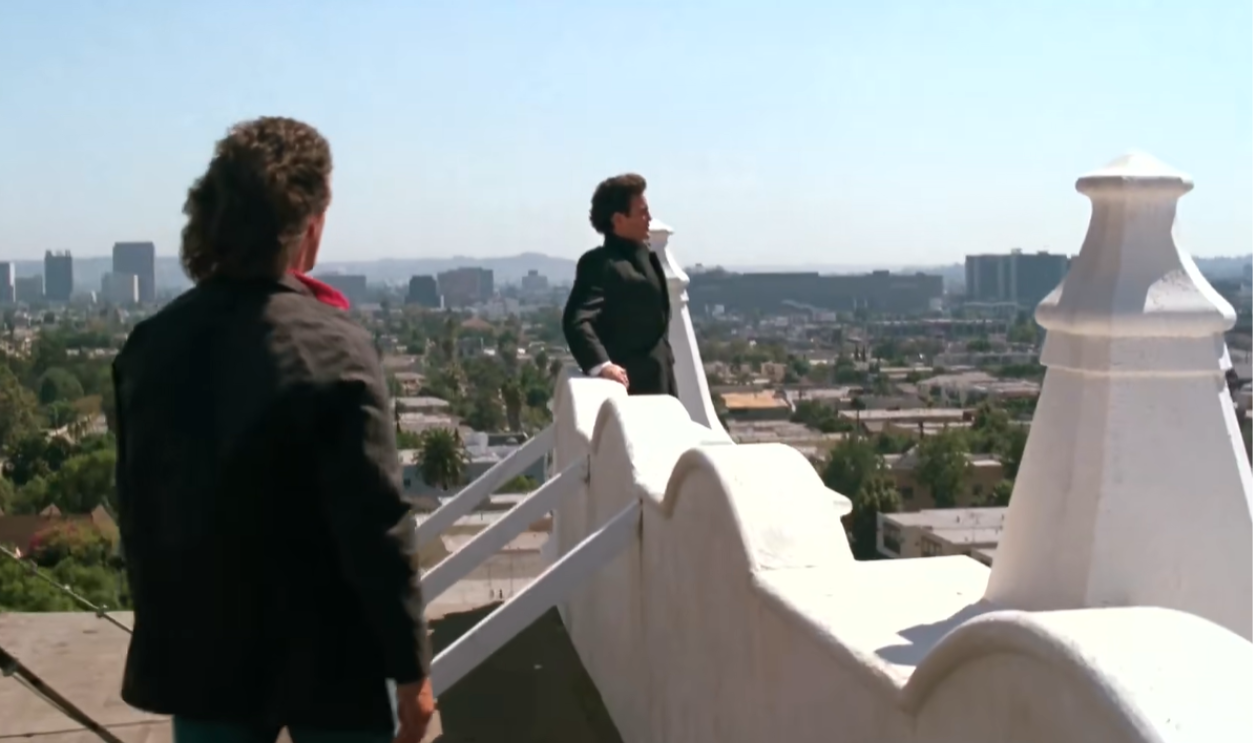 Screenshot from Lethal Weapon, Warner Bros. Discovery (1987)
The Building Was Carefully Chosen
Cinematographer Stephen Goldblatt later explained that he had suggested the building used for the sequence because he admired its distinctive appearance. The location was the Emser Building on Santa Monica Boulevard in West Hollywood, whose bright exterior stood out sharply against the blue California sky. The filmmakers used those visual qualities to make the rooftop scene especially striking, allowing viewers to appreciate the height and exposure of the performers.
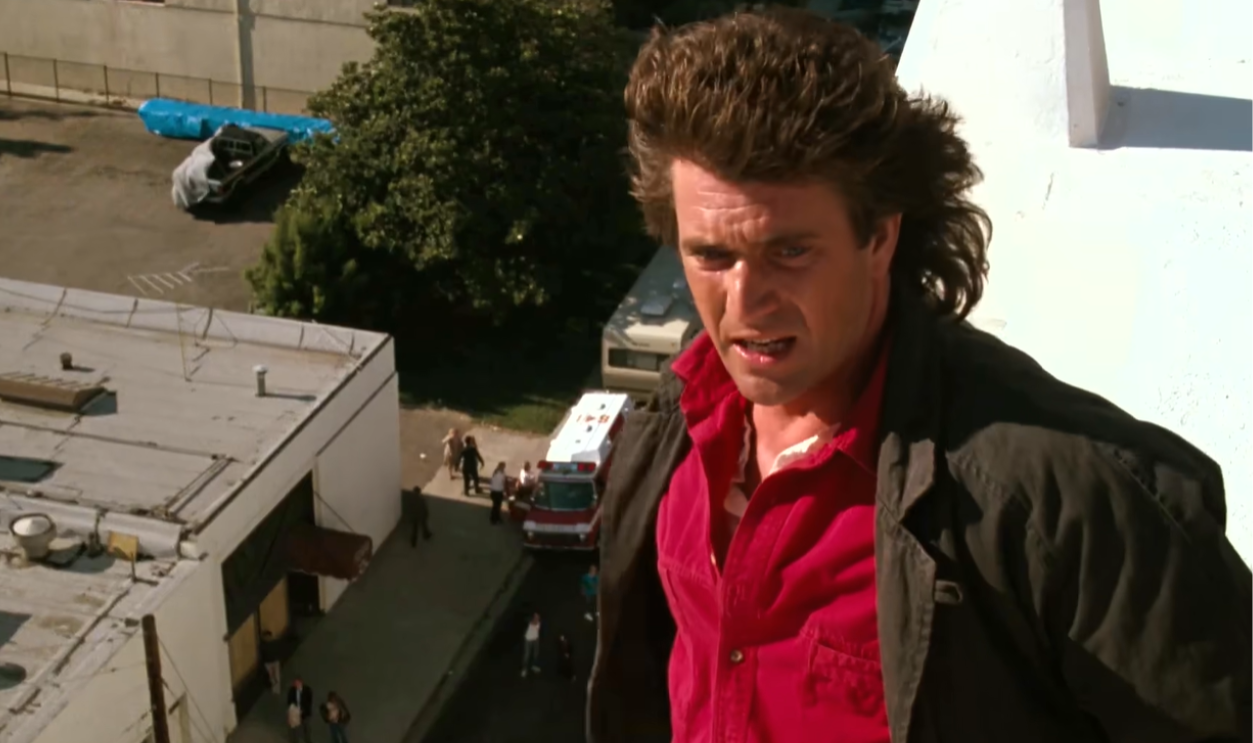 Screenshot from Lethal Weapon, Warner Bros. Discovery (1987)
The Landing Needed A Giant Airbag
The story required both characters to survive the jump, so the production arranged an airbag system below the building to receive the falling stunt performers. Creating the illusion depended on coordinating the rooftop action, the apparent distance of the fall, and the landing area. Goldblatt discussed the sequence in an interview with American Cinematographer, demonstrating how careful location selection and practical stunt planning contributed to one of the film's unforgettable early scenes.
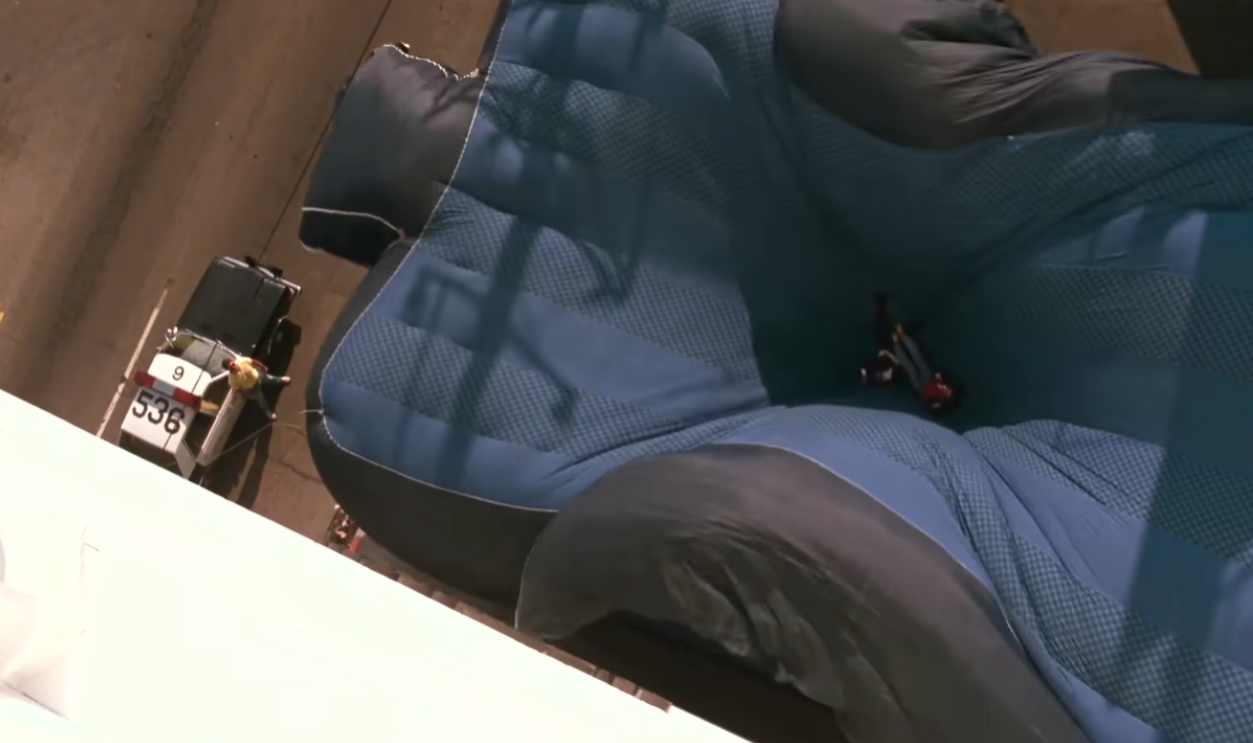 Screenshot from Lethal Weapon, Warner Bros. Discovery (1987)
James Bond Fought Beneath A Flying Cargo Plane
Timothy Dalton's first James Bond film, The Living Daylights, arrived in 1987 with an extraordinary action sequence involving a military cargo aircraft. During the confrontation, Bond and his opponent Necros fight while suspended from a cargo net hanging beneath the moving plane. The scene creates the impression of two men struggling for survival thousands of feet above the ground, with little separating them from a devastating fall.
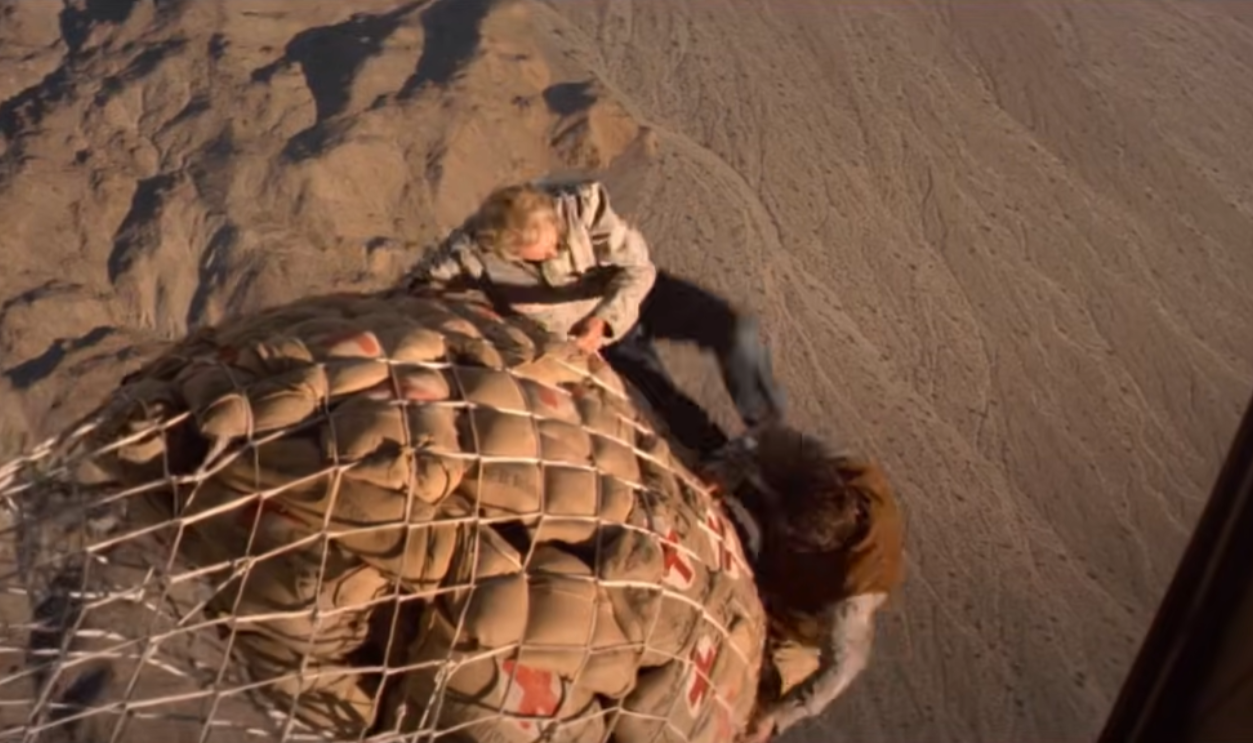 Screenshot from The Living Daylights, MGM (1987)
The Stuntmen Really Were Thousands Of Feet Up
According to the official James Bond production history, stunt performers B.J. Worth and Jake Lombard performed the aerial confrontation while suspended approximately 6,500 feet above the Mojave Desert. The cargo net weighed about 1,500 pounds, and the aircraft traveled at roughly 100 knots during filming. A safety specialist remained available to assist if necessary, while carefully disguised parachutes provided an additional precaution.
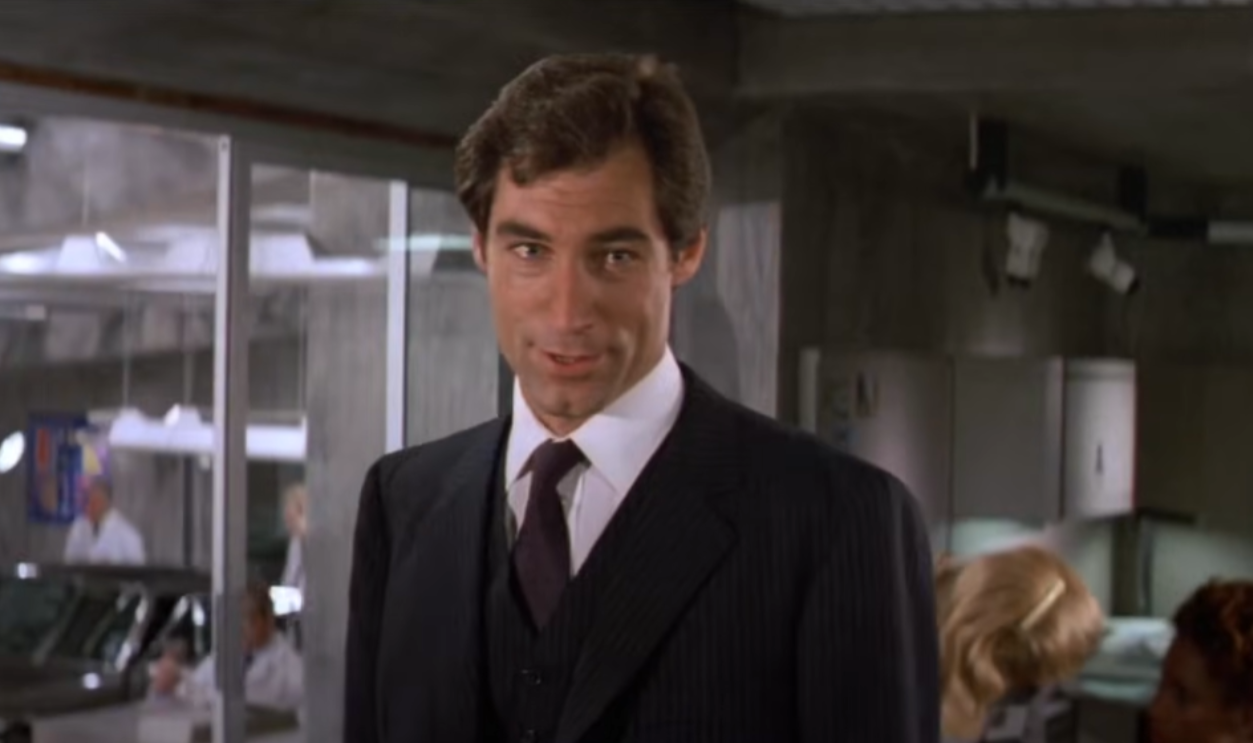 Screenshot from The Living Daylights, MGM (1987)
The Wind Made Everything Unpredictable
The stunt became especially difficult because the cargo net behaved unpredictably as the aircraft moved through the air. Worth later described how the net began whipping violently after his opponent's character fell away, leaving him struggling to maintain control. Additional close-ups were filmed with Dalton and fellow actor Andreas Wisniewski in a controlled studio environment, allowing the editors to combine genuine aerial stunt work with safer dramatic coverage.
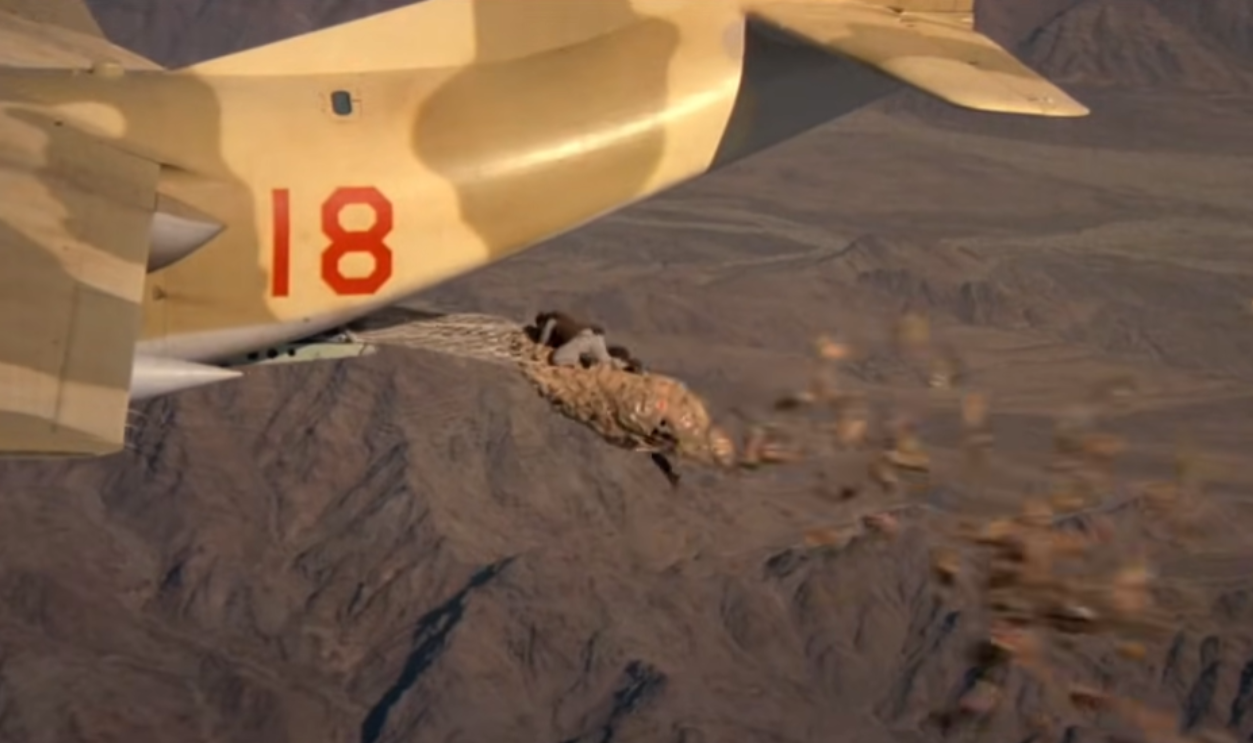 Screenshot from The Living Daylights, MGM (1987)
Die Hard's Final Fall Wasn't Entirely An Illusion
The 1988 action classic Die Hard ended with one of cinema's most memorable confrontations, as Alan Rickman's Hans Gruber falls from the fictional Nakatomi Plaza. The sequence includes a close-up of Gruber's shocked expression as he begins his descent, creating an unusually convincing moment of surprise. Part of that reaction came from the fact that Rickman actually performed a substantial fall during production.
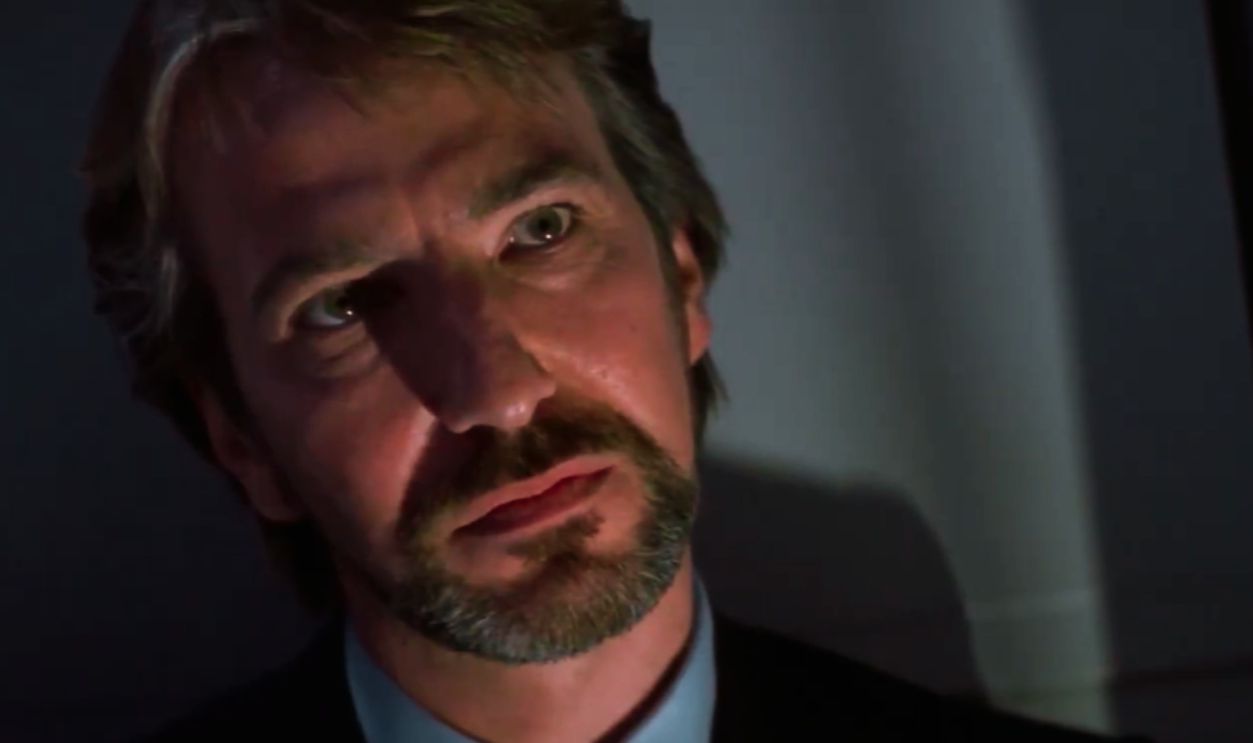 Screenshot from Die Hard, The Walt Disney Company (1988)
Rickman Agreed To Make The Drop Himself
The actor volunteered to perform the stunt rather than leaving the entire sequence to a double. The production arranged for him to fall approximately 40 feet onto a specially prepared landing surface, allowing the camera to capture his genuine expression during the descent. For a performer whose career had previously centered heavily on theater, it was an unusually demanding physical challenge.
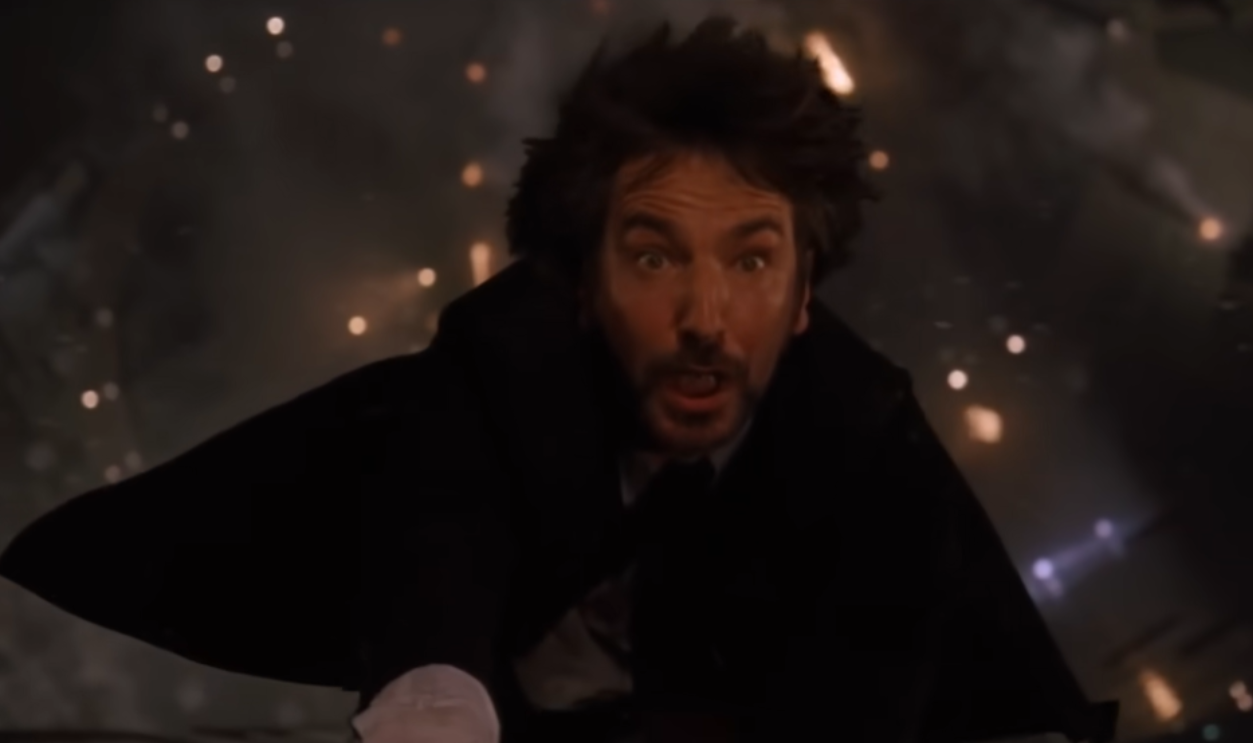 Screenshot from Die Hard, 20th Century Studios (1988)
The Crew Surprised Him On Purpose
Rickman was told that the stunt team would release him after a countdown, giving him time to prepare for the fall. Instead, the crew deliberately released him earlier than expected, producing the startled expression that appeared in the finished movie. The American Film Institute later highlighted the story as one of the film's memorable production details, illustrating how a brief facial reaction could require both elaborate stunt preparation and an unexpected moment of improvisation.
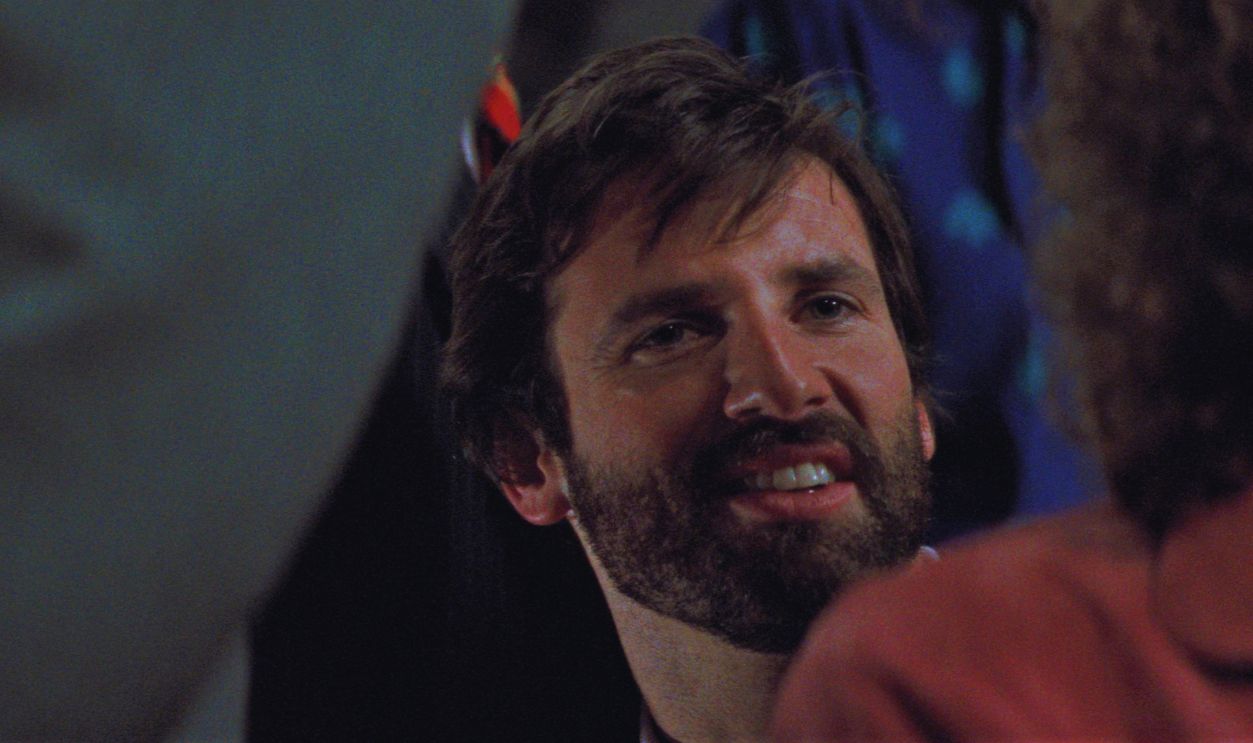 Screenshot from Die Hard, 20th Century Studios (1988)
Licence To Kill Featured A Tanker On Two Wheels
Timothy Dalton returned as James Bond in 1989's Licence to Kill, which concluded with an enormous chase involving heavy tanker trucks on a winding mountain road. One of the most spectacular moments occurs when Bond maneuvers a tanker onto one side, narrowly avoiding an approaching threat. The stunt looks almost impossible considering the vehicle's enormous size, but the production found a remarkable way to make it happen.
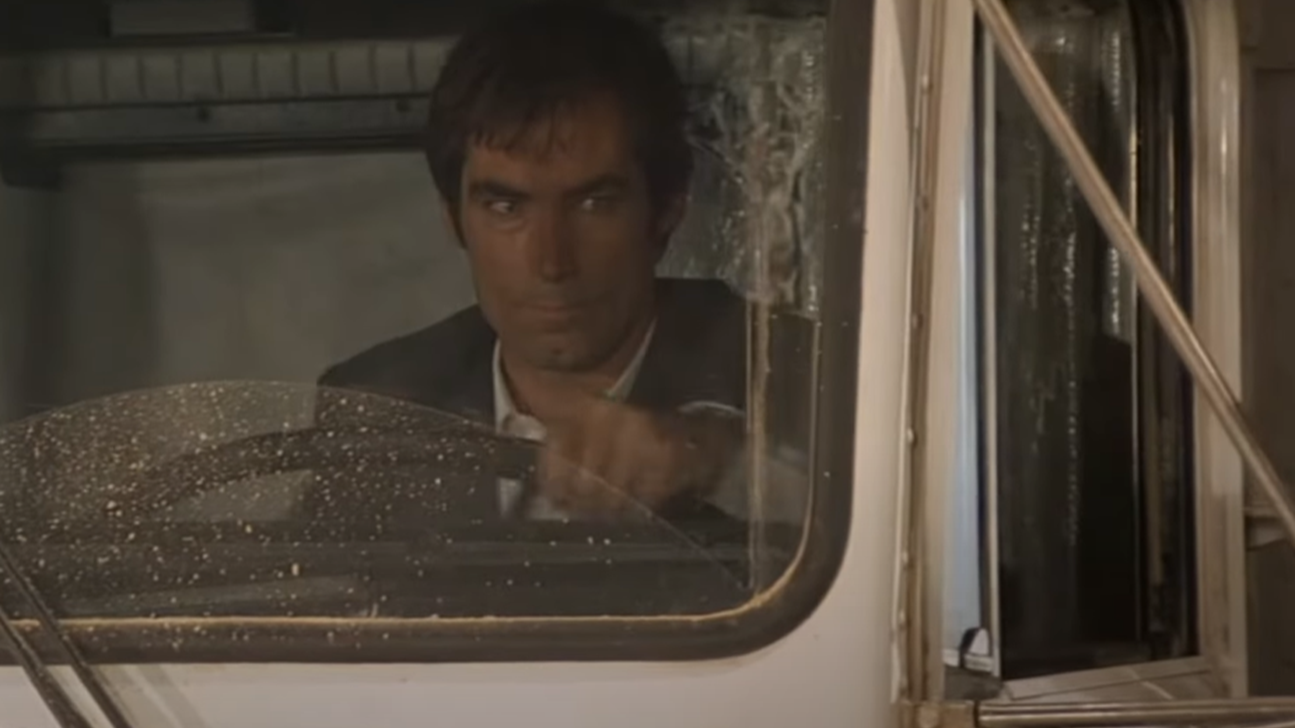 Screenshot from Licence to Kill, MGM (1989)
The Crew Originally Built A Special Rig
The special-effects team initially developed equipment intended to help tilt the tanker safely during the maneuver. With a vehicle weighing several tonnes, its balance and handling had to be considered carefully before attempting the shot. However, stunt driver Rémy Julienne believed he could accomplish the move by driving onto a specially positioned ramp, eliminating the need for the original mechanical solution.
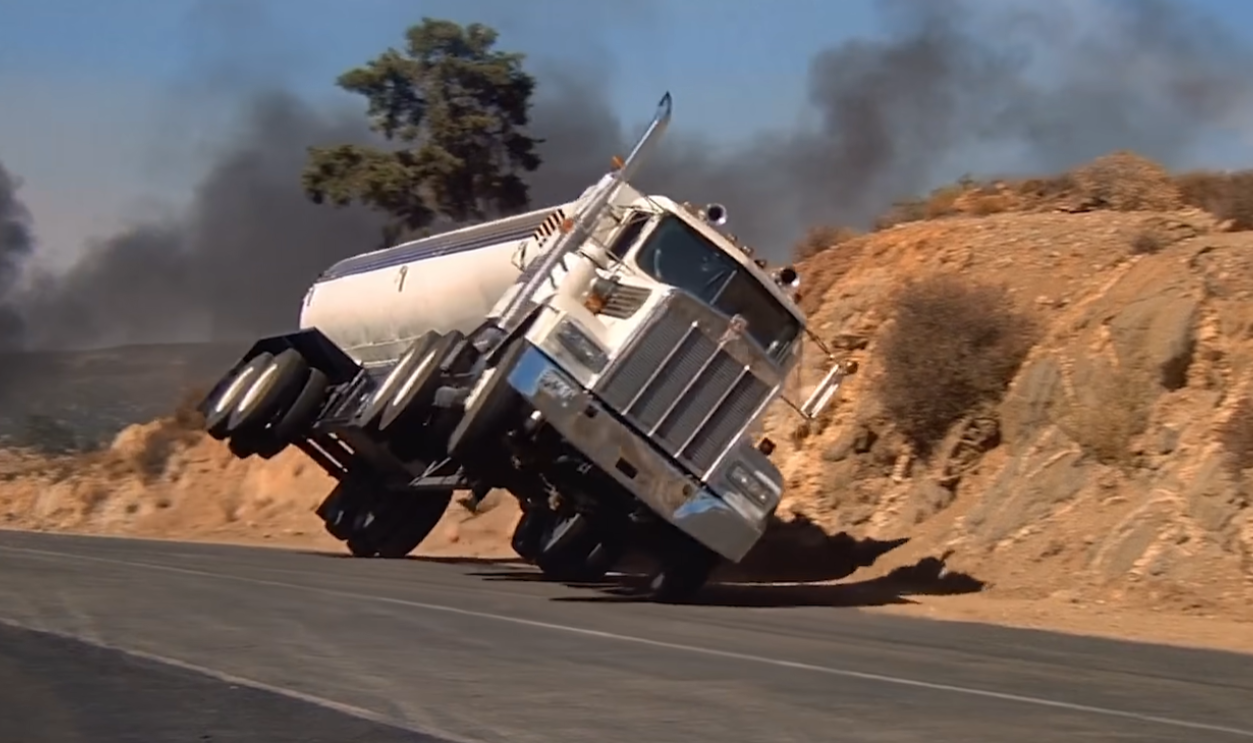 Screenshot from Licence to Kill, MGM (1989)
The Driver Made The Impossible Look Easy
Julienne arrived at the location and successfully drove the tanker up the ramp, balancing it on one side in a genuinely extraordinary display of vehicle control. Special-effects supervisor Chris Corbould later recalled being astonished by the stunt, particularly because the driver performed it without the elaborate rig that had originally been prepared. The final sequence became one of the film's defining action moments, demonstrating how professional driving expertise could sometimes accomplish what seemed to require complicated mechanical trickery.
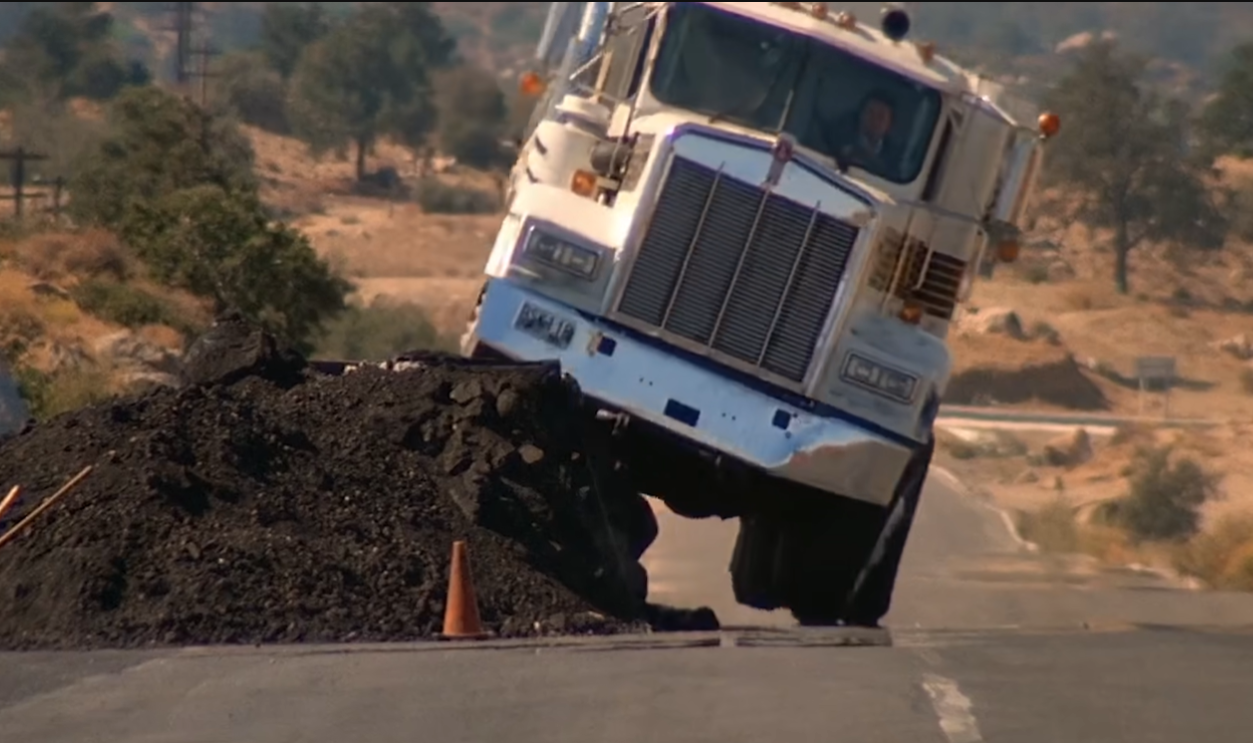 Screenshot from Licence to Kill, MGM (1989)
You May Also Like
How These Bands Came Up With Their Names
Celebrity Kids Who Dropped Their Famous Last Names
Names that most people today haven't heard of, but were once bigger than presidents.
Sources: 1, 2, 3, 4, 5, 6, 7, 8, 9, 10, 11, 12, 13, 14, 15, 16