More Than Annette
Donna Pescow could have been remembered forever as the heartbroken Annette from Saturday Night Fever (1977). Instead, she built an unusually durable television career, starring in sitcoms across four different decades and became recognizable to generations who had no idea she once chased John Travolta around a Brooklyn disco.
 Michael Ochs Archives, Getty Images
Brooklyn Was Home
Pescow was born in Brooklyn, New York, on March 24, 1954. Her father, Marty, operated a newsstand at 17 Battery Place in downtown Manhattan, while Donna attended Sheepshead Bay High School. Acting interested her early, and New York gave the aspiring performer plenty of opportunities to pursue it.
 ABC Public Relations, Wikimedia Commons
She Studied Acting
After high school, Pescow studied at Manhattan's American Academy of Dramatic Arts. Students were encouraged to eliminate regional accents, and Pescow worked diligently to lose her unmistakable Brooklyn sound. She also studied with Lee Strasberg and began working onstage, including an early Off-off-Broadway musical called Poor Old Fool.
 By Artemisboy [Public domain], via Wikimedia Commons, Wikimedia Commons
The Stage Came First
Pescow's early career was rooted in theater rather than movies. After graduating, she toured in Eugene O'Neill's Ah, Wilderness! with an impressive company that included Richard Kiley, Barbara Bel Geddes, and Sam Bottoms under director George Schaefer. Film acting, however, was still entirely new territory when her life-changing audition arrived.

Annette Took Six Auditions
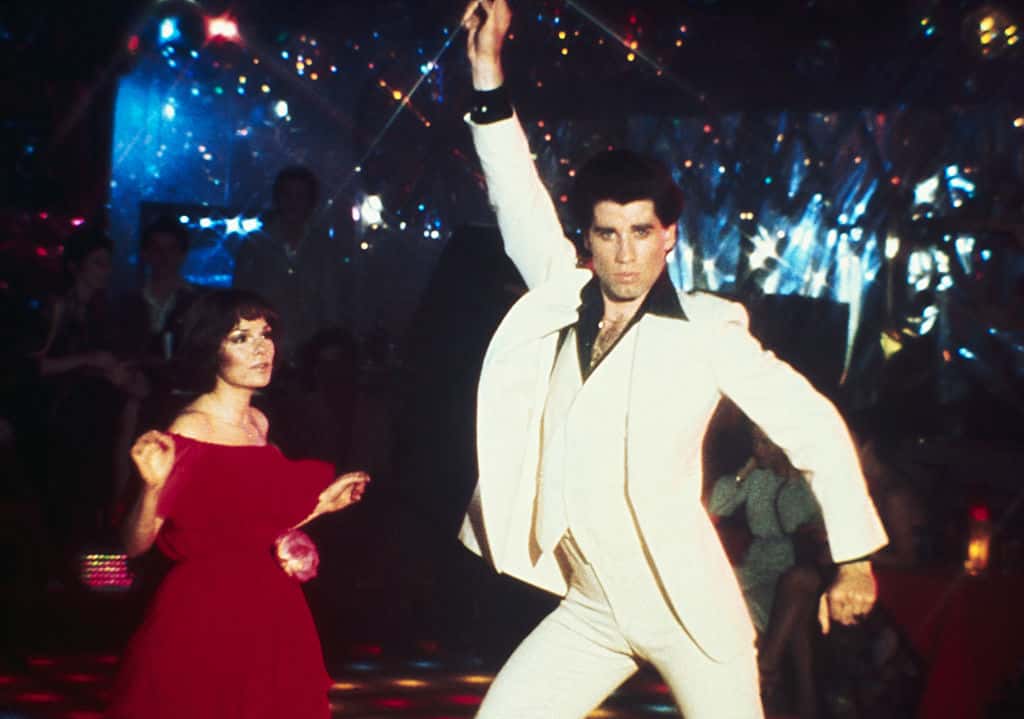
Pescow had never auditioned for a movie when she went after Annette in Saturday Night Fever (1977). She ultimately auditioned six times, three while John G. Avildsen was attached to direct and another three for replacement director John Badham. When Pescow finally won the part, she was 22 and still accustomed to working Christmas seasons selling ornaments at Bloomingdale's.
 Screenshot from Saturday Night Fever, Paramount Pictures (1977)
Brooklyn Came Back
There was one problem: acting school had done its job too well. Casting director Shirley Rich couldn't hear Brooklyn in the Brooklyn-born actress. She advised Pescow to go home and spend time with her family. Pescow did exactly that, reacquiring the accent she had spent years learning to suppress before returning to audition.

She Changed For Annette
Pescow also physically transformed herself for Annette, reportedly gaining roughly 40 pounds for the role. The transformation helped set Annette apart from Karen Lynn Gorney's more sophisticated Stephanie, the woman Tony Manero desperately wanted as his dance partner and ticket toward something better.
 Screenshot from Saturday Night Fever, Paramount Pictures (1977)
Annette Was Treated Terribly
Annette spends much of Saturday Night Fever (1977) longing for Tony, but Tony repeatedly humiliates and rejects her. Her story eventually becomes considerably darker when members of Tony's group force themselves on her. Pescow made Annette's need to be loved painfully human rather than allowing the character to become merely the unwanted girl chasing the hero.
 creenshot from Saturday Night Fever, Paramount Pictures (1977), Modified
The Movie Changed Everything
John Badham's Saturday Night Fever (1977), starring John Travolta, Karen Lynn Gorney, Barry Miller, Joseph Cali, and Pescow, became a cultural phenomenon. Pescow suddenly went from an unknown New York stage actress to a recognizable movie performer. The New York Film Critics Circle placed her among its runners-up for Best Supporting Actress, behind winner Sissy Spacek.
Daytime Television Called
Pescow quickly moved into television. In 1977, she joined ABC's One Life to Live as Celena Arquette. The stint lasted less than a year, but it began a surprisingly important relationship between Pescow and daytime drama. She would eventually appear on three long-running ABC soaps during three different phases of her career.

She Played A Garland
In the television biopic Rainbow, Pescow portrayed Jinnie Gumm, one of Judy Garland's older sisters. Andrea McArdle played the young Garland, with Don Murray and Piper Laurie portraying her parents. Directed by actor-turned-director Jackie Cooper, the production aired in 1978, keeping Pescow visible while an even bigger television opportunity approached.

Angie Made Her A Star
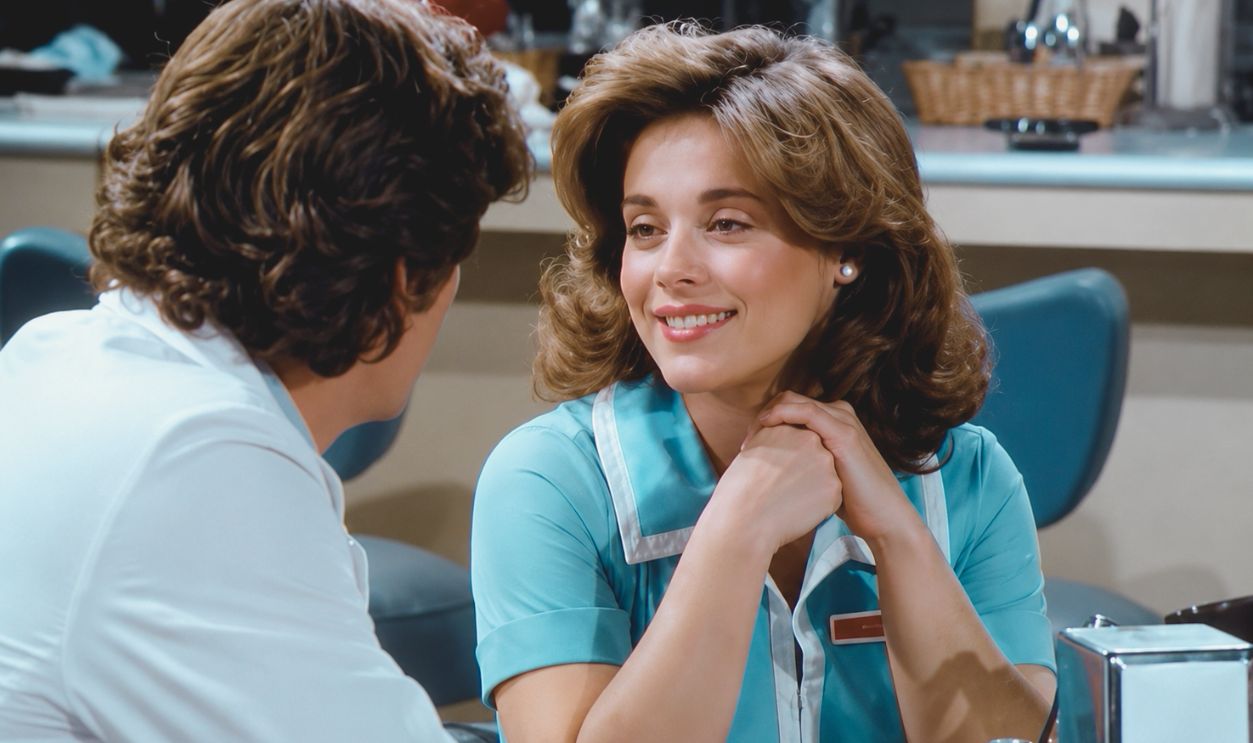
Co-creator Garry Marshall wanted Pescow for Angie, an ABC sitcom built around working-class Philadelphia waitress Angie Falco. Robert Hays played her affluent boyfriend and eventual husband Brad Benson, while Doris Roberts and Debralee Scott played Angie's mother Theresa and sister Marie. The series premiered in 1979 and quickly gave Pescow something Saturday Night Fever hadn't: top billing.
 Screenshot from Angie, ABC (1979–1980), Modified
Angie Started Strong
The class differences between Angie's Italian-American family and Brad's wealthy background drove much of the comedy. Angie didn't merely do respectably. It was reportedly among the top-rated shows during its first season, and historical ratings compilations place it around No. 5 for 1978–79. “Different Worlds,” performed by Maureen McGovern, reached No. 18 on the Billboard Hot 100 and No. 1 on the Adult Contemporary chart. Pescow had successfully made the jump from dramatic movie supporting player to sitcom lead.
 Screenshot from Angie, ABC (1979–1980)
Recognition Followed Angie
Angie lasted only two seasons and 36 episodes, ending in 1980, but Pescow's performance earned significant recognition. She received a 1980 Golden Globe nomination for Best Actress in a Television Series, Musical or Comedy, as well as a People's Choice Award nomination for her work on the series.
 Screenshot from Angie, ABC (1979–1980)
The Eighties Kept Calling
After Angie, Pescow worked steadily across television. She appeared in The Love Boat, Cassie & Co., Fantasy Island, Trapper John, M.D., Hotel, Finder of Lost Loves, and Mr. Belvedere. She also played Wendy in Andrew Lane's adventure comedy Jake Speed (1986), opposite Wayne Crawford, Dennis Christopher, and John Hurt.

She Broke Daytime Ground
In 1983, Pescow accepted one of her most historically significant roles, psychiatrist Dr. Lynn Carson on All My Children. Lynn was openly lesbian, making her the first openly lesbian character on an American daytime soap opera. For early-1980s network television, simply identifying a sympathetic professional woman as gay was groundbreaking.
 Screenshot from All My Children, ABC (1982)
The Story Had Limits
The storyline involved Devon McFadden, played by Tricia Pursley, developing feelings for Lynn while struggling with what those feelings meant. Lynn acknowledged being a lesbian but did not become part of an on-screen same-sex romance; she ultimately rebuffed Devon's attraction. The storyline now looks restrained, but it represented territory American daytime television had essentially never explored.
 Screenshot from All My Children, ABC (1982)
Donna Garland Arrived
In 1987, Pescow returned to regular sitcom work as Donna Garland on Out of This World. Maureen Flannigan starred as Donna's teenage daughter Evie, who discovers that her absent father Troy is actually an extraterrestrial. Burt Reynolds supplied Troy's voice, while Joe Alaskey played Donna's brother Beano during the show's early seasons.
 Screenshot from Out of This World, syndicated television (1987–1991)
Mothering An Alien
The wonderfully absurd premise gave Pescow the job of grounding the show. Donna had married an alien, raised their half-alien daughter on Earth, and now had to cope with Evie's supernatural abilities alongside ordinary teenage problems. Pescow's sitcom instincts helped make the increasingly fantastic situations feel like family comedy rather than pure science-fiction parody.
 Screenshot from Out of This World, syndicated television (1987–1991)
Four More Seasons
Out of This World ran in first-run syndication from 1987 until 1991, giving Pescow four seasons and 96 episodes as Donna Garland. That longevity is easy to overlook today, but it meant she had now anchored substantial runs on two completely different sitcoms, first as the young romantic lead and then as the mother of a teenager.
 Screenshot from Out of This World, syndicated television (1987–1991)
The Nineties Stayed Busy
Pescow's profile became quieter after Out of This World, but she never disappeared. During the 1990s she appeared on Nash Bridges, Clueless, NYPD Blue, and Pauly, and played Rosemary Monroe in the television movie Dead Husbands. She also appeared as Bonnie Benitez in Ivory Tower (1998).
 Screenshot from Out of This World, syndicated television (1987–1991)
Another Soap Came Along
In 1999, Pescow returned to ABC daytime as Gertrude Morgan on General Hospital. Gertrude was the scheming aunt of Chloe Morgan, played by Tava Smiley, giving Pescow the opportunity to embrace a considerably more villainous persona. She remained with the soap until 2001.

Even Stevens Found Her
Around the same time, Disney approached Pescow about another family comedy. The resulting Even Stevens premiered in 2000, with Pescow as Eileen Stevens, mother of the wildly mismatched Stevens children. The cast included Tom Virtue as Steve, Christy Carlson Romano as Ren, Nick Spano as Donnie, and a very young Shia LaBeouf as chaos-generating Louis.
 Screenshot from Even Stevens, Disney Channel (2000–2003)
Another Generation Knew Her
Pescow later remembered the Even Stevens cast as genuinely close, describing the series as a throwback to family sitcoms of the 1980s. She watched LaBeouf and Romano mature as performers while the show developed a devoted young audience. Suddenly children who had never heard of Annette or Angie knew Donna Pescow as somebody's mom.
 John Mathew Smith & www.celebrity-photos.com, Wikimedia Commons
She Stepped Behind Camera
Even Stevens ran three seasons through 2003, with Pescow appearing in 65 episodes and directing three. She returned as Eileen in the Disney Channel finale movie The Even Stevens Movie. Her work on the series brought three Daytime Emmy nominations, giving yet another generation a completely different association with her career.

She Never Really Stopped
Pescow continued working through the following decades, appearing on Crossing Jordan, Cold Case, New Girl, The Flash, Truth Be Told, Welcome to Chippendales, and Grey's Anatomy. In 2007 she even appeared in the famous series finale of The Sopranos as Donna Parisi, wife of Dan Grimaldi's Patsy Parisi.

Her Career Came Full Circle
Pescow married Arnold Zelonka in 1987, and the couple have a son. Professionally, she eventually found herself revisiting the movie that changed everything. In 2023, she reunited with John Travolta for Capital One's "Holiday Night Fever" commercial, playing a shoe-store employee opposite Travolta's disco-dancing Santa nearly half a century after Saturday Night Fever (1977).

Three Generations Remember Her
Donna Pescow's career is unusual because its defining role depends almost entirely on your age. One generation sees Annette from Saturday Night Fever (1977), another remembers Angie Falco or Donna Garland, and another grew up with Eileen Stevens. More than five decades after that first movie audition, Pescow's greatest accomplishment may be how many times she successfully introduced herself all over again.
 Screenshot from Saturday Night Fever, Paramount Pictures (1977), Modified
You May Also Like:
The Highest Grossing Movie The Year You Were Born
The 10 Best Picture Oscar Winners Of The 1970s—And the 10 Films That Actually Should’ve Won