A Superhero Who Survived Her Movie
When Helen Slater first donned Supergirl's famous red cape in 1984, Hollywood hoped it had found the star of another lucrative superhero franchise. Instead, the movie became a commercial disappointment. But while plans for further adventures fell by the wayside, Slater's association with the character endured. More than four decades later, she remains a beloved figure among generations of superhero fans.
Hollywood Wanted Another Superman
When Richard Donner's Superman (1978) turned Christopher Reeve into an international star, producers Alexander and Ilya Salkind realized that comic book adaptations offered enormous commercial potential. Superman's Kryptonian cousin, Supergirl, had been appearing in DC Comics since 1959 and seemed a natural candidate for her own franchise.
The producers began developing the movie before filming commenced on Superman III (1983). They hoped to replicate their earlier success by introducing another relatively unknown performer to movie audiences.
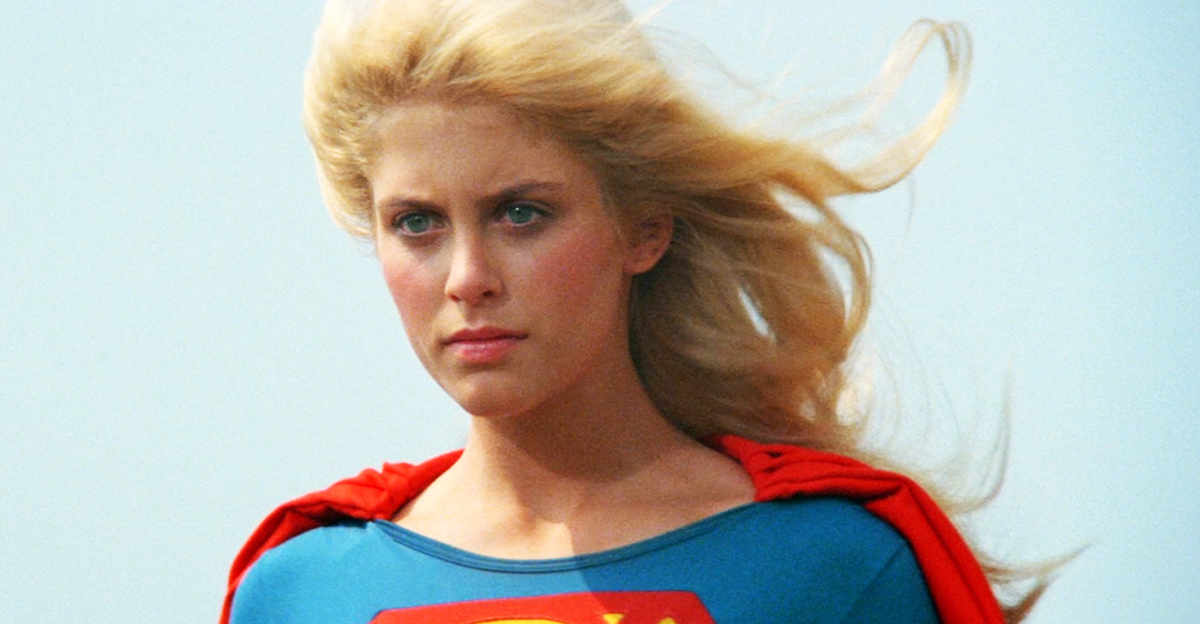
 Screenshot from 'Supergirl' (1984), Tri-Star Pictures
An Actress Fresh Out Of School
Born on December 15, 1963, in New York, Helen Slater graduated from New York City's High School of the Performing Arts, the institution immortalized in Alan Parker's Fame (1980).
Her professional experience consisted primarily of television commercials and an appearance in the 1982 ABC Afterschool Special Amy & the Angel. Slater had decided to spend a year pursuing acting opportunities before continuing her education. She could hardly have anticipated the magnitude of the opportunity awaiting her.
She Beat Hundreds Of Competitors
The search for Supergirl attracted hundreds of actresses, including such recognizable young performers as Brooke Shields and Demi Moore. However, the producers ultimately settled on Slater, whose relative anonymity allowed audiences to associate her directly with the character.
After auditioning in New York and completing a screen test in England, Slater secured a three-picture contract. Her reported salary for the first movie was $75,000. Hollywood was entrusting an extraordinarily expensive production to an actress who had never appeared in a theatrical feature.
 Screenshot from Supergirl, TriStar Pictures (1984)
Becoming The Girl Of Steel
Slater underwent four months of intensive physical preparation. Besides improving her strength and endurance, she had to master the demanding wirework necessary to create the illusion of flight.
Director Jeannot Szwarc, whose previous movies included Jaws 2 (1978) and Somewhere in Time (1980), also needed Slater to establish two distinct personalities. Her confident, powerful Supergirl had to contrast convincingly with the comparatively timid Linda Lee, the identity she assumed while living among ordinary humans.
She Was Surrounded By Legends
The producers assembled an impressive supporting cast. Faye Dunaway portrayed the power-hungry sorceress Selena, Peter O'Toole appeared as Supergirl's mentor Zaltar, and Mia Farrow played her mother, Alura.
Brenda Vaccaro and Hart Bochner also appeared, while Marc McClure reprised his role as photographer Jimmy Olsen from the Superman movies. Slater later recalled receiving acting advice from O'Toole during production. For a young performer barely removed from drama school, the experience represented an extraordinary education in filmmaking.
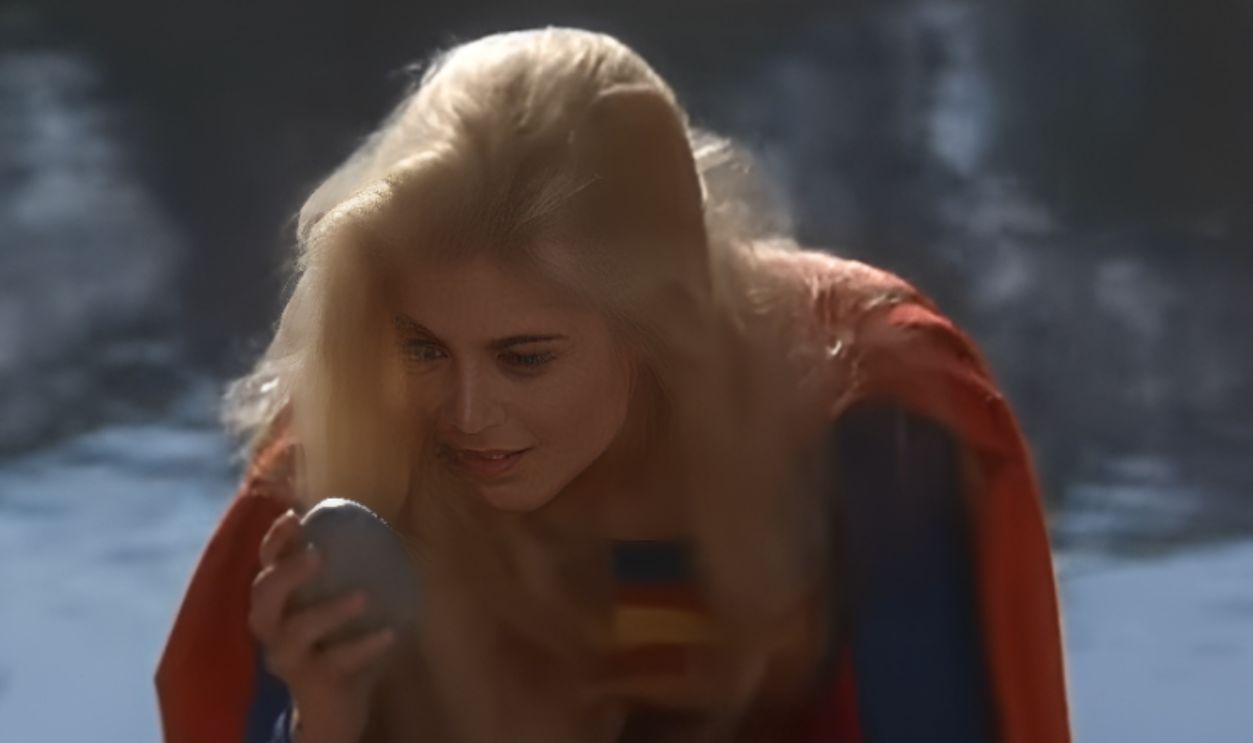 Screenshot from Supergirl, TriStar Pictures (1984)
Superman Never Showed Up
One disappointment was the absence of Christopher Reeve. Although his participation had been contemplated during the movie's development, he ultimately never appeared.
Instead, audiences were told that Superman was away on a mission. His absence deprived the filmmakers of an obvious opportunity to connect their new heroine with the established franchise.
Distribution complications further undermined the project. Warner Bros. relinquished its distribution rights, and Tri-Star Pictures eventually released a shortened version of the movie in American theaters in November 1984.
The Franchise Never Took Flight
With a reported production budget of $35 million, Supergirl (1984) grossed approximately $14 million at the North American box office. Reviews were generally disappointing, with critics finding fault with the storyline and its uneven combination of fantasy, comedy, and superhero adventure.
Slater herself escaped much of the criticism. Roger Ebert praised her ability to approach the superhero character with the same sincerity as Christopher Reeve, although he felt the filmmakers gave her insufficient opportunity to demonstrate it. In any case, the disappointing financial results pretty much ended any plans they may have had for further installments, leaving Slater's three-picture superhero contract unfulfilled.
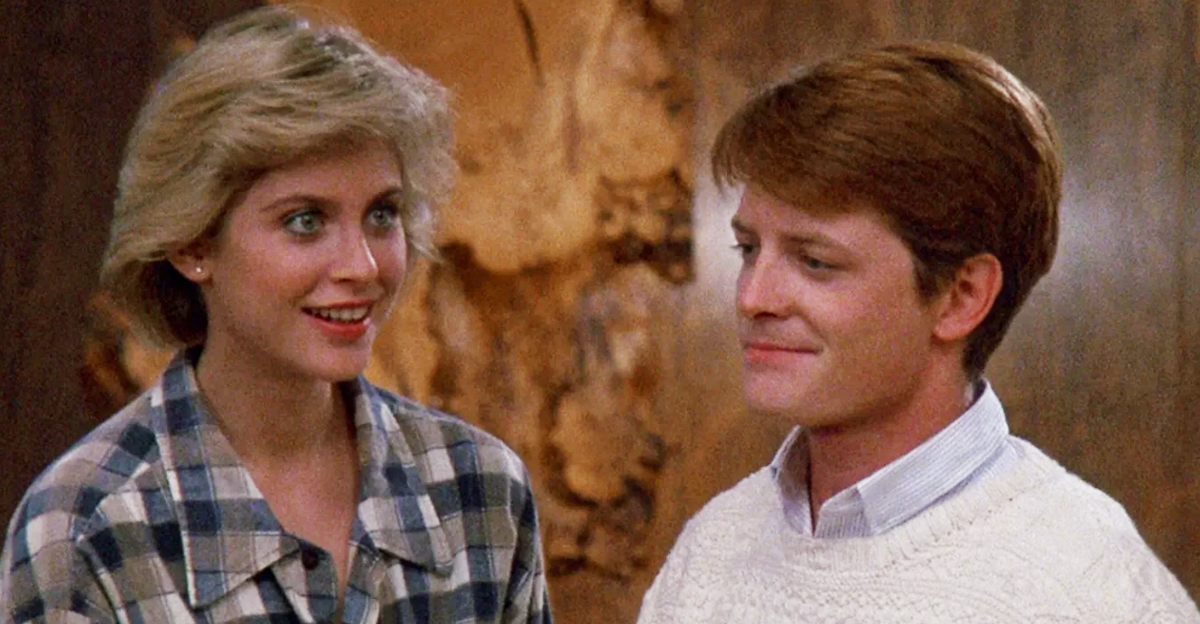 Screenshot of 'The Secret of My Success', (1987), Universal Pictures
Her Career Was Far From Over
Slater's next movie, Matthew Robbins' The Legend of Billie Jean (1985), became another commercial disappointment that later acquired a devoted following. She portrayed a young Texas woman whose fight against injustice transforms her into a symbol of teenage rebellion.
Greater commercial success followed with Ruthless People (1986), alongside Danny DeVito and Bette Midler, and Herbert Ross' The Secret of My Success (1987), opposite Michael J. Fox. She subsequently appeared with Billy Crystal in Ron Underwood's enormously successful comedy City Slickers (1991).
She Returned To The Superman Universe
Slater continued acting in film and television while pursuing her interests in music, releasing several albums showcasing her abilities as a pianist, singer, and songwriter.
However, her association with the superhero universe never disappeared. In 2007, she appeared in Smallville as Lara-El, Superman's biological mother. Beginning in 2015, she portrayed Eliza Danvers, the adoptive mother of Melissa Benoist's Kara, in the television series Supergirl.
For longtime fans, seeing the original big-screen Supergirl welcoming a new generation's interpretation of the character was particularly enjoyable.
 Nightscream, Wikimedia Commons
She Welcomed A New Supergirl
When director Craig Gillespie's Supergirl (2026) arrived in theaters, Slater enthusiastically supported her successor, Australian actress Milly Alcock.
Having already praised Alcock's brief appearance in James Gunn's Superman (2025), Slater remained equally enthusiastic after seeing the new movie, describing Alcock's performance as "astonishing." Despite the film's disappointing opening weekend, Slater praised its leading actress's strength, fierceness, and comic timing.
Having earned a doctorate in mythological studies, Slater also welcomed the character's darker, more irreverent interpretation, arguing that familiar mythological figures need to evolve to remain culturally relevant.
The Girl Of Steel Endures
Home video, television broadcasts, and subsequent releases featuring restored footage helped Supergirl (1984) find an audience that had largely eluded it during its original theatrical run. Its colorful aesthetic, Jerry Goldsmith's stirring musical score, and Slater's earnest performance have become central to its nostalgic appeal.
Slater has embraced her place in superhero history, appearing at fan conventions and speaking affectionately about the experience that launched her career.
Hollywood may have abandoned its ambitious plans for a Supergirl franchise in the 1980s, but audiences never abandoned Helen Slater. Her movie's commercial failure ended up being far less enduring than the character she brought to life.
You May Also Like:
Soaring Facts About Margot Kidder, The One Who Dared To Fly
The Legendary Michael J. Fox—His Best Roles In Movies And Television