He Looked Like Hercules
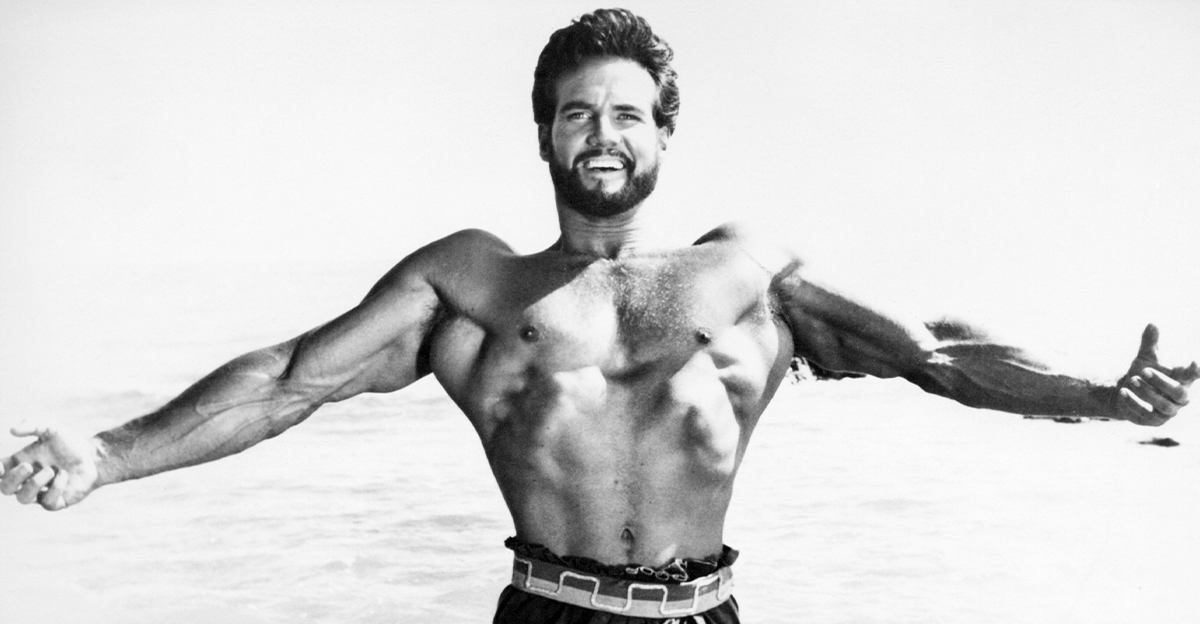
Long before computer-generatead superheroes filled movie screens, Steve Reeves looked almost impossibly heroic. The champion bodybuilder became an international sensation as Hercules, inspired future fitness icons, and ranked among Europe’s biggest stars. But after years of playing seemingly indestructible heroes, injuries and disillusionment helped persuade Reeves to leave Hollywood when he was still remarkably young.
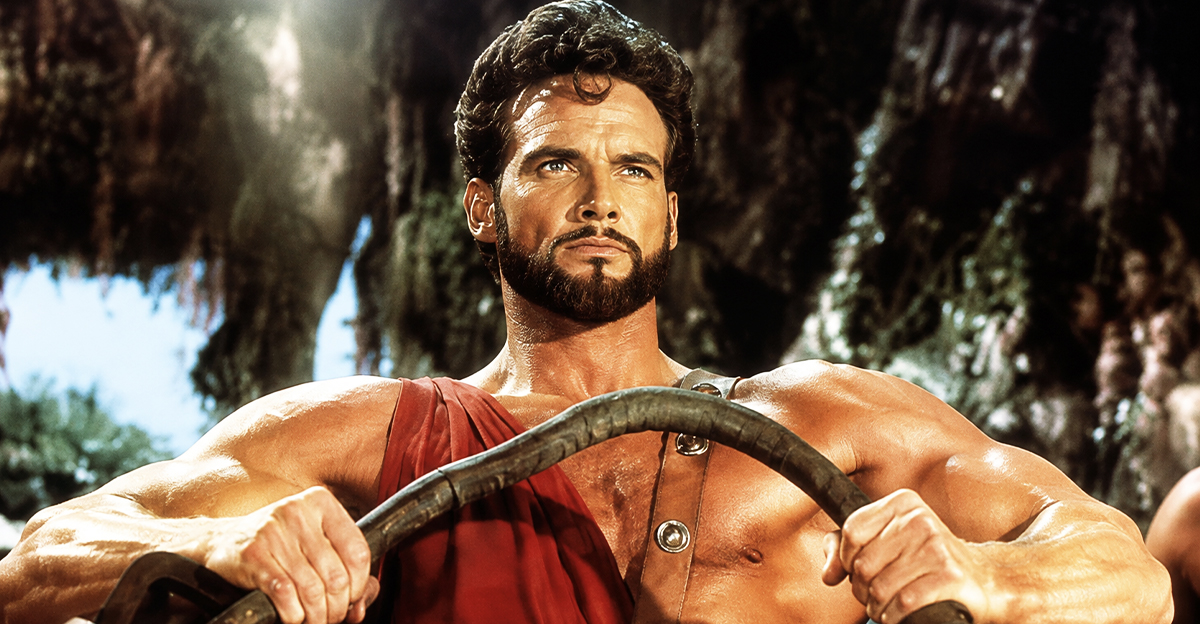 Screenshot of Steve Reeves in 'Hercules Unchained' (1959), AMC Networks
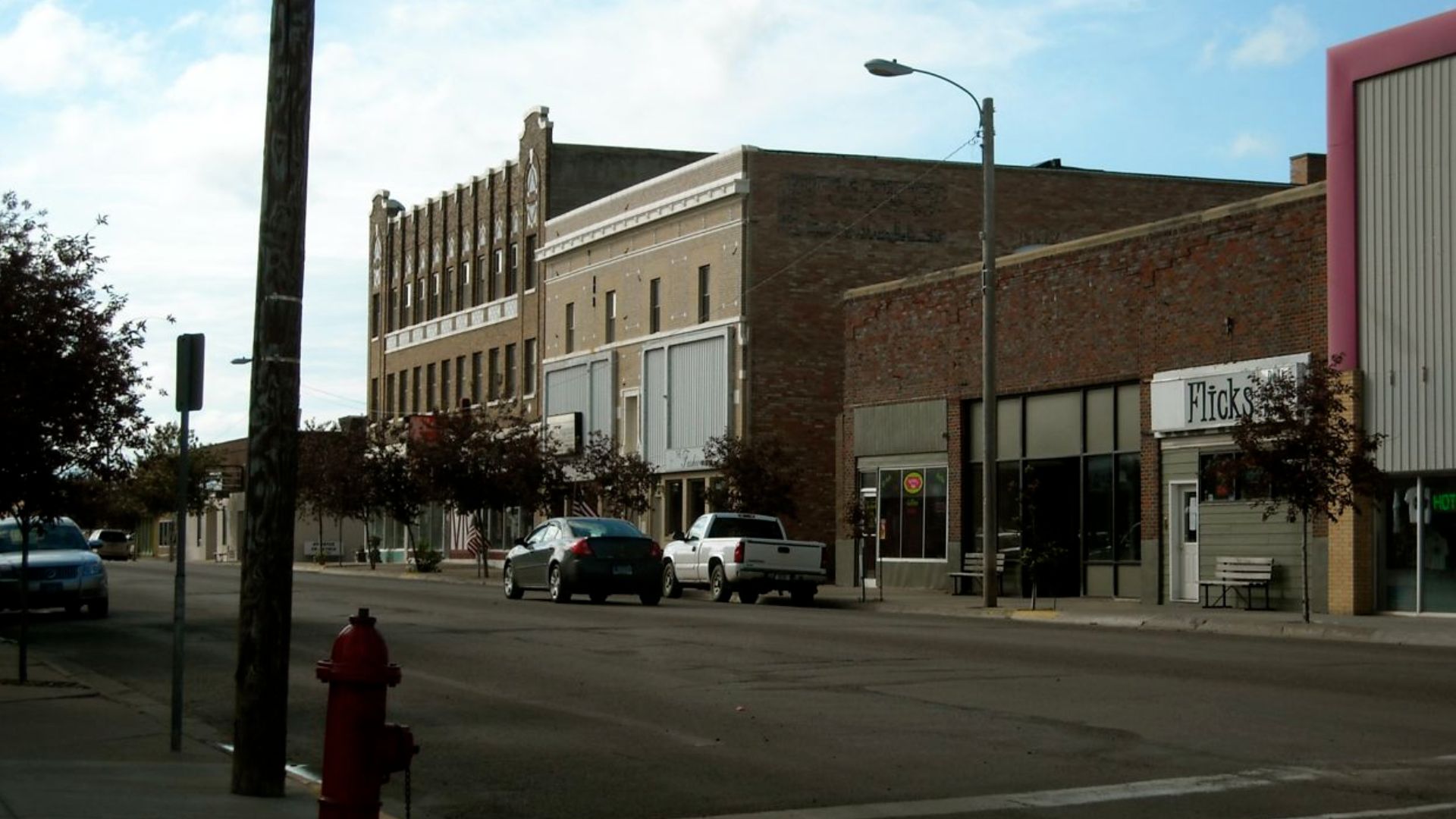
A Montana Beginning
Stephen Lester Reeves was born January 21, 1926, in Glasgow, Montana. His father, Lester Dell Reeves, was a farmer who died in an accident when Steve was still very young. His widowed mother, Goldie, eventually took her son west, beginning a childhood far removed from the European movie sets that later made him famous.
California Changed Everything
When Reeves was about 10, he and his mother settled in Oakland, California. He grew into an athletic teenager and attended Castlemont High School. Reeves later remembered developing his leg muscles while bicycling through Oakland’s hills on a newspaper route, unknowingly laying some early foundations for the extraordinary physique that would define his life.
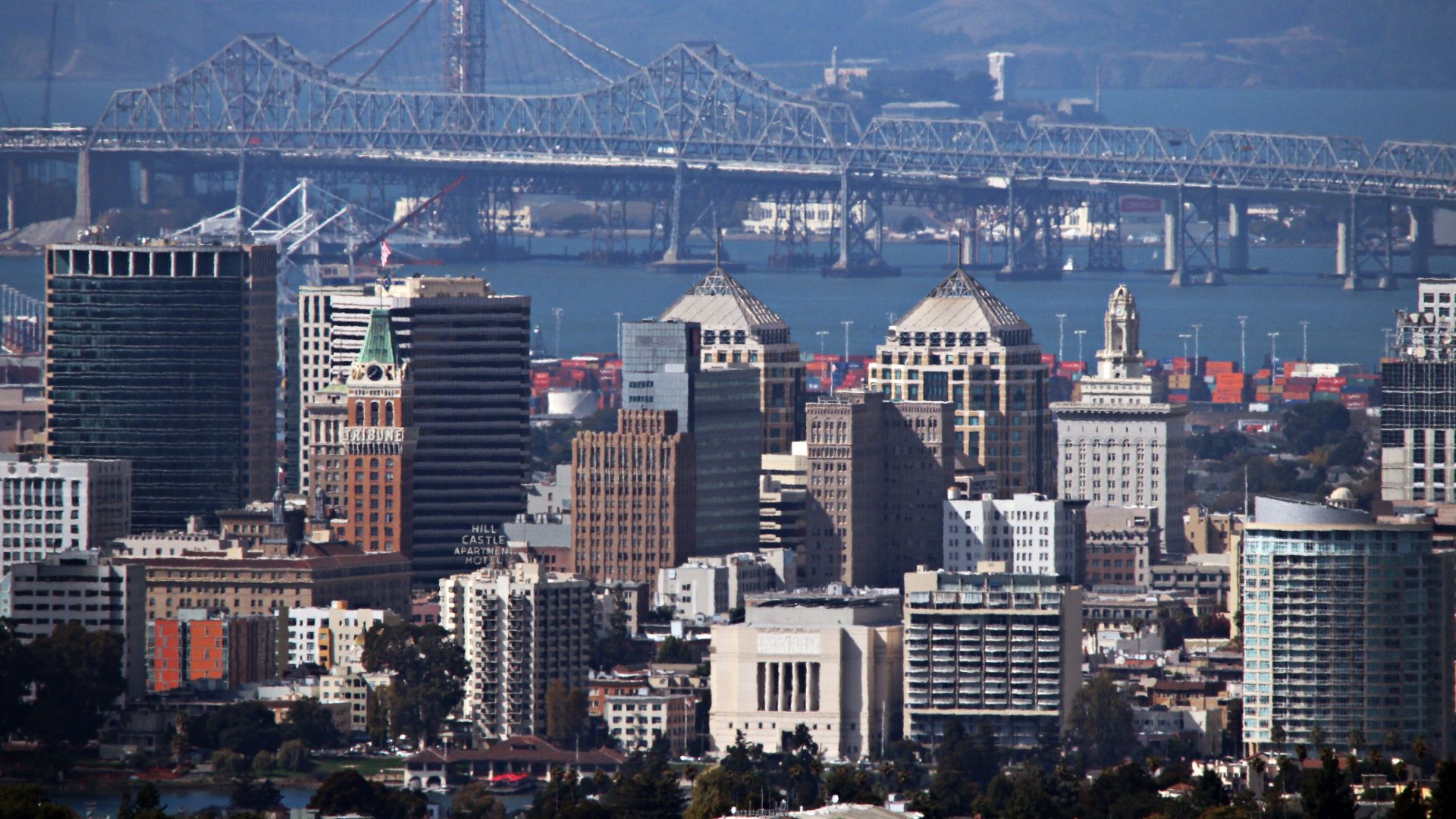 Basil D Soufi, Wikimedia Commons
He Discovered Bodybuilding
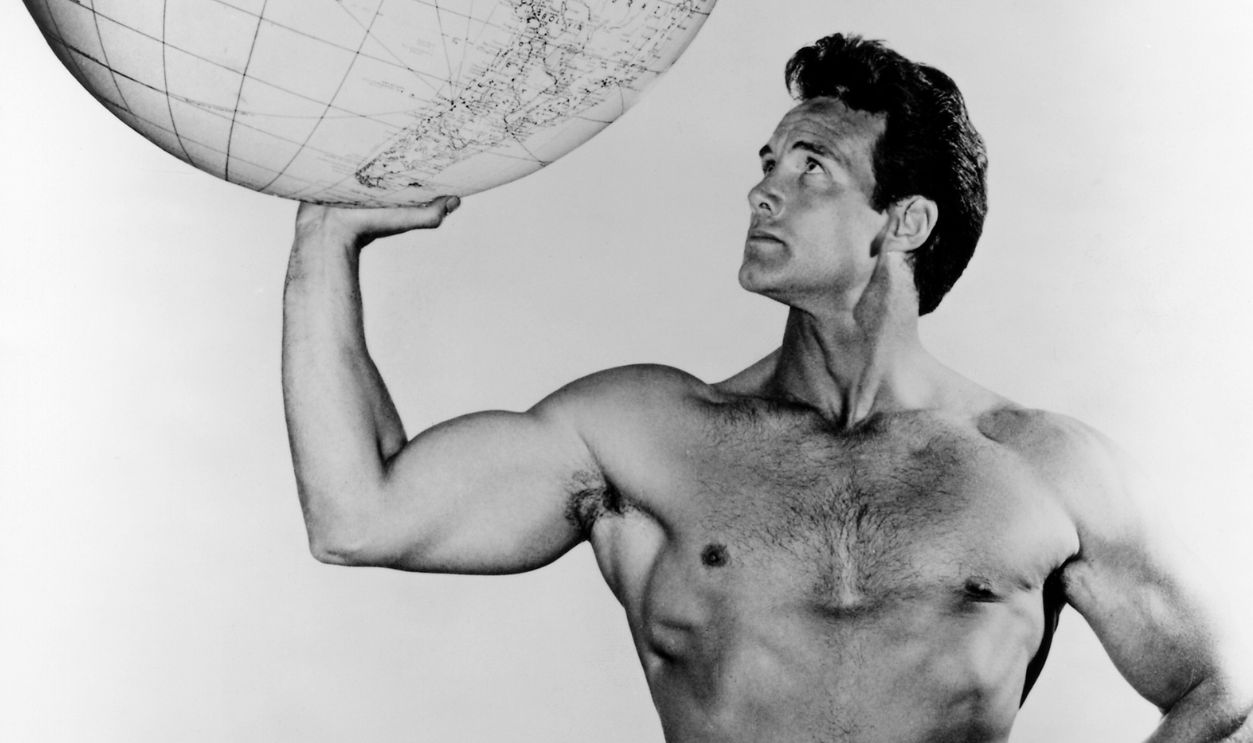
Reeves started serious weight training at around the time he was 16 and eventually trained at Ed Yarick’s gym in Oakland. His body responded extraordinarily quickly. At a time before modern bodybuilding’s steroid-driven physiques, Reeves developed the combination of broad shoulders, narrow waist, powerful legs, and symmetry that would become his trademark.
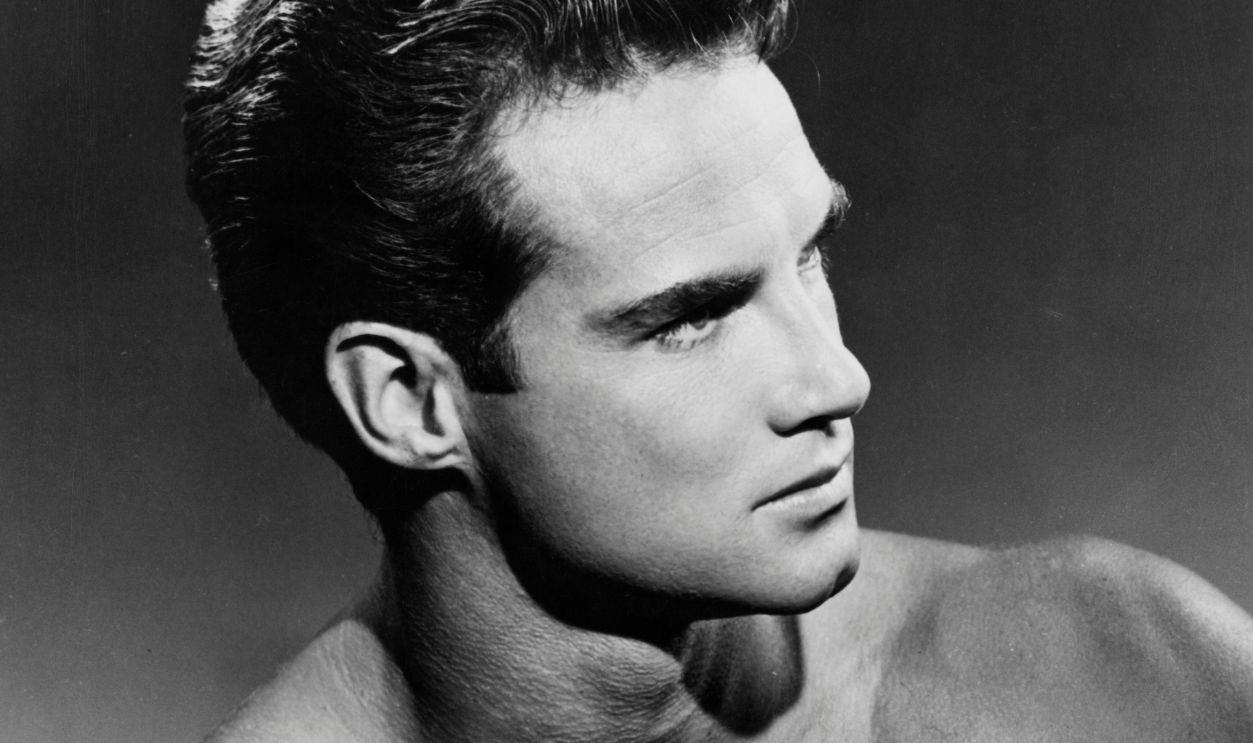 John Springer Collection, Getty Images
War Interrupted His Training
After graduating from high school, Reeves joined the U.S. Army during World War II and served in the Philippines. He contracted malaria during his military service and later served during the occupation of Japan. Once he was discharged, he went back to civilian life and picked up where he’d left off in the bodybuilding career the war had interrupted.
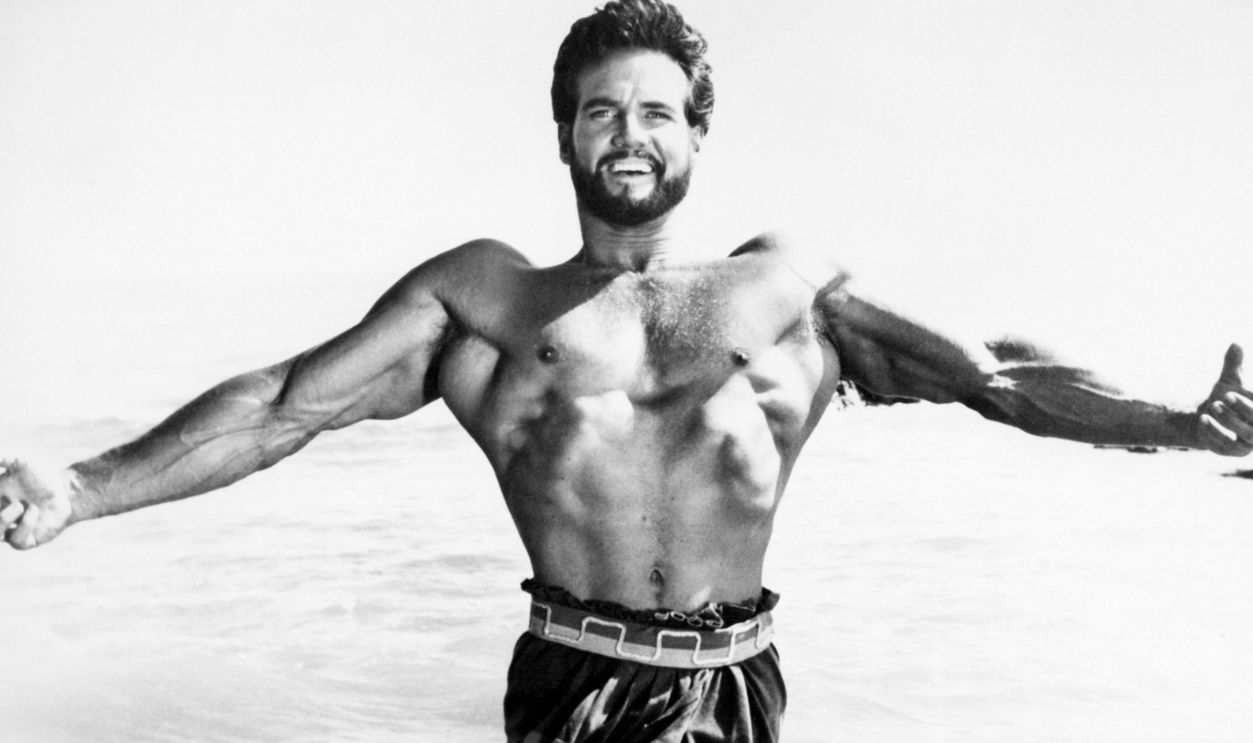 Silver Screen Collection, Getty Images
The Trophies Started Coming
Reeves quickly established himself as an elite competitor. He won Mr. Pacific Coast in 1946 and captured the prestigious Mr. America title in 1947. His combination of size and classical proportions stood apart from many contemporaries, and bodybuilding publications started treating the handsome young Californian as something genuinely extraordinary.
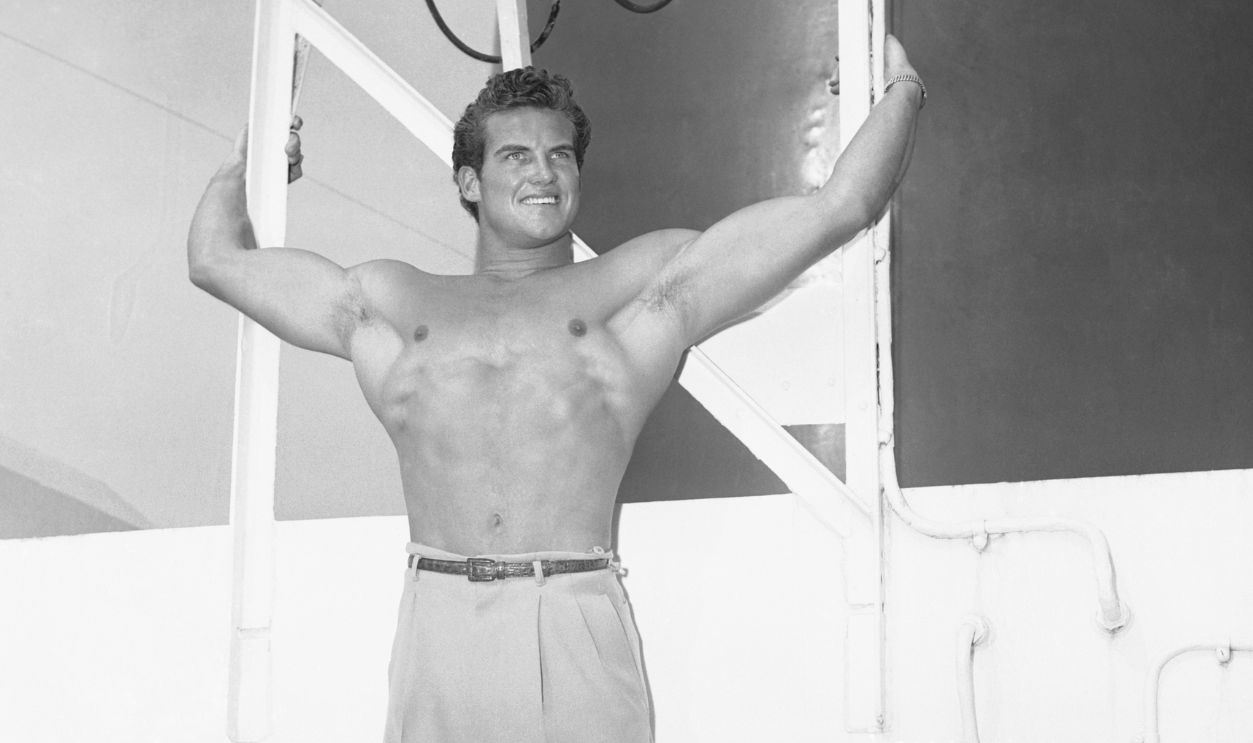
He Conquered Bodybuilding
Reeves added Mr. World in 1948 before reaching bodybuilding’s summit by defeating future star Reg Park for the 1950 Mr. Universe title. At approximately 6-foot-1 and 220 pounds, the 24-year-old had achieved virtually everything available before the creation of Mr. Olympia. He subsequently retired from serious competition.
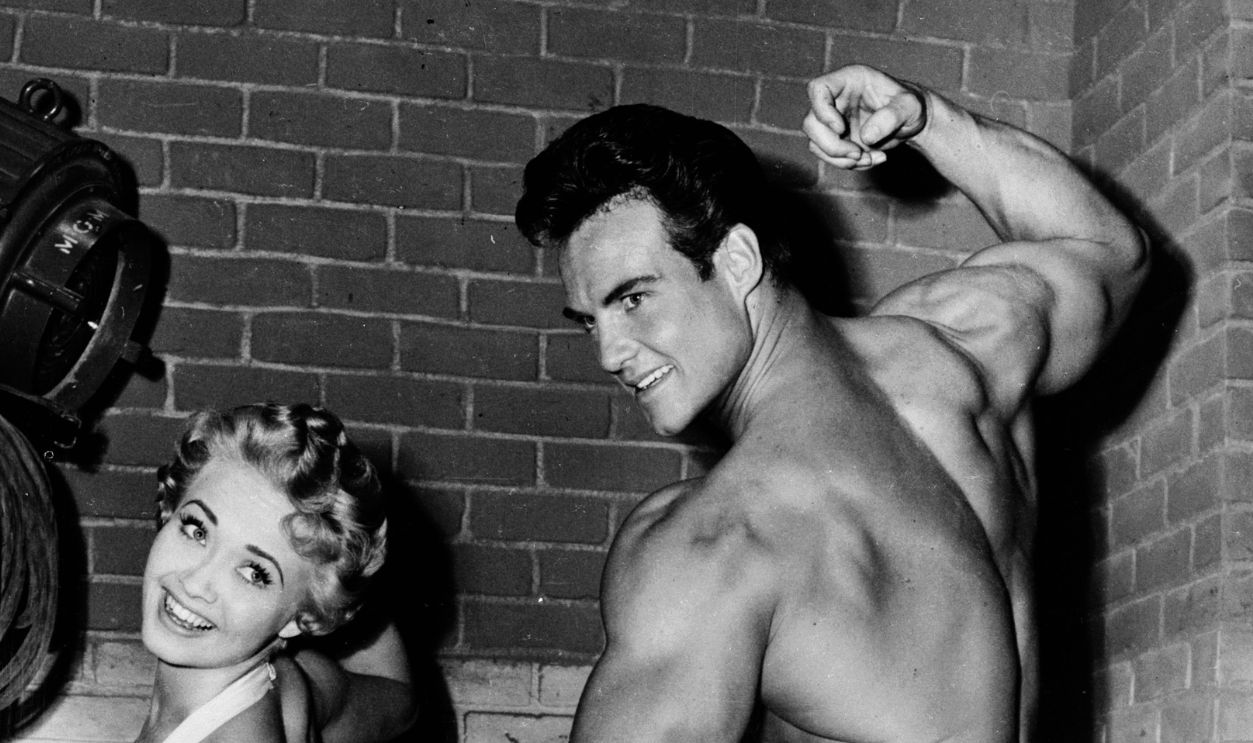 John Kobal Foundation, Getty Images
Hollywood Came Calling
Reeves moved toward acting, studying in New York and eventually attracting Hollywood attention. Cecil B. DeMille considered him for Samson and Delilah (1949), but Reeves said DeMille wanted him to lose approximately 15 pounds. After Reeves tried to comply, the coveted role ultimately went to Victor Mature instead.
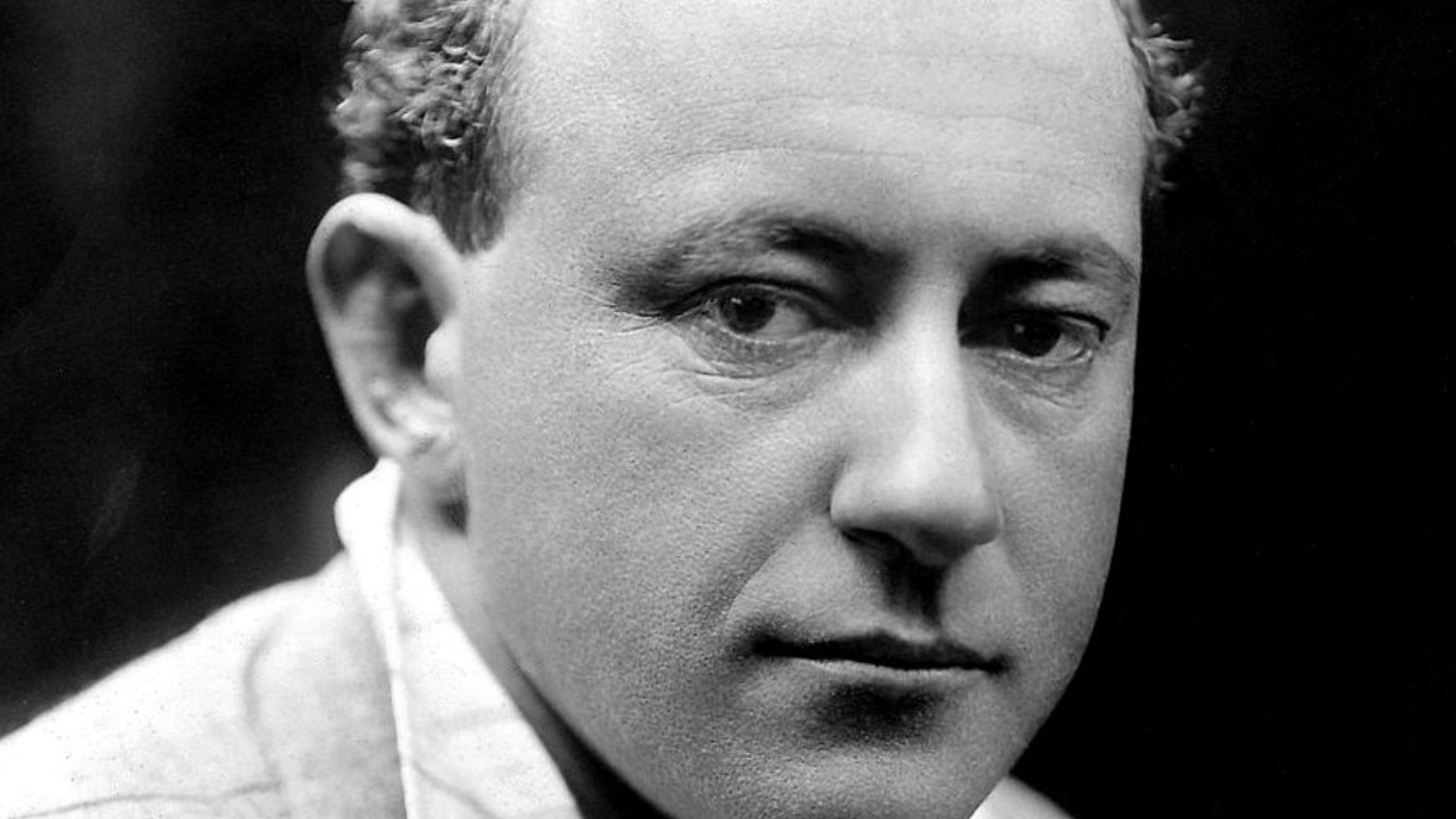 Albert Witzel, Wikimedia Commons
Television Came First
Reeves filmed a Tarzan-like television pilot called Kimbar of the Jungle (1949) and made appearances during television’s early years. He also appeared on The George Burns and Gracie Allen Show. Hollywood clearly recognized his extraordinary appearance, but initially struggled to find roles that could turn his bodybuilding fame into some kind of sustainable acting career.
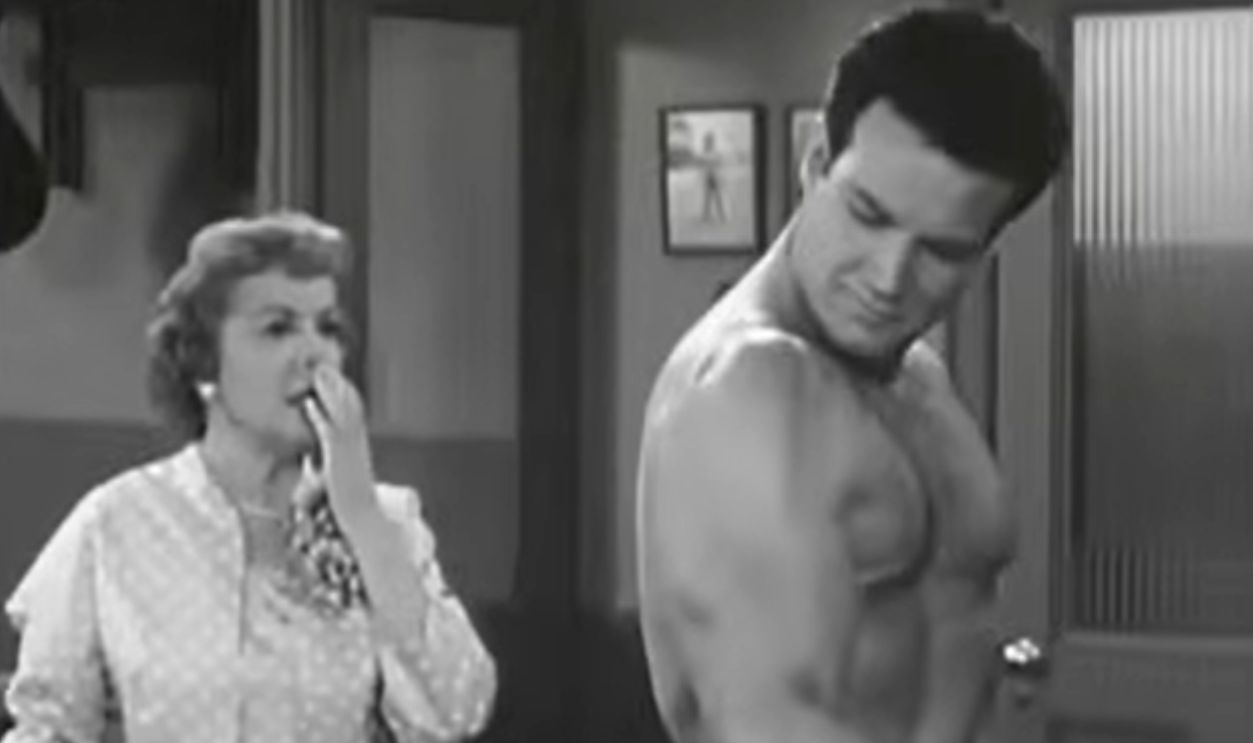 Screenshot from The George Burns and Gracie Allen Show, CBS (1950-1958)
His First Marriage
Reeves married Sandra Jeanne Smith in 1955, although the marriage proved brief and ended in divorce the following year. His personal life received comparatively little attention beside his increasingly unusual career. Reeves remained an intensely private personality despite having exactly the kind of appearance Hollywood normally transformed into celebrity spectacle.
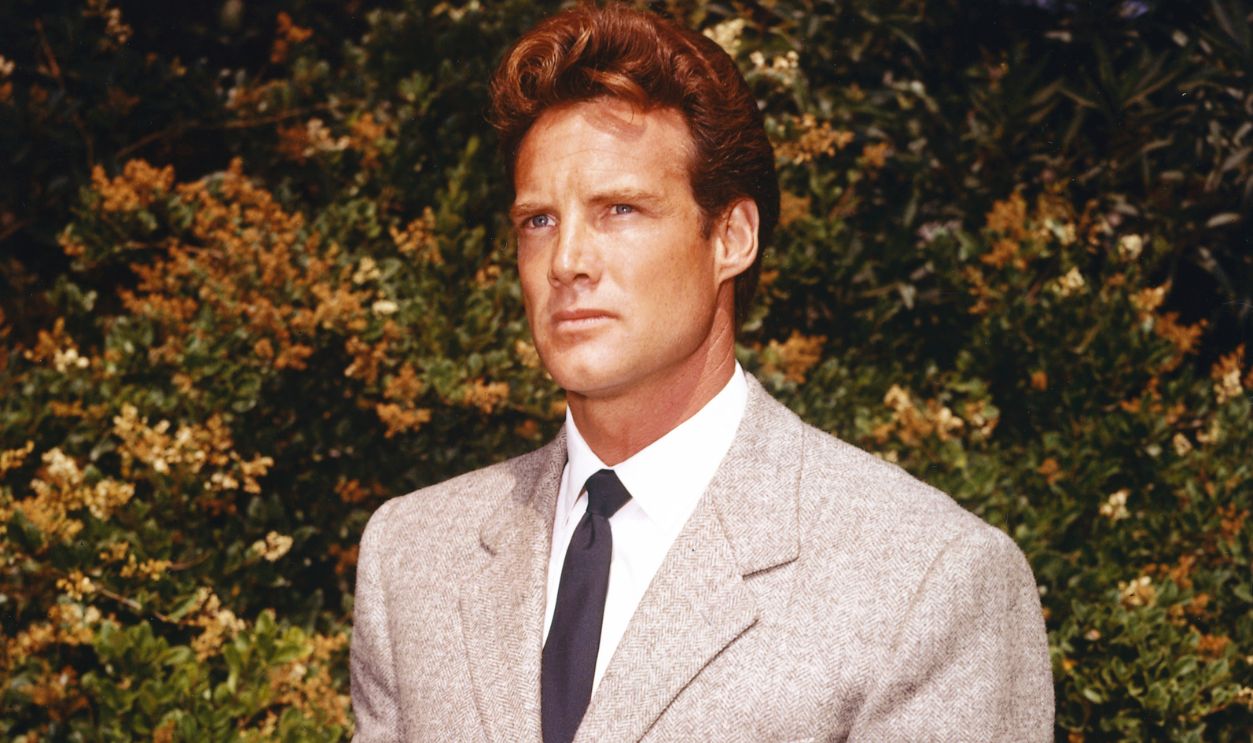 Silver Screen Collection, Getty Images
Strange Early Movie Roles
Reeves appeared uncredited as an Olympic team member in Howard Hawks’s Gentlemen Prefer Blondes (1953), starring Marilyn Monroe and Jane Russell. He subsequently appeared in Ed Wood’s low-budget Jail Bait (1954) and Richard Thorpe’s musical Athena (1954), alongside Jane Powell, Debbie Reynolds, Vic Damone, and Edmund Purdom.
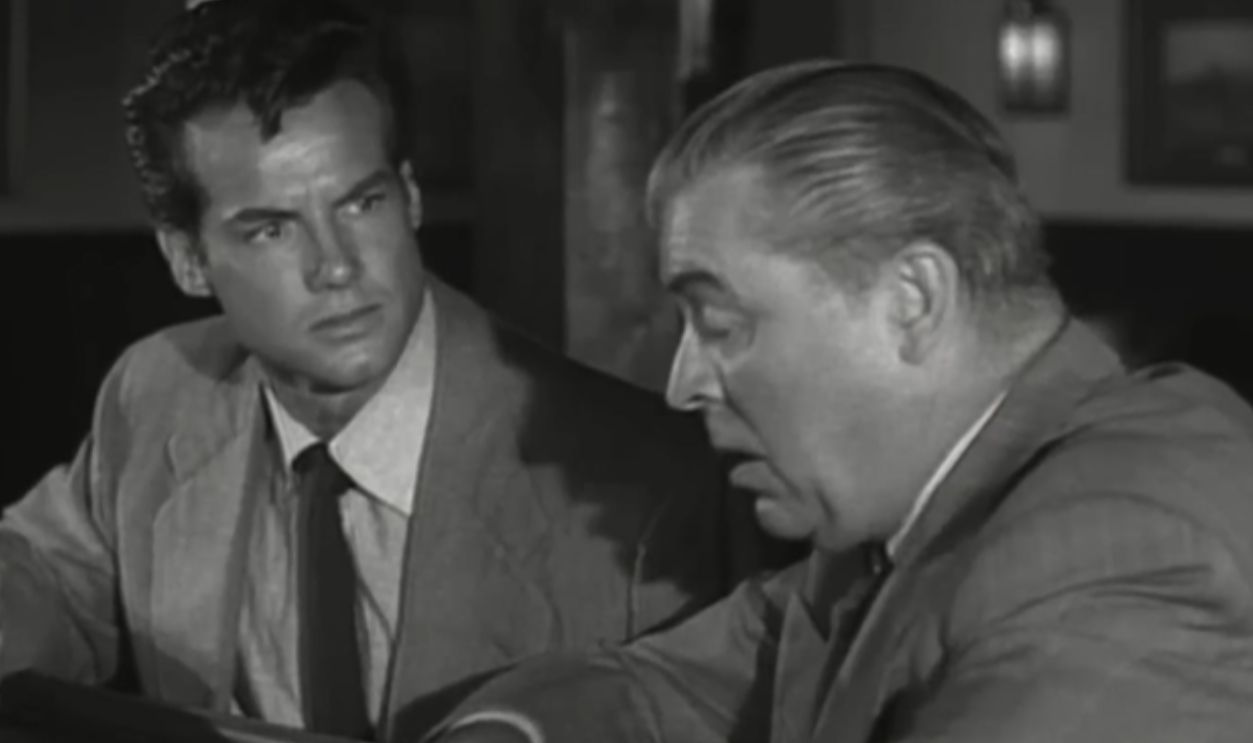 Screenshot from Jail Bait, Howco Productions (1954)
Italy Finally Understood Him
American studios never quite figured out what to do with Reeves, but Italian filmmakers did. Director Pietro Francisci cast him as the title character in Hercules (1958), opposite Sylva Koscina, Fabrizio Mioni, Gianna Maria Canale, and Ivo Garrani. Reeves suddenly had a role perfectly suited to his monumental physique.
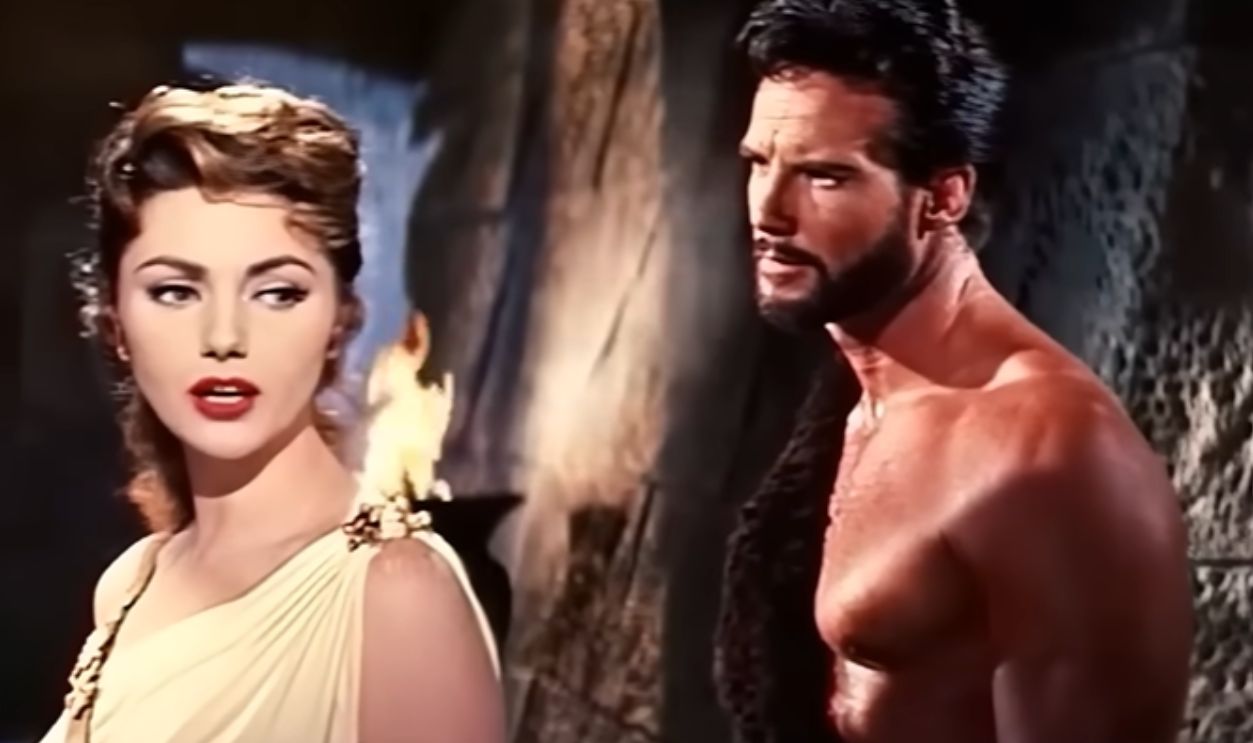 Screenshot from Hercules, Lux Film (1958)
Hercules Changed Everything
Hercules (1958) became an international phenomenon. Producer-distributor Joseph E. Levine promoted the picture heavily in America, helping transform an Italian mythological adventure into a major hit. Reeves became internationally recognizable almost overnight and helped ignite the sword-and-sandal movie craze that flooded theaters with muscular mythological heroes.
![Collectie / Archief : Fotocollectie Anefo
Reportage / Serie : [ onbekend ]
Beschrijving : Producer](https://www.factinate.com/storage/app/media/theshot/2026/8/20/17872321406f5618e56d3b2730f51347800597a395023c22bc.jpg) Rob Bogaerts / Anefo, Wikimedia Commons
Rob Bogaerts / Anefo, Wikimedia Commons
Hercules Returned
Reeves reunited with Sylva Koscina and director Pietro Francisci for Hercules Unchained (1959). Although Reeves would forever be associated with Hercules, he actually portrayed the mythological muscleman in only these two films. Nevertheless, their enormous popularity made his face and physique synonymous with the character for an entire generation.
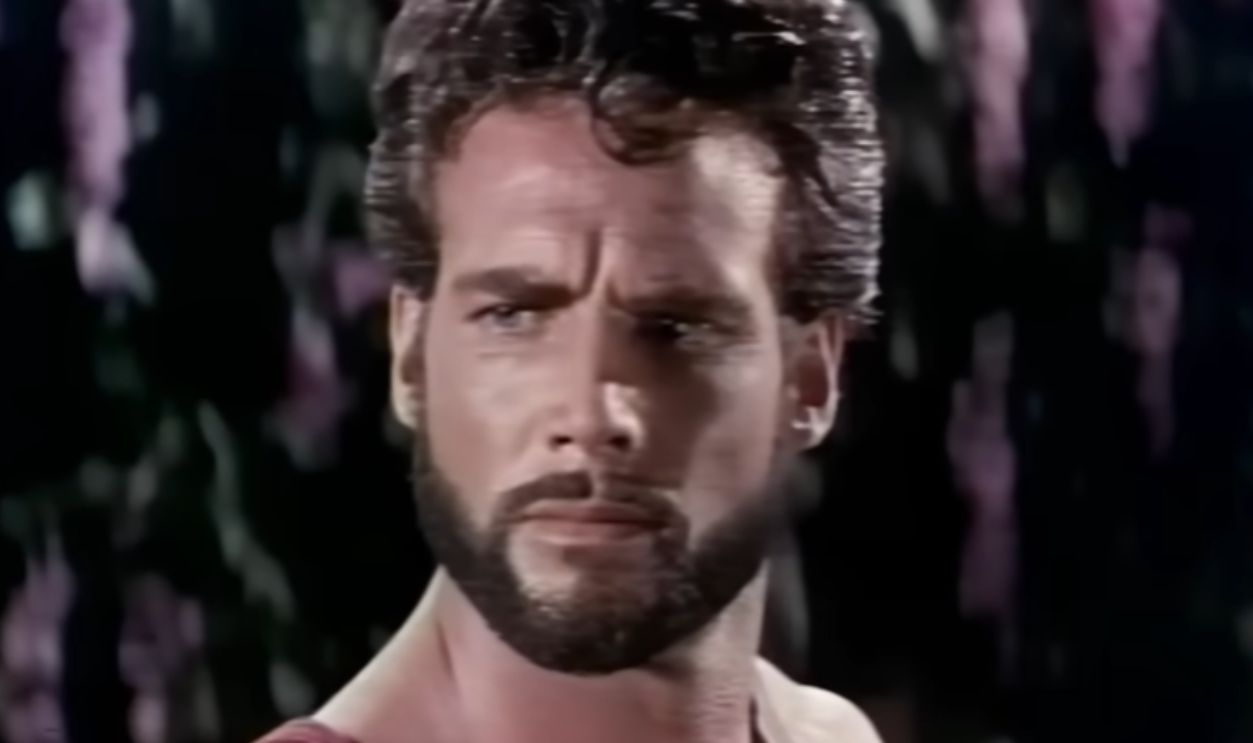 Screenshot from Hercules Unchained, Warner Bros. (1959)
Stardom Brought More Epics
Reeves became enormously busy, starring in The White Warrior (1959), directed by Riccardo Freda, and Carlo Campogalliani’s Goliath and the Barbarians (1959). His success proved that audiences would follow him beyond Hercules, while producers put together increasingly elaborate historical adventures around his distinctive screen presence.
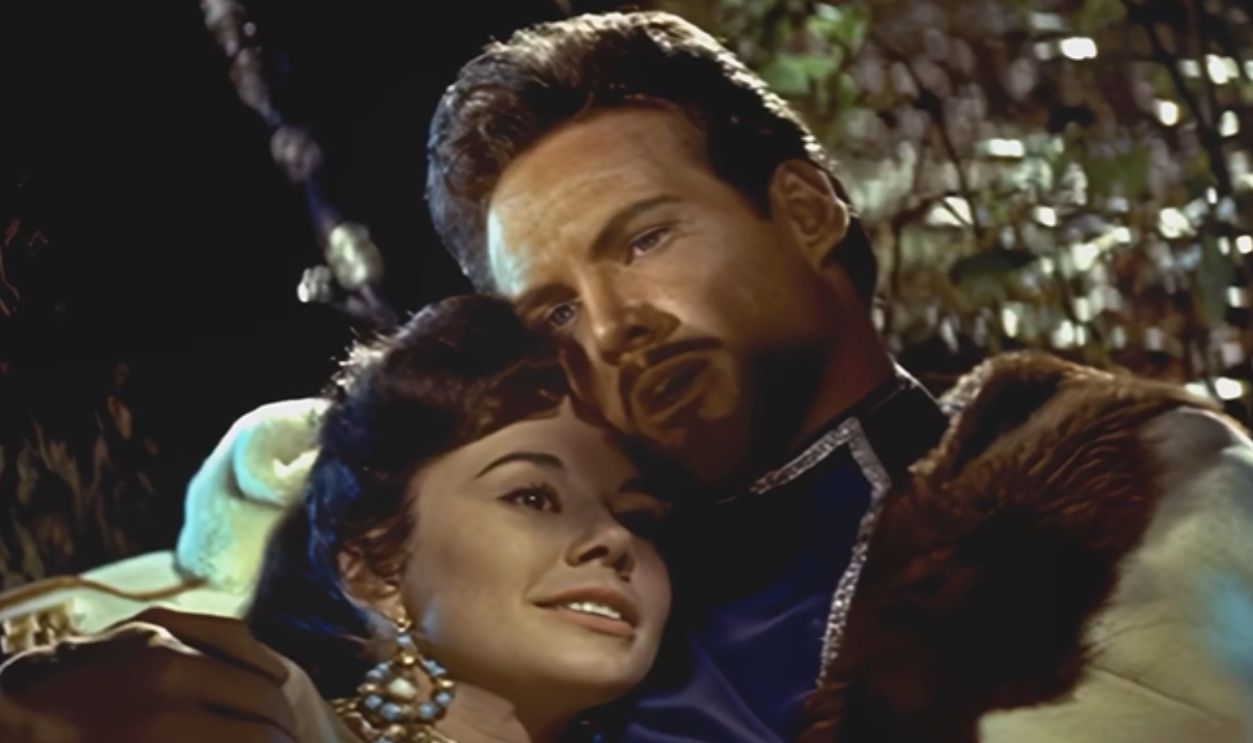 Screenshot from The White Warrior, Warner Bros. (1959)
One Stunt Changed Everything
While making The Last Days of Pompeii (1959), co-starring Christine Kaufmann and Fernando Rey, Reeves suffered the injury that haunted his remaining career. During a chariot sequence, he crashed into a tree and dislocated his shoulder. He later aggravated the damaged shoulder while filming an underwater escape.
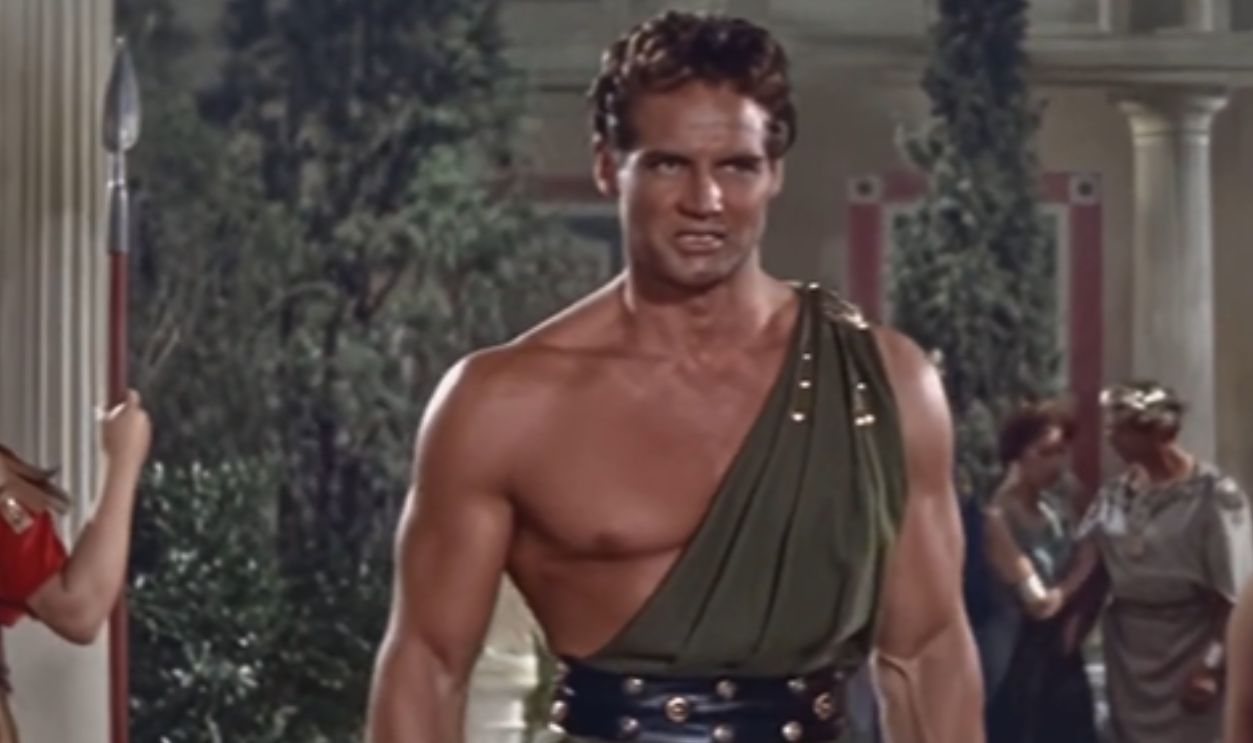 Screenshot from The Last Days of Pompeii, United Artists (1959)
He Kept Working Hurt
Rather than stopping, Reeves continued performing physically demanding action scenes. The shoulder injury was repeatedly aggravated by subsequent stunt work. He followed with The Giant of Marathon (1959), directed by Jacques Tourneur and Mario Bava, portraying the legendary Greek messenger Pheidippides while his international drawing power continued to climb to Olympian heights.
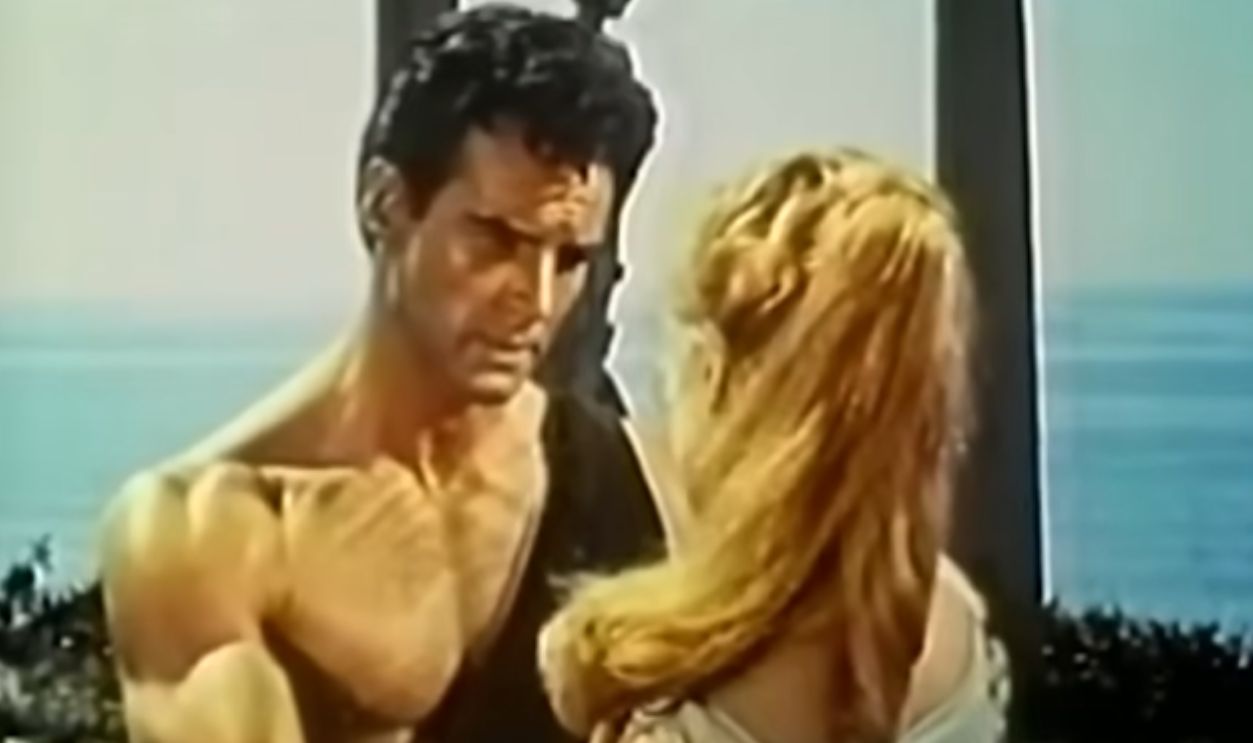 Screenshot from The Giant of Marathon, Metro-Goldwyn-Mayer (1959)
Europe Made Him Royalty
By 1960, Reeves was reportedly the number-one box-office attraction in 25 countries. He followed his early successes with films including Morgan the Pirate (1960), directed by André De Toth and Primo Zeglio, and The Thief of Baghdad (1961), directed by Arthur Lubin. Reeves had become one of Europe’s most bankable stars.
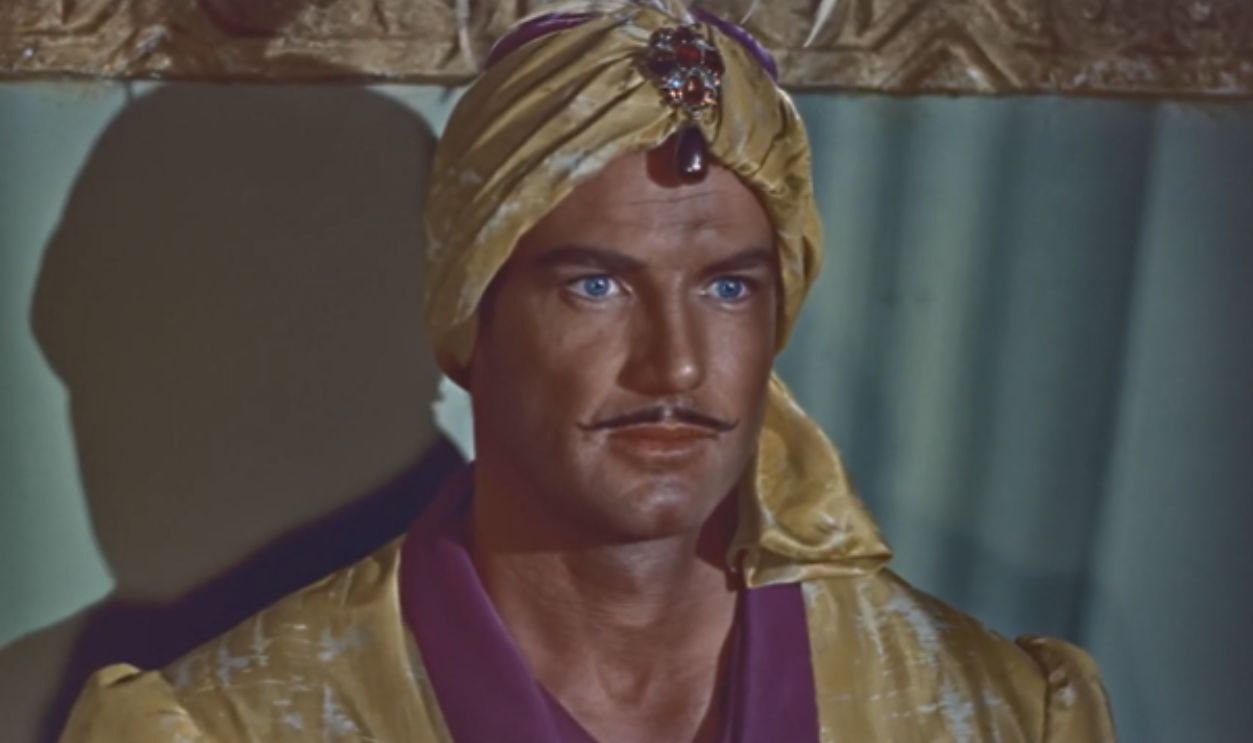 Screenshot from The Thief of Baghdad, Metro-Goldwyn-Mayer (1961)
Two Musclemen Collided
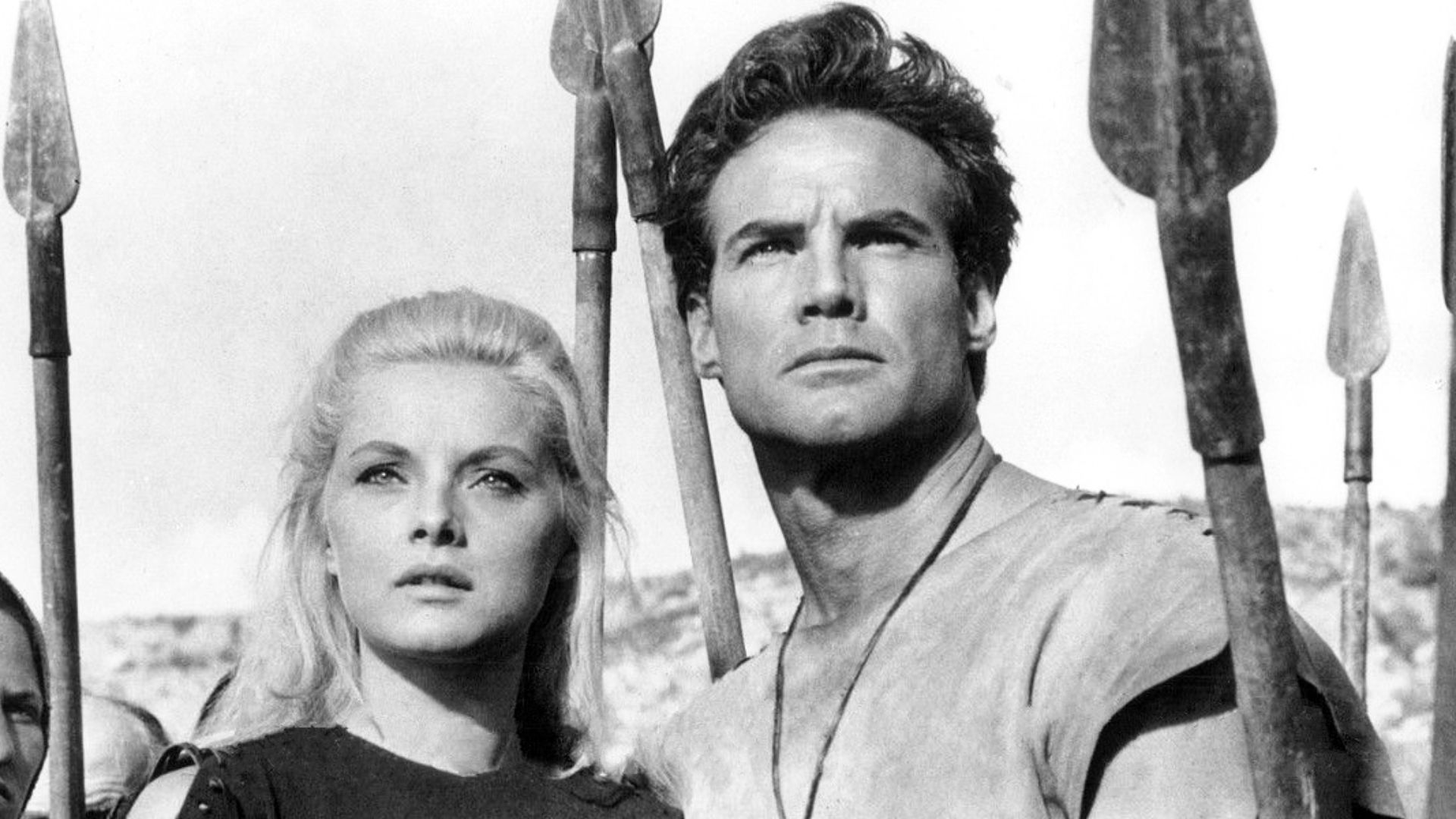
Sergio Corbucci’s Duel of the Titans (1961) offered audiences an irresistible pairing: Reeves as Romulus opposite fellow bodybuilding star Gordon Scott as Remus. Virna Lisi also starred. The story dramatized the legendary founding of Rome and showed how much the musclemen had completely conquered European popular cinema.
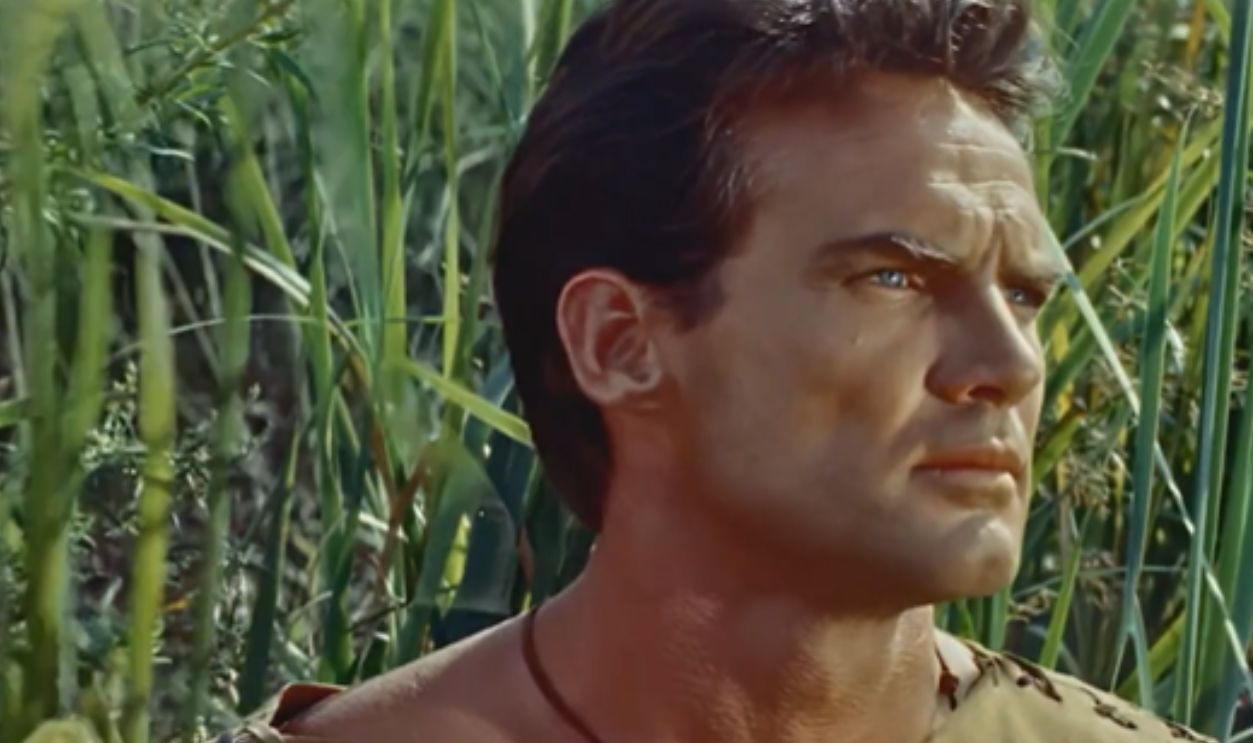 Screenshot from Duel of the Titans, Paramount Pictures (1961)
Adventure Beyond Ancient Rome
Reeves continued varying his heroic identities. He played the Malaysian pirate hero Sandokan in Sandokan the Great (1963), directed by Umberto Lenzi, and returned for The Pirates of Malaysia (1964). His screen persona remained consistent: physically imposing, morally upright, courageous, and seemingly capable of surviving practically anything.
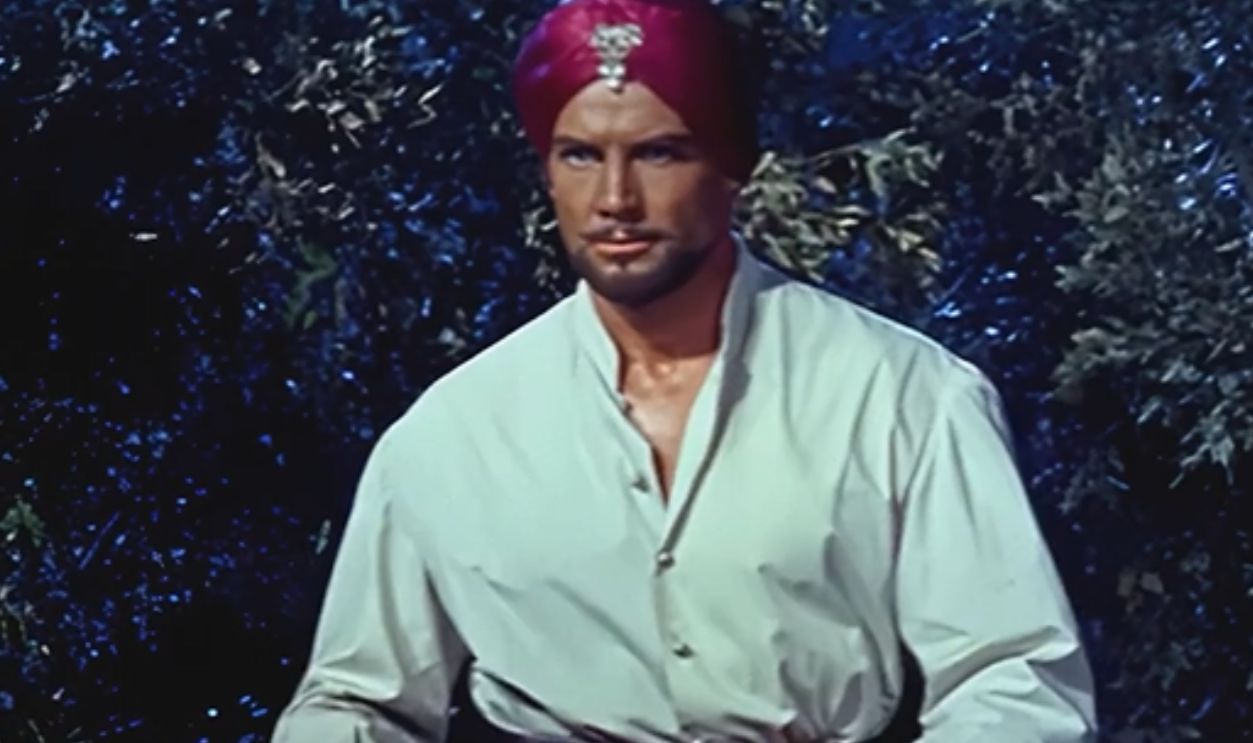 Screenshot from Sandokan the Great, Metro-Goldwyn-Mayer (1963)
Aline Became His Partner
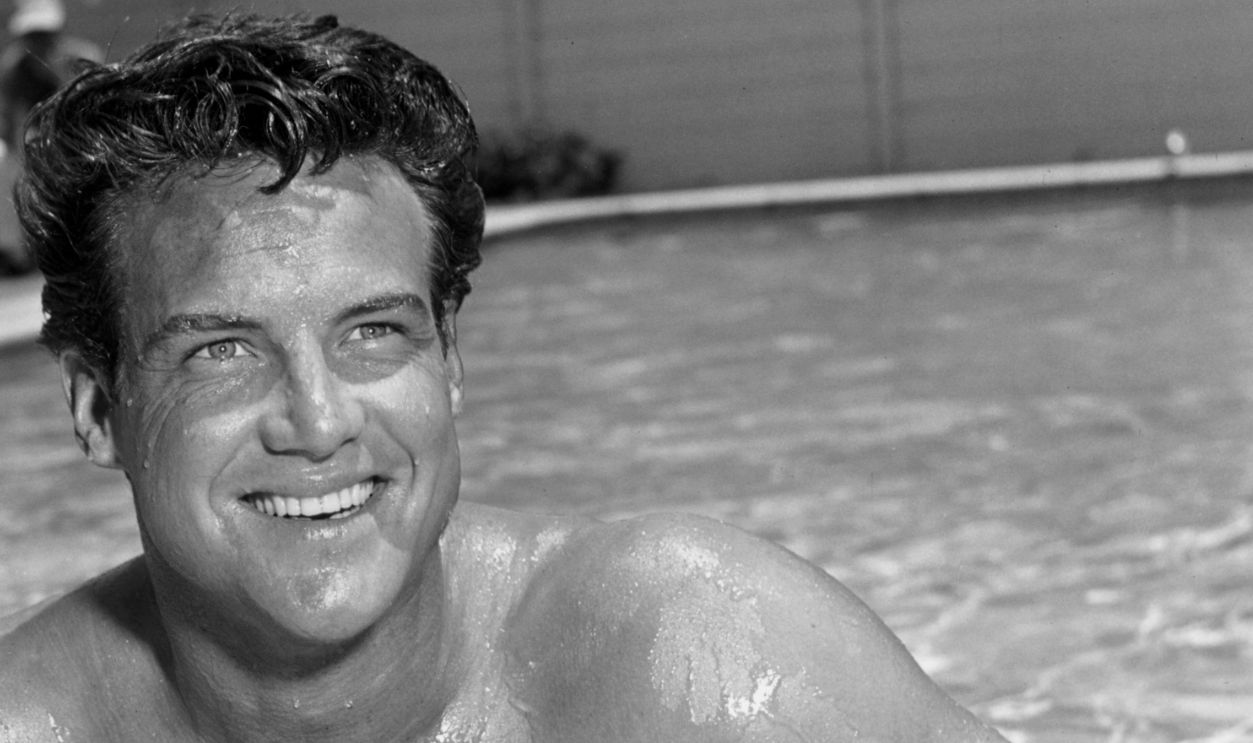
In 1963, Reeves married Aline Czartjarwicz, beginning a marriage that lasted until her death in 1989. The couple had no children. Aline shared the quieter life Reeves increasingly preferred after his screen career, including years spent on ranches where the former cinematic strongman devoted himself to horses.
He Passed On Leone
One of Reeves’s most intriguing career decisions involved a movie he did not make. He reportedly turned down the lead in Sergio Leone’s A Fistful of Dollars (1964). Clint Eastwood accepted the role instead, and the film helped revolutionize the Western genre while transforming Eastwood into an international movie star.
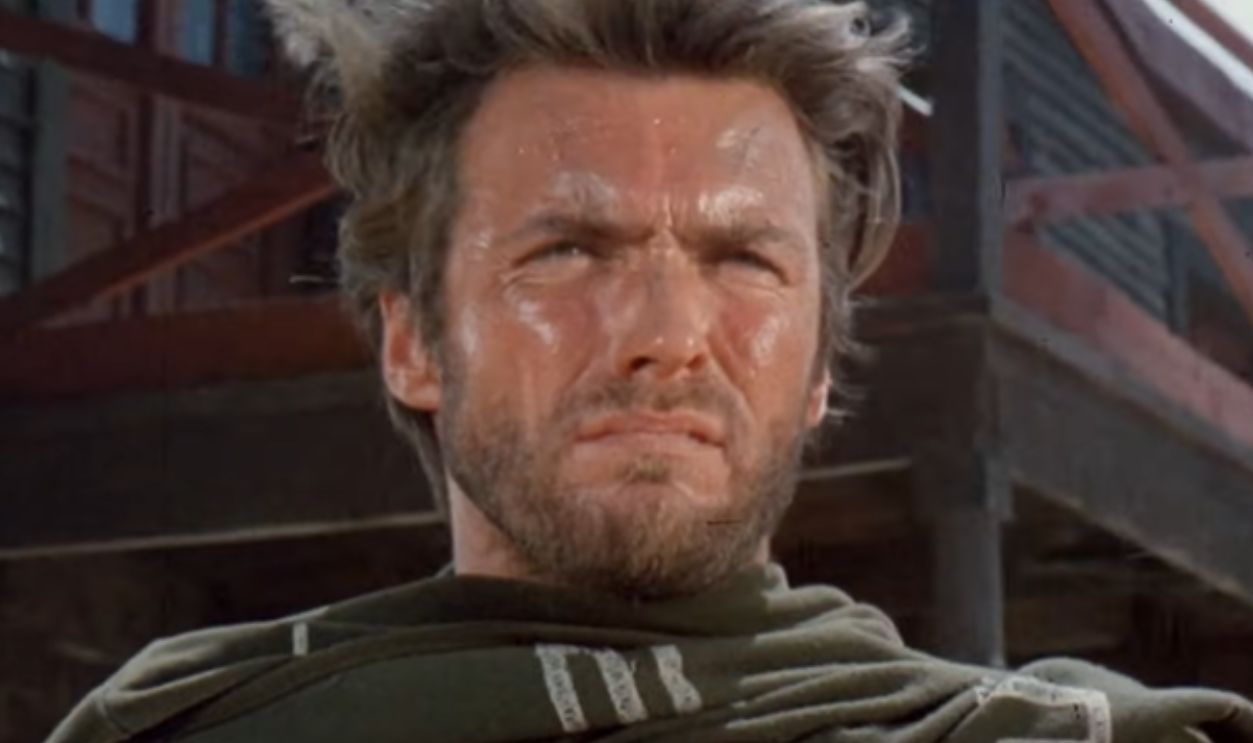 Screenshot from A Fistful of Dollars, United Artists (1964)
The Epics Were Fading
By the mid-1960s, the European sword-and-sandal boom that Reeves helped create was losing momentum. Audiences were moving toward other genres, particularly spaghetti Westerns and spy adventures. For Reeves, whose shoulder still caused him considerable pain, the combination of changing tastes and physically punishing filmmaking made continuing increasingly unattractive.
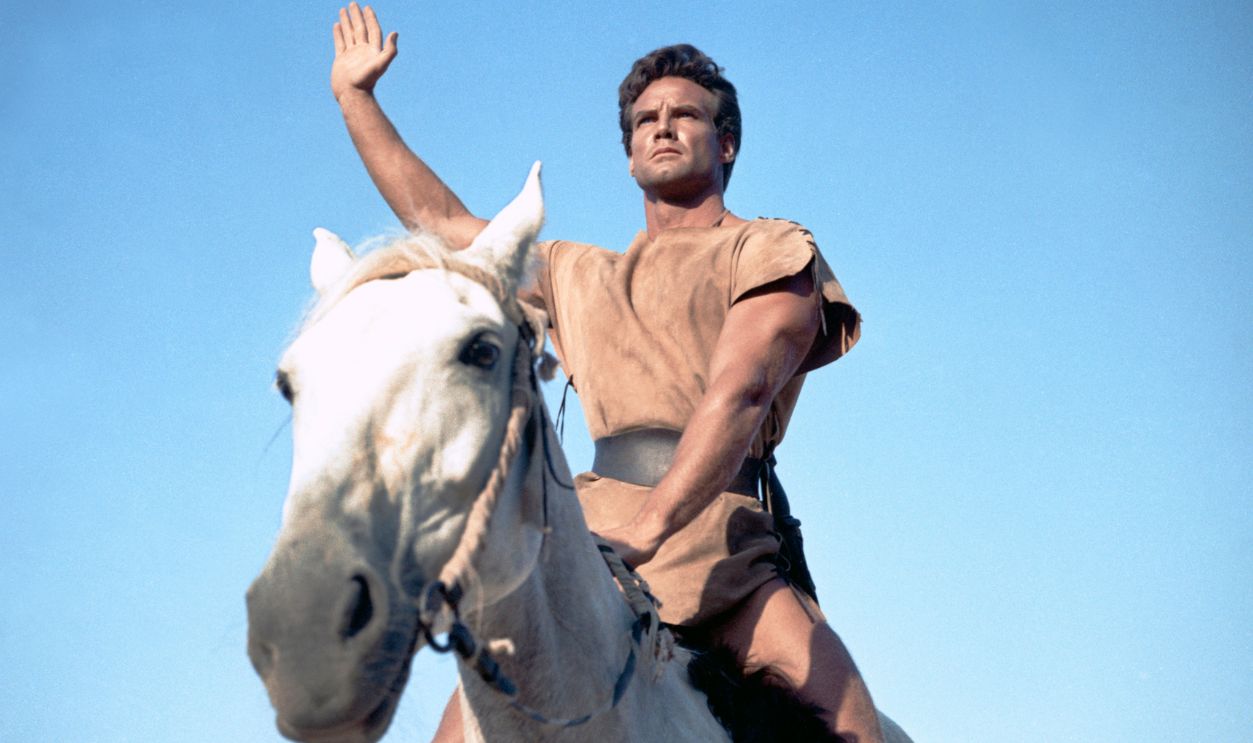 Sunset Boulevard, Getty Images
One Last Ride
Reeves made his final starring film with A Long Ride From Hell (1968), an Italian Western directed by Camillo Bazzoni and co-starring Wayde Preston and Rosalba Neri. Then, at only 42, Reeves effectively walked away from filmmaking. Unlike many fading stars, he was financially secure enough to leave on his own terms.
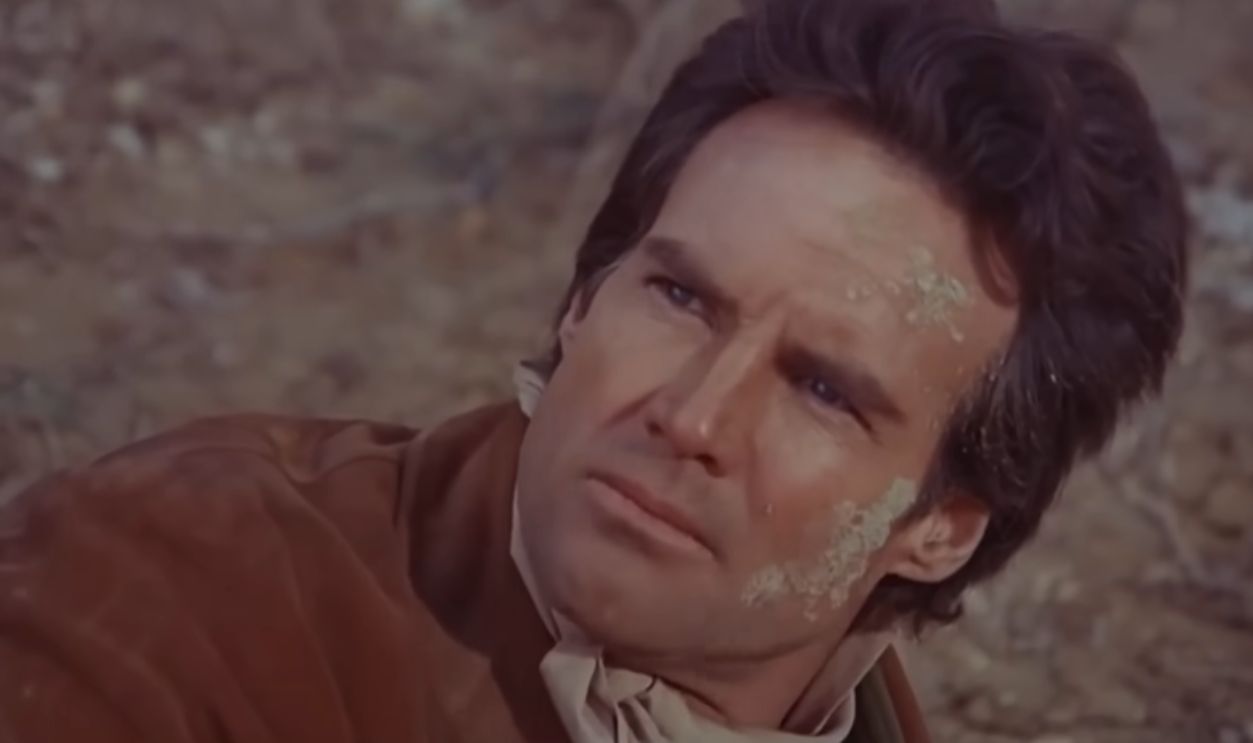 Screenshot from A Long Ride from Hell, Titanus (1968)
He Chose Ranch Life
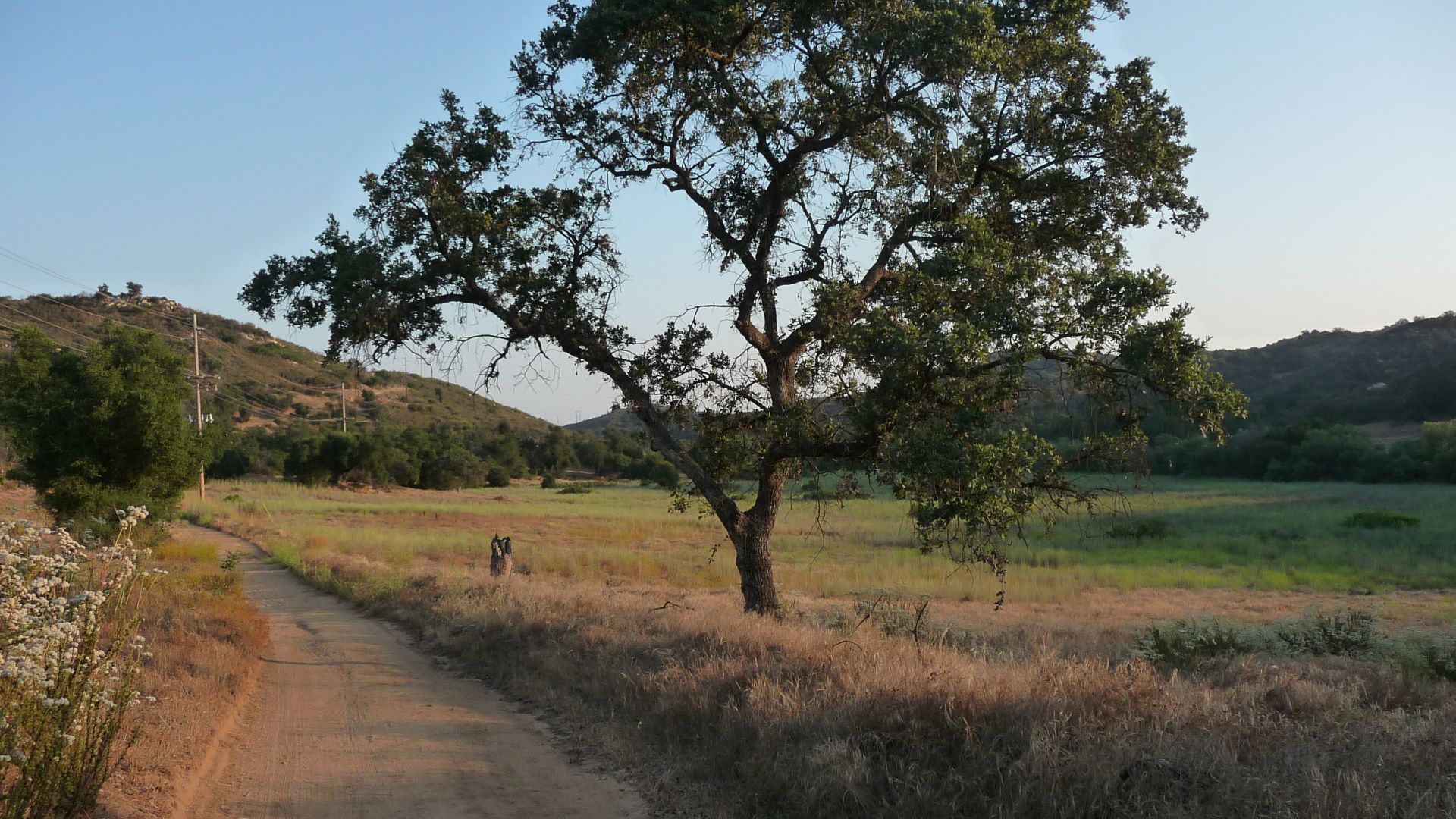
Reeves had invested his earnings in stocks, bonds, real estate, and ranch property rather than squandering all his money on movie-star extravagance. He owned a ranch in Oregon before settling in Valley Center, California, where he and Aline raised horses. Reeves later admitted freely that he had never particularly enjoyed acting itself.
His Training Was Different
Reeves remained a fitness icon long after retiring. During his competitive years, he favored full-body workouts roughly three times weekly instead of modern bodybuilding split routines, generally performing three sets of eight to 12 repetitions. Later he promoted power walking and strongly advocated natural, drug-free bodybuilding.
 Silver Screen Collection, Getty Images
A Lasting Fitness Legacy
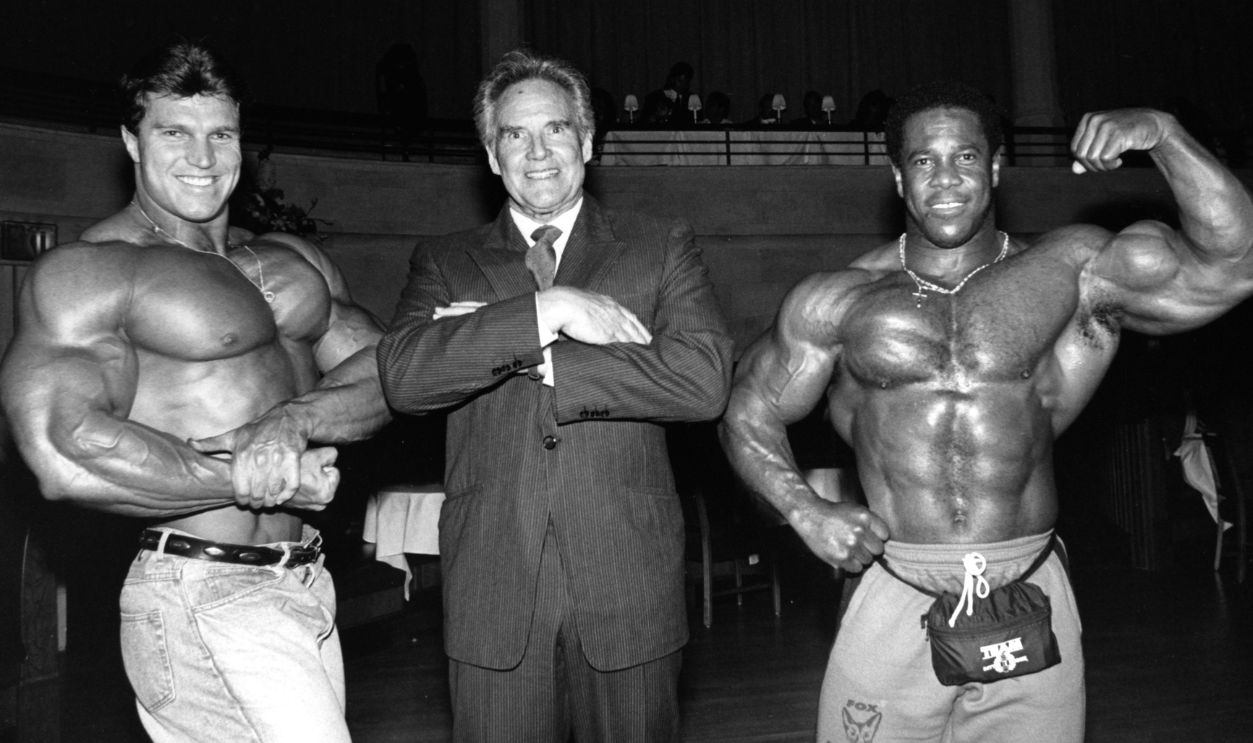
Reeves wrote fitness books including Powerwalking and Building the Classic Physique: The Natural Way. In 1994, he helped establish the Steve Reeves International Society. Arnold Schwarzenegger, Lou Ferrigno, and other later bodybuilding stars cited him as an inspiration, helping his influence survive long after his final sword-and-sandal adventure.
 Catherine McGann, Getty Images
The Strongman Was Gone
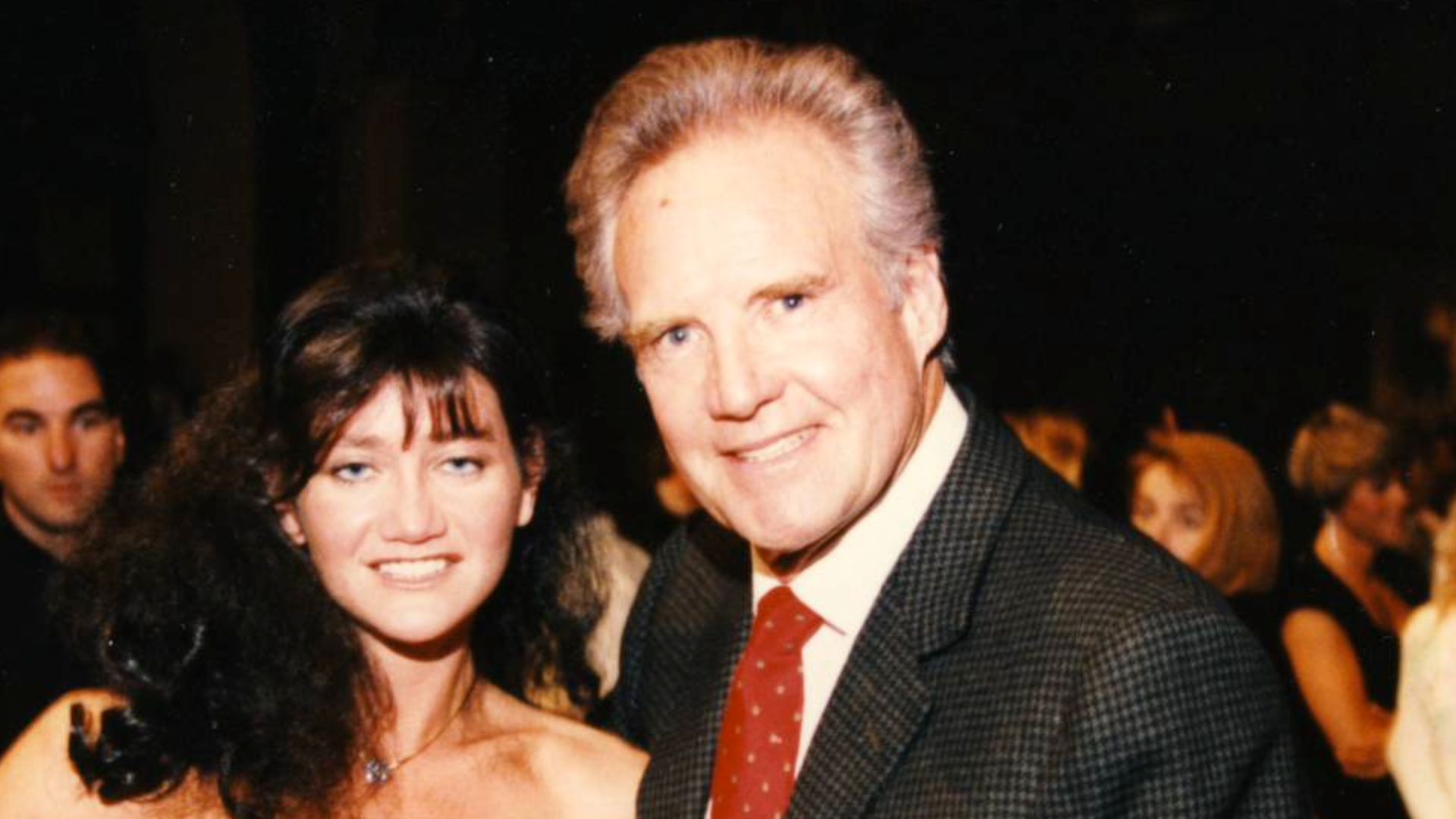
After Aline’s death from complications of a stroke in 1989, Reeves continued living on his California ranch. Diagnosed with lymphoma late in life, he underwent exploratory surgery in April 2000 and died from a blood clot on May 1 at age 74. He left no children.
 Dotty'sgoinglikethis, Wikimedia Commons
His Physique Endured
Reeves never won an Academy Award and readily admitted he was no Shakespearean actor. But his cultural influence was enormous nonetheless. He helped popularize bodybuilding worldwide, established the cinematic template for muscle-bound superheroes, and made a classical physique seem attainable without having to gain extreme mass. Decades later, his version of Hercules is still instantly recognizable.
 Unknown authorUnknown author, Wikimedia Commons
You May Also Like:
Actors who showed insane strength on screen and audiences just assumed it was movie magic.
Sly Stallone Vs. Arnold Schwarzenegger: Who Was The Ultimate 80s Action Star?